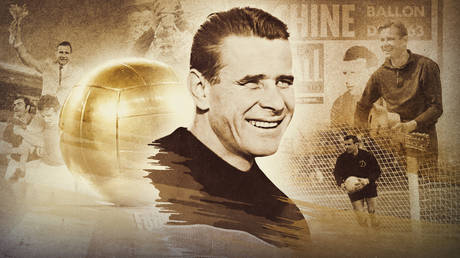
Lev Yashin remains revered as a benchmark of goalkeeping excellence
The world of football was cast into mourning last December with the passing of Pele, one of the undisputed greats of the game. The death of the Brazilian legend led to tributes from far and wide, as fans reflected on the impact of a man who changed the face of his sport.
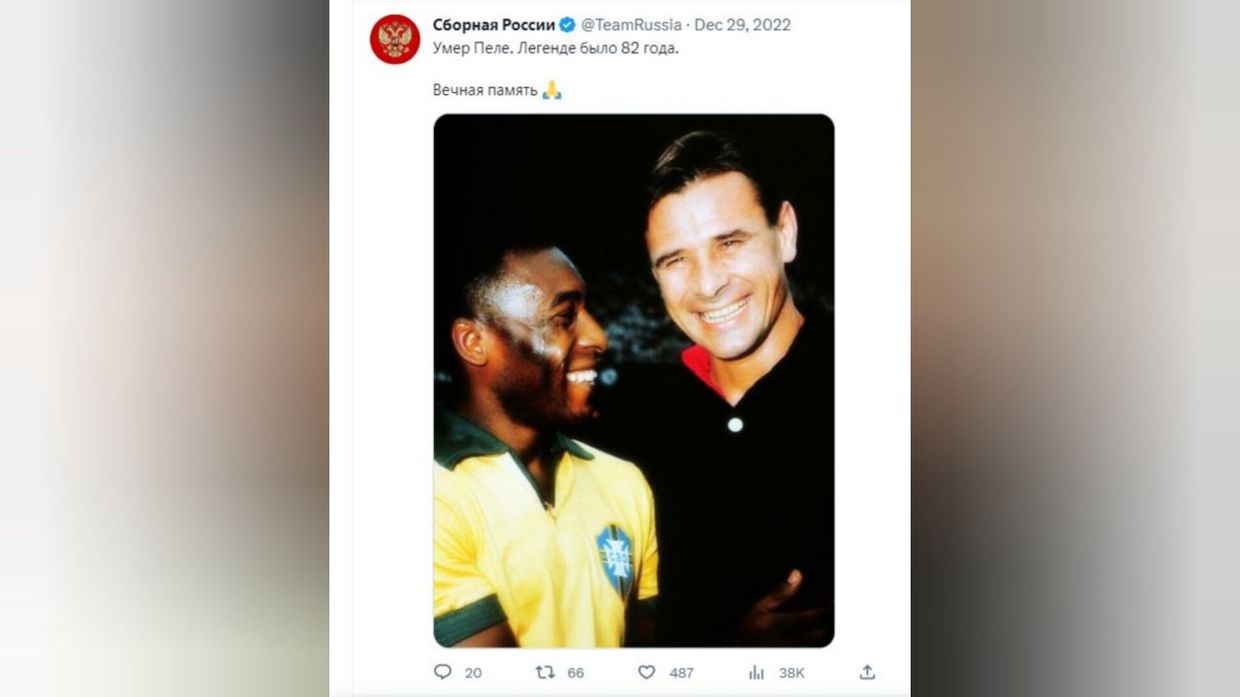
Russia was no exception, and the men’s national team paid its respects by sharing a poignant image of a smiling Pele. But alongside the legendary forward was another man who earned revered status as part of the same generation – the late, great Lev Yashin.
While Pele made his name scoring goals, Yashin forged his reputation by preventing them. A shot-stopper unlike any who had come before him, the Russian remains a benchmark for goalkeeping brilliance, more than 50 years after he played his last game and over three decades after his death.
If Pele would be selected to spearhead the attack in many football fans’ all-time fantasy eleven, the name widely picked in goal would surely be Yashin.
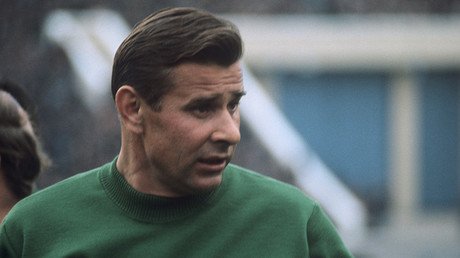
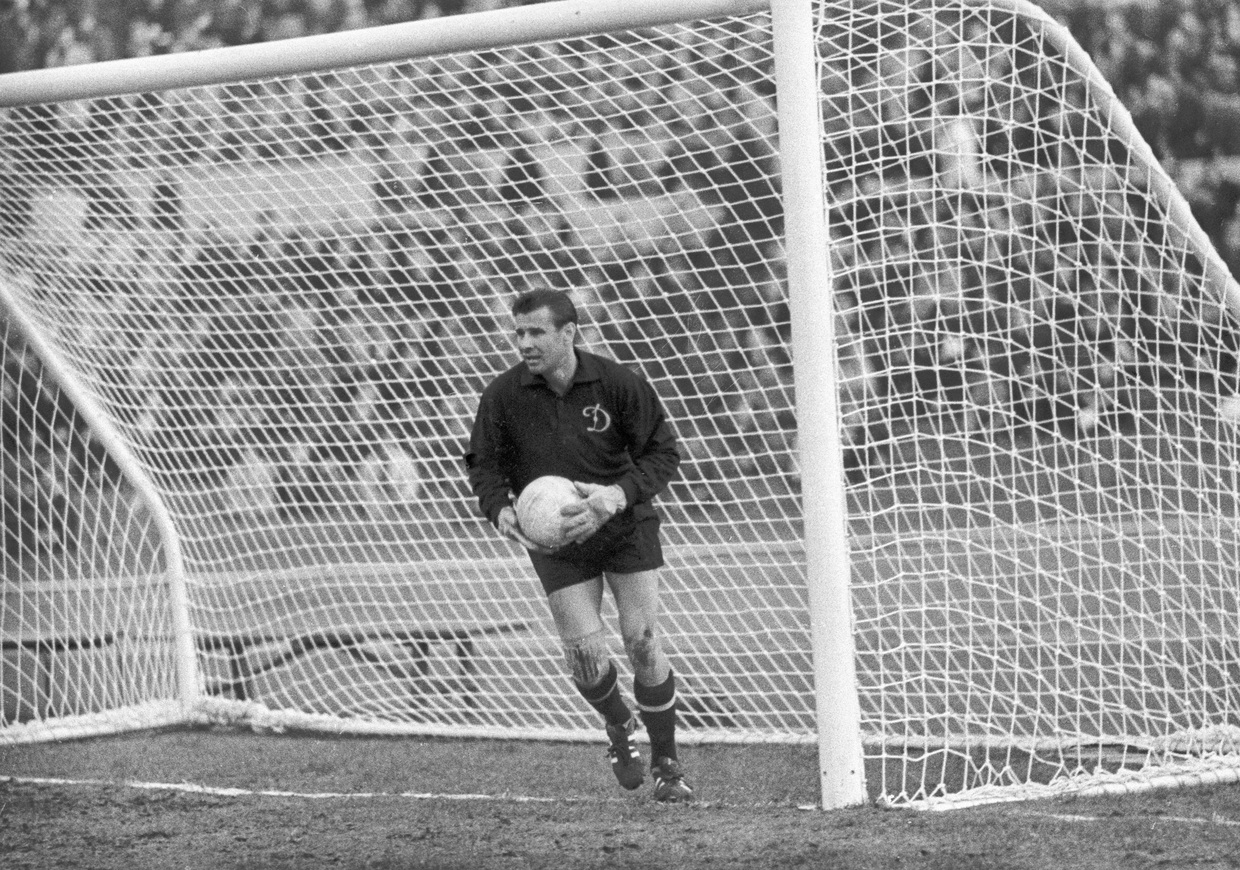
Nicknamed ‘The Black Spider’, ‘The Black Octopus’, and ‘The Black Panther’ because of his feats of acrobatics and the color of his on-pitch attire – topped off with a trademark flat cap – Yashin was a pioneer as an imposing Soviet shot-stopper who enjoyed a storied 20-year career.
Such was his renown, Yashin gives his name to the title annually bestowed on the world’s best goalkeeper by the respected France Football magazine.
Monday, March 20, marks 33 years since Yashin’s passing at the age of 60, and will be a day when many reflect on the remarkable life and times of Russia’s greatest football idol.
The Russian national team paid tribute to Pele alongside a legend of their own.
Born in Moscow on October 22, 1929, into a family of industrial workers, Yashin did not seem destined for footballing immortality. He was not yet a teenager when he started his own factory labors, helping the Russian effort during World War II. Yashin continued his factory work after the war, but suffered what was described as a “nervous breakdown” at age 18 as the experience took its toll.
“Was it depression? I don’t know,” Yashin wrote in his autobiography. “The fatigue accumulated over the years began to make itself felt and something in me suddenly broke. At that time I felt nothing except emptiness.”
Sport, however, was to be a vital outlet and would open up new opportunities for the young Yashin. Already a keen football and ice hockey player, he was advised by a teammate to volunteer for military service, something which he described as his “salvation” as he combined football with his new duties.
After being scouted in 1949, Yashin was invited to join the youth ranks of Dynamo Moscow – one of the Russian capital’s powerhouse football clubs, which had caused a stir with a groundbreaking tour of the UK in 1945 during which the team impressively went unbeaten in four games against supposedly superior home opposition.
Yashin, however, was not to enjoy an auspicious start when he made his debut for Dynamo in 1950, letting in a soft goal that partly contributed to him only playing two league games that year. Also in his way was Alexei ‘Tiger’ Khomich, a revered figure who would keep Yashin out of the team during the early part of his career.
Rather than seek a pathway to regular first-team football elsewhere, Yashin became hellbent on making it to the top at Dynamo. He even played as a goaltender for Dynamo’s ice hockey team, winning the Soviet Cup in 1953, showing his versatility as an all-round athlete.
“I ran, did the high jump, shot put, discus, took fencing lessons, had a go at boxing, diving, wrestling, skating, tried basketball, played ice hockey, water polo, and football. I spent my winters on skis and skates. I’m not sure what I was best at,” Yashin later recalled.
Hitting the big time
Biding his time with his football career, Yashin finally managed to oust Khomich from the Dynamo starting eleven when the latter was injured in 1953. Yashin was to make the position his own, embarking on a glittering era for Dynamo which would ultimately yield five Soviet league titles – four of which came between 1954-59 – and three Soviet Cups.
Yashin’s initial success at Dynamo meant the Soviet national team soon came calling. He received his first international call-up in 1954 in a 7-0 win against Sweden, with the next four years truly providing his breakthrough to the big time with glory at Dynamo and gold with the USSR at the 1956 Olympics.
In 1958, an even bigger football audience took note of Yashin at the World Cup in Sweden. His ‘sweepers-keeper’ approach – since popularized again by the likes of Manuel Neuer, Alisson, and Marc-Andre ter Stegen – came to the forefront, as did his ability to read the game.
Yashin crossed paths with a 17-year-old Pele and eventual champions Brazil in the group stage. Though the Selecao won 2-0, Yashin limited the South Americans’ account from growing through a string of top saves.
The USSR crashed out in the quarterfinals against the hosts, but Yashin was voted goalkeeper of the tournament, with journalists worldwide hailing him as the best in the game.
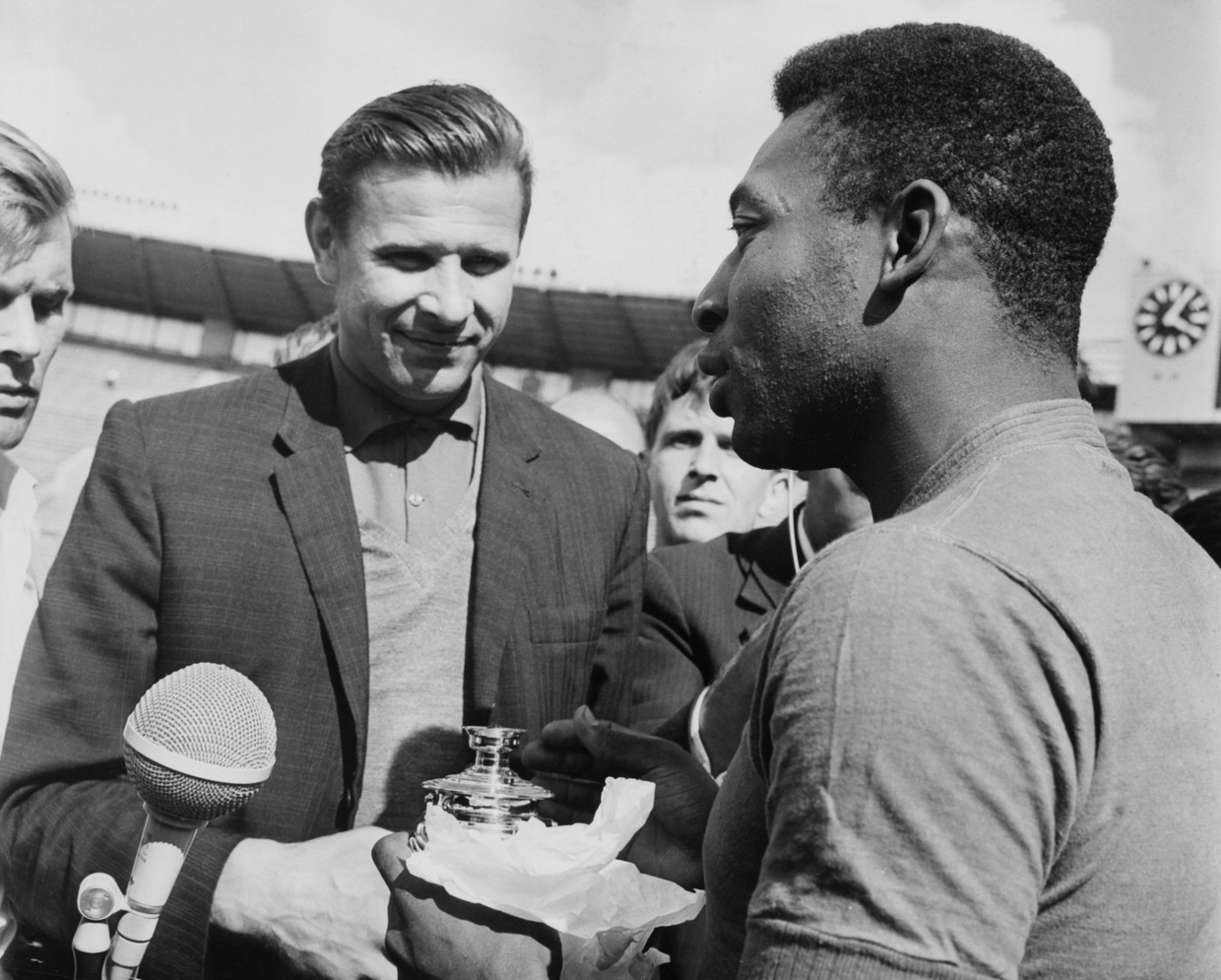
Yashin pictured with Brazilian great Pele in 1965.
Two years later, he made up for heartache in Scandinavia by leading the Soviets to the title at the inaugural European Championships in France. The tournament in 1960 was then known as the European Nations Cup, and Yashin kept a clean sheet in the semifinal as the Soviet Union beat Czechoslovakia 3-0.
In the final at the Parc des Princes against Yugoslavia, Yashin saved two free-kicks before being beaten by a deflected shot that connected with his captain Igor Netto. In extra time, Yashin made vital interventions as Yugoslavia tried to equalize Viktor Ponedelnik’s 113th-minute winner.
The celebrations were relatively tame in Paris, with runner-up Dragan Sekularac claiming that the “crowds in France wanted western European glamor, not mysterious teams from the other side of Europe” as he commented on the sparse attendance at a reception held at the Eiffel Tower. But upon their return to Moscow, the Soviet team was celebrated like heroes by over 100,000 of their compatriots at a victory parade held in the Central Lenin Stadium (now known as Luzhniki).
Bouncing back
Yashin’s heroics in Paris were the glory before a fall. At the 1962 World Cup, his errors against Colombia resulted in the game ending 4-4 before the highly fancied Soviets were eliminated at the quarterfinal stage once more by falling to hosts Chile 2-1.
“I was in disbelief that I’d scored past the great Lev Yashin,” Eladio Rojas, who embraced the ‘keeper instead of his teammates, said years later. “I still am. I was overcome with excitement that all I wanted to do was hug him. Scoring past Yashin was like a trophy.”
Yashin was made the scapegoat for the exit in Arica and was branded a “fading force” by L’Equipe. He would likely have been mentally tortured by Rojas and his blunders against Colombia, once posing: “What kind of a goalkeeper is one who is not tormented by a goal he has conceded?”
“He must be tormented! And if he is calm, that means the end. No matter what he had in the past, he has no future,” added Yashin, of whom it was later revealed had suffered a concussion in the match against Chile.
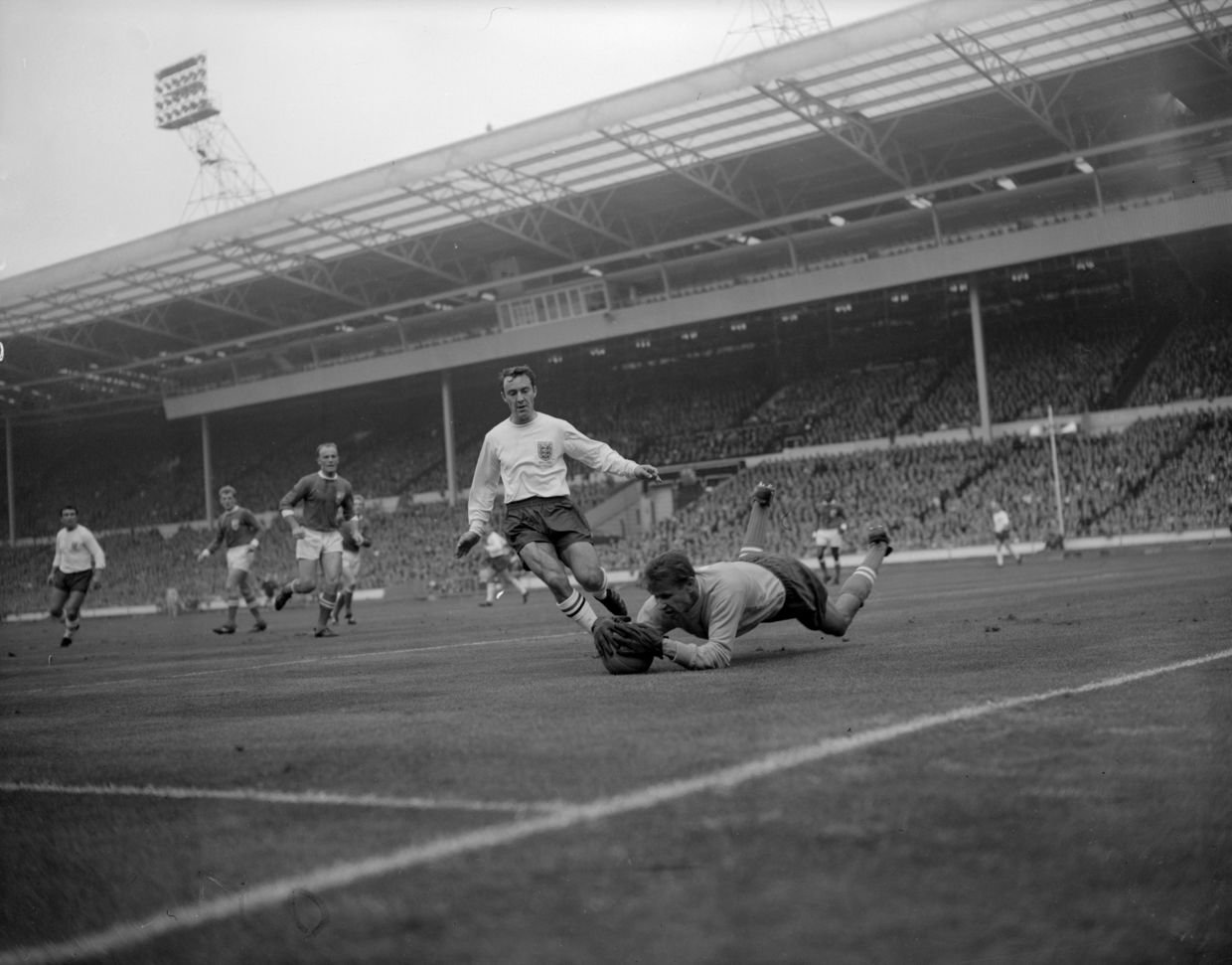
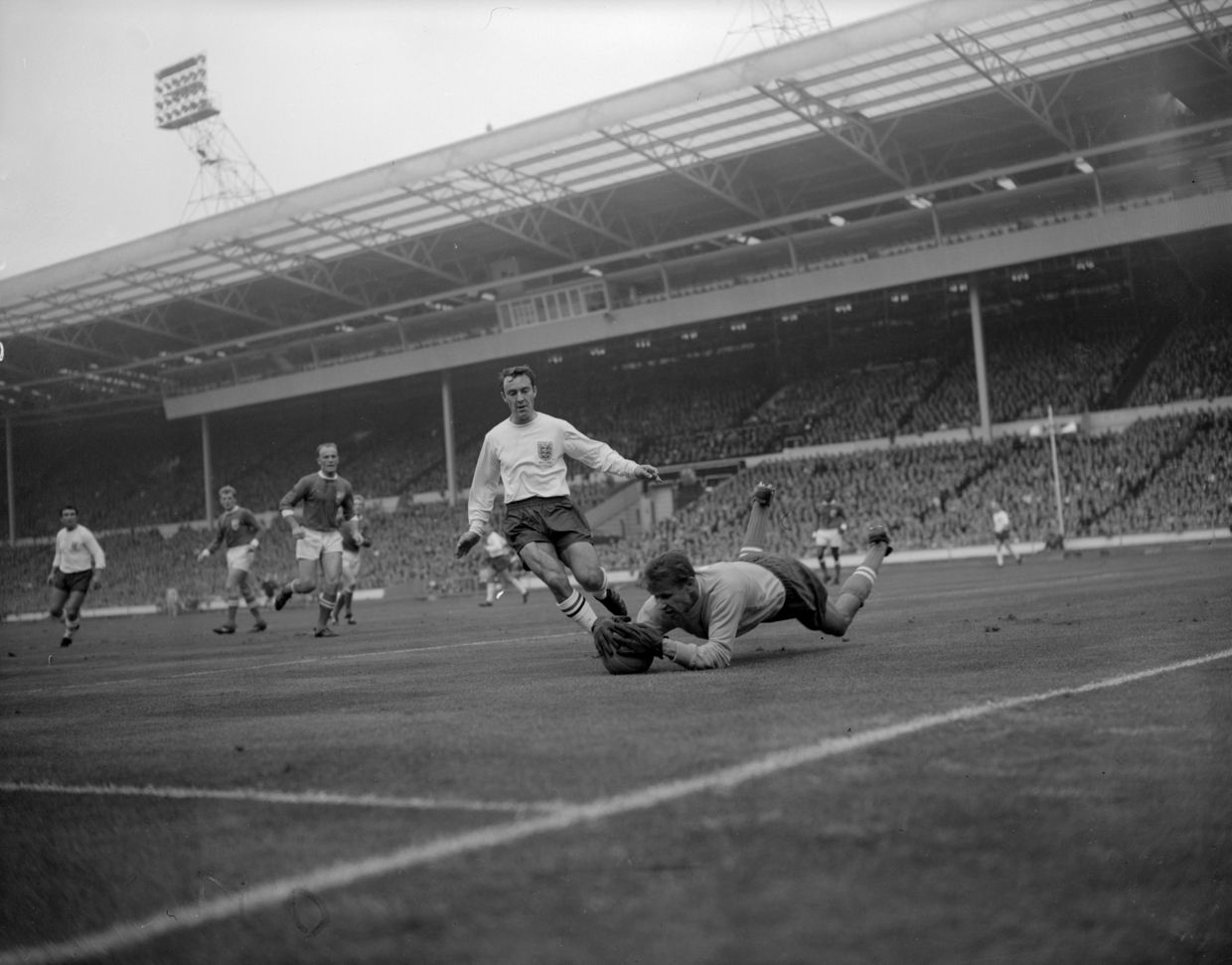
As all greats do, Yashin made a comeback for the ages by first leading Dynamo to another league title in 1963 and becoming the first and only goalkeeper ever to claim France Football’s Ballon d’Or for the best player in Europe. Yashin credited the spectacular saves he made during an England versus Rest of the World match at Wembley, where Pele was mysteriously absent, with prolonging his career and earning him the award months after the 2-1 loss in a game to mark 100 years of the English Football Association.
Yashin pounces on the ball during a match between England and a Rest of the World XI at Wembley in 1963.
Considering it to be his greatest achievement at the time, Yashin officially received his Ballon d’Or ahead of a European Championship quarterfinal second leg against Sweden in May 1964, in a match the USSR won 3-1 in front of around 100,000 fans in Moscow. The Soviets would go on to reach the final of the tournament in Spain, but were edged out 2-1 by the hosts in Madrid.
Yashin’s international journey continued at the 1966 World Cup in England, though he missed the first two matches due to injury. After returning to action, he led the Soviets to a best-ever fourth place finish following a semifinal loss to West Germany.
Hanging up his gloves
Completing two decades of loyal service to Dynamo and over a decade-and-a-half to his country, Yashin hung up his gloves in 1970 after traveling to his final World Cup in Mexico, where he acted as an assistant coach and third-choice back-up.
“I don’t know if one man has ever meant so much to one club,” said former Dynamo teammate Igor Chislenko, who along with Yashin was a rare breed as a one-club man.
But Yashin meant more to football than simply his allegiances to one club or country. At his testimonial in 1971, 103,000 fans reportedly turned out to see him play for Dynamo one last time against a European team captained by England and Manchester United legend Bobby Charlton.
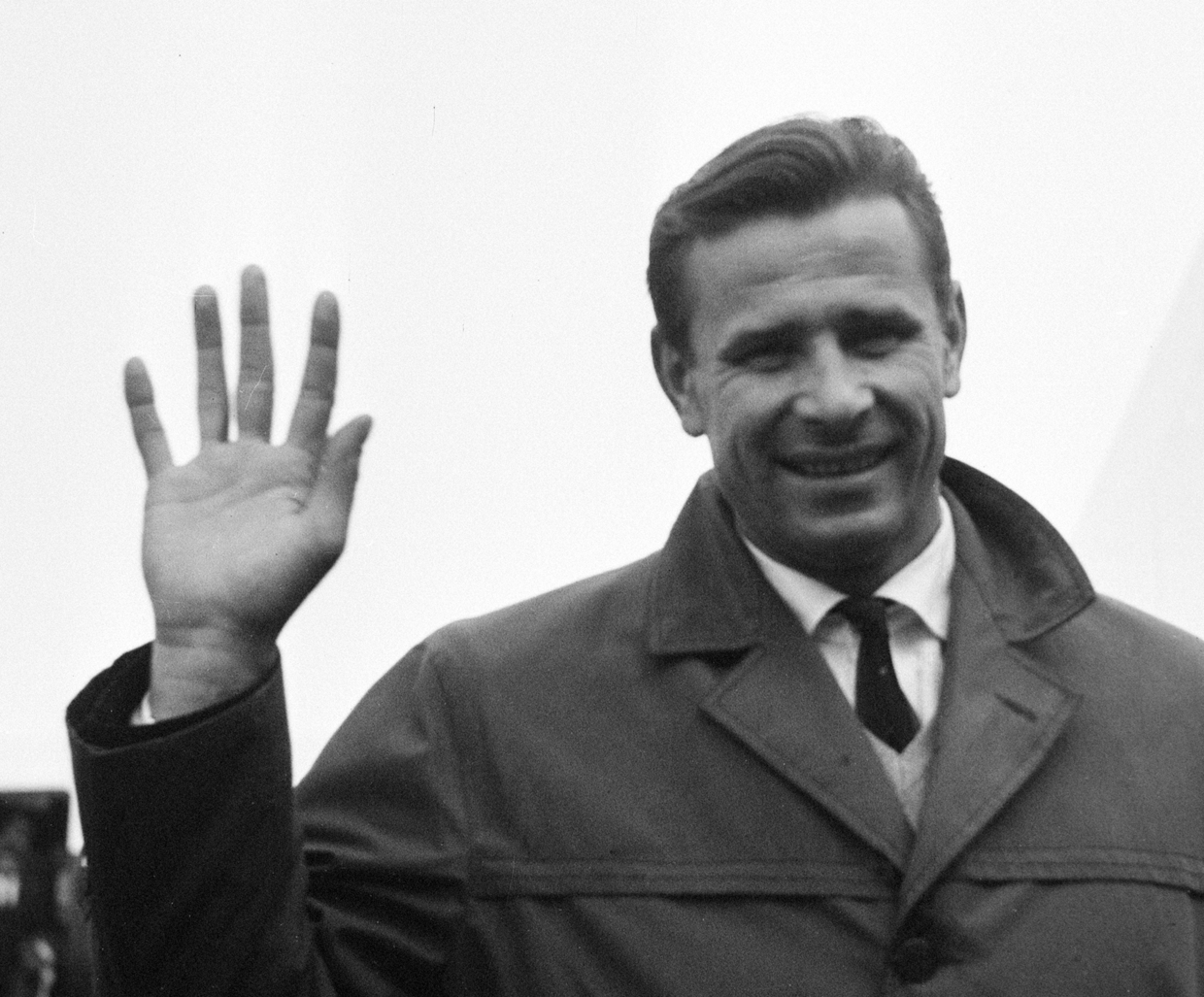
Yashin became a football icon in Russia and far beyond.
Pele and Eusebio were also present, and joined the throngs of respected figures that spoke with reverence of a man who bowed out after setting a recordof more than 150 penalty saves (“the joy of seeing Yuri Gagarin flying in space is only superseded by the joy of a good penalty save,” Yashin once said) and keeping around 275 clean sheets.
“Someone once said that a team with Pele started [a game] with a 1-0 lead. A team with Yashin started winning 2-0,” Pele explained.
“He made me as a footballer. When you’re able to score against the greatest goalkeeper in the history of world football, you remember it for your whole life. You realize that you can score against anyone,” said Portuguese great Eusebio.
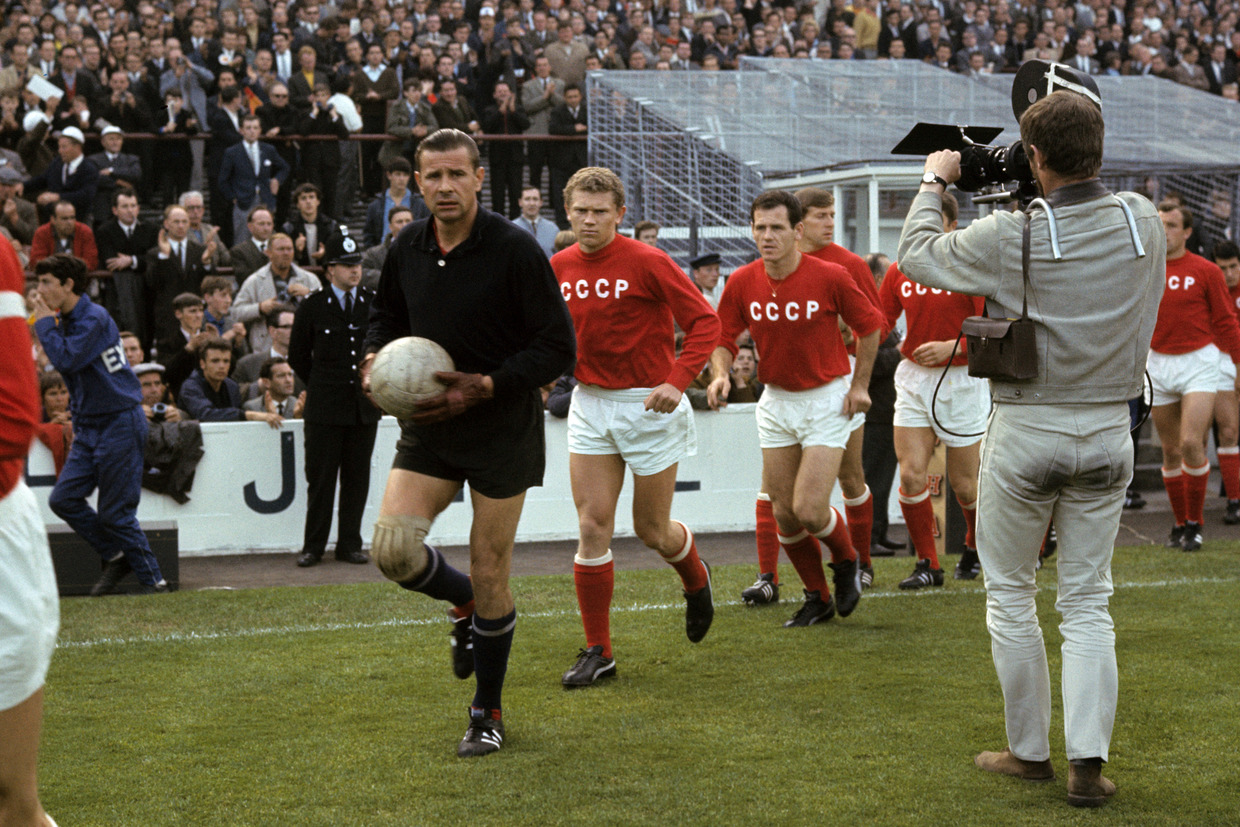
Yashin leads the USSR team out at the 1966 World Cup in England.
England’s 1966 World Cup winner Gordon Banks, regarded as one of the greatest shot-stoppers of all time, likewise hailed his Russian counterpart. “Lev Yashin was first-class, a real super goalkeeper. Everything he did was top-class. He was the model for goalkeeping for the next ten to 15 years,” Banks said.
“I visualized myself doing some of the things he was doing. Even though I was already playing in the top division, I used to learn from him.”
One of a kind
France Football agreed with Yashin’s undoubted influence, saying that he “revolutionized the role of goalkeeper like no other before him by always being ready to act as an extra defender,” and by “starting dangerous counter-attacks with his positioning and quick throws” after demonstrating his prowess through plucking crosses out of the sky.
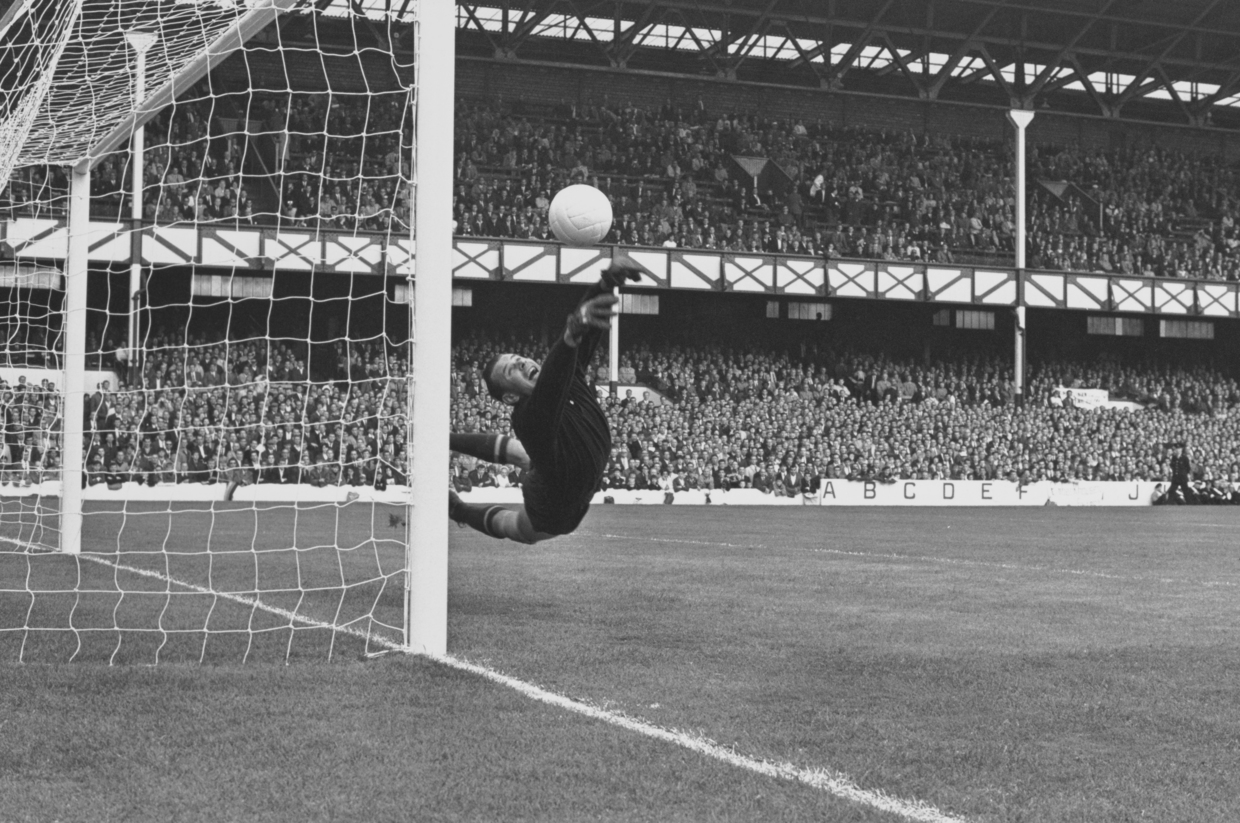
One of the original ‘sweepers-keepers’, he was also renowned for commanding from the back, bellowing instructions to teammates while often out of his area and taking part in build-ups. He could expertly read the game, anticipating the opposition striker’s movement and where his shot was destined, and his long arms earned him the nickname ‘the Black Spider’ while helping him reach top-corner shots. Despite his somewhat lanky 6ft 2in frame, Yashin was known as agile and athletic.
Yashin making a trademark acrobatic save at the 1966 World Cup.
The same France Football magazine which handed Yashin the Ballon d’Or in 1963 and named its goalkeeping award after him unsurprisingly picked the Russian in its all-time Dream Team in 2020. In November 2003, to mark UEFA’s jubilee, the Russian Football Union selected him as its most outstanding player of the last 50 years to compliment the Order of Lenin award he received in 1967 for his outstanding services to his country and people.
Yashin was a man of the people who fans always called by his first name, said his successor at Dynamo, Vladimir Pilguy. “To them, he was one of them like a brother or a friend. He used to walk home from matches with masses of fans – he’d let them carry his sports bag,” Pilguy added.
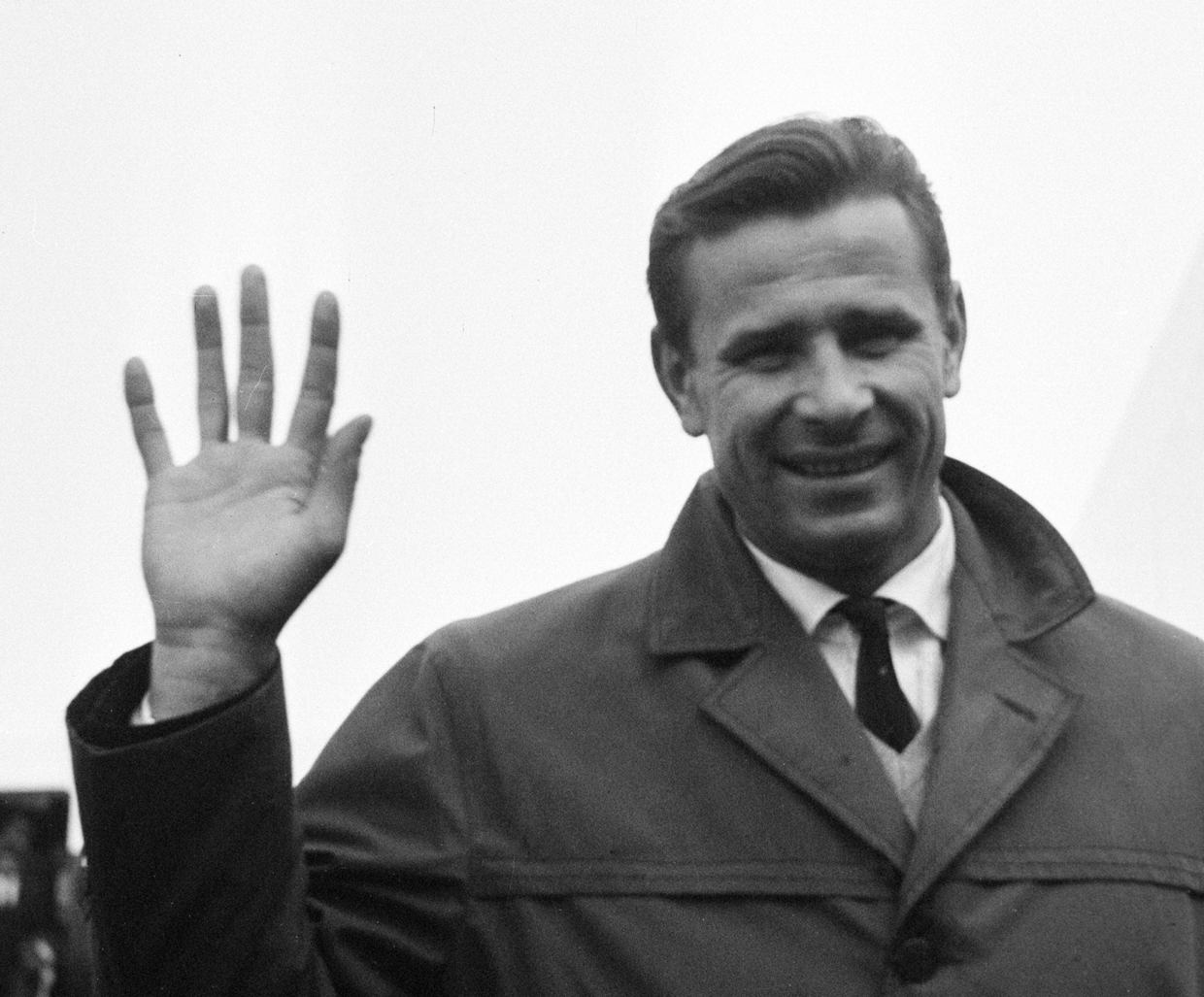
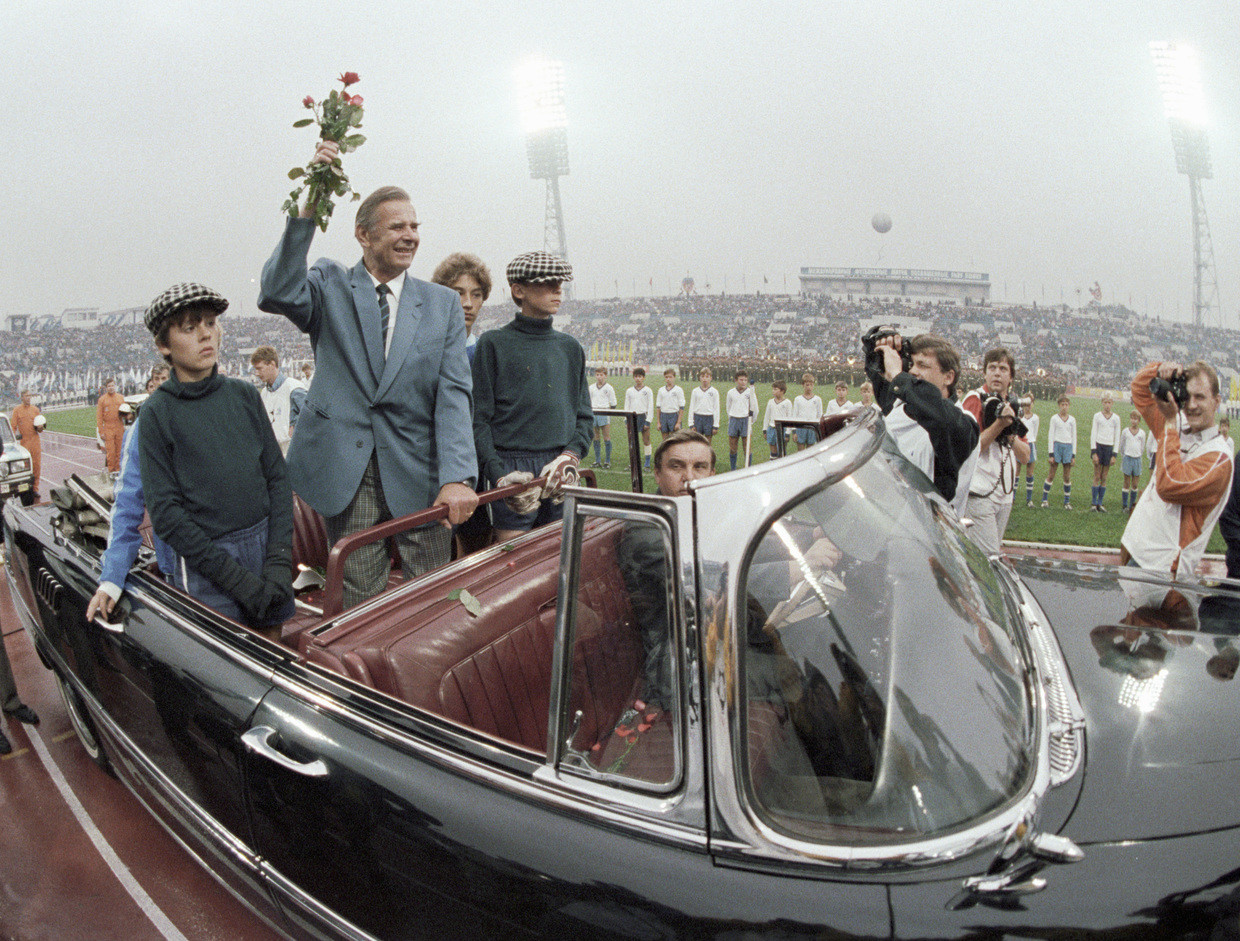
Yashin takes a tour of the Dynamo Stadium in 1989, at a match played in honor of his 60th birthday.
Yet contrary to belief, Yashin wasn’t always the model pro that people thought. “My secret? Before a game I would smoke a cigarette to calm my nerves and down a nice vodka to tone my muscles,” he once revealed.
Despite his achievements, Yashin reportedly fell out with Dynamo in his later years, and in particular with chairman Piotr Bogdanov who boasted political clout that allegedly made Yashin unable to leave the country due to routine refusals to grant his wife a visa.
Monuments to an icon
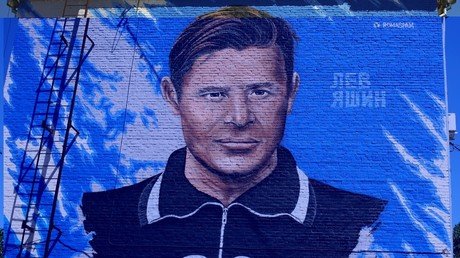
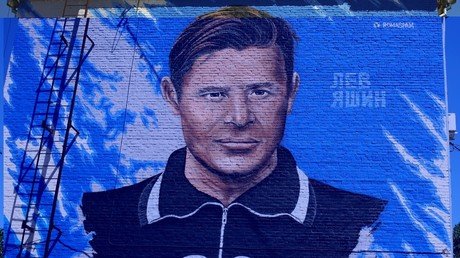
Nonetheless, Yashin remains a revered figure at the club. Its stadium is known as the VTB Arena for sponsorship purposes, but also bears Yashin’s name and his statue can be found outside it. Dynamo’s players wore a retro kit to honor him on would have been his 92nd birthday in 2021 and continued the tradition in 2022. In 2019, Yashin’s heroics were brought to a new generation in the form of a film based on his life, ‘Lev Yashin: Dream Goalkeeper’.
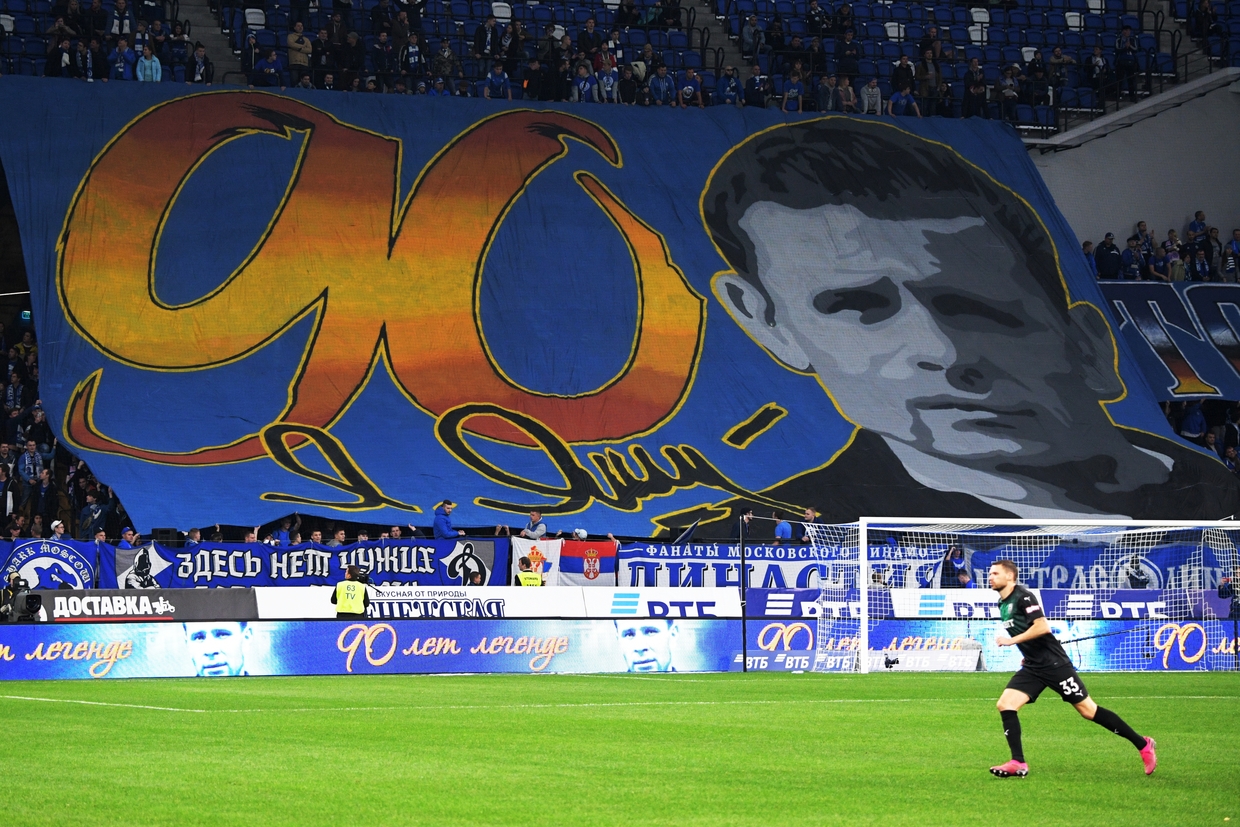
Dynamo Moscow fans unveil a banner in Yashin’s honor at a match in 2019.
Yashin, sadly, has not been around to witness many such tributes to his career. In 1986, a blood clot he suffered in his leg required it to be amputated, before he passed away in 1990 from stomach cancer complications at the age of 60, with his wife and two daughters by his side.
It was during a European Cup match between Dnipro and Benfica in the Meteor Stadium that Yashin’s death was announced, reportedly bringing tears to the eyes of Portuguese icon Eusebio, who traveled as part of the Lisbon club’s delegation.
The striker, who is himself known as an all-time great of the game, called Yashin “the peerless goalkeeper of the century.” Many would find that hard to dispute, not only due to Yashin’s team and personal accolades, but also the sheer influence he had in his position.
In the pantheon of football icons, the Russian would surely lay claim to the number one shirt.
Lev Yashin remains revered as a benchmark of goalkeeping excellence
The world of football was cast into mourning last December with the passing of Pele, one of the undisputed greats of the game. The death of the Brazilian legend led to tributes from far and wide, as fans reflected on the impact of a man who changed the face of his sport.
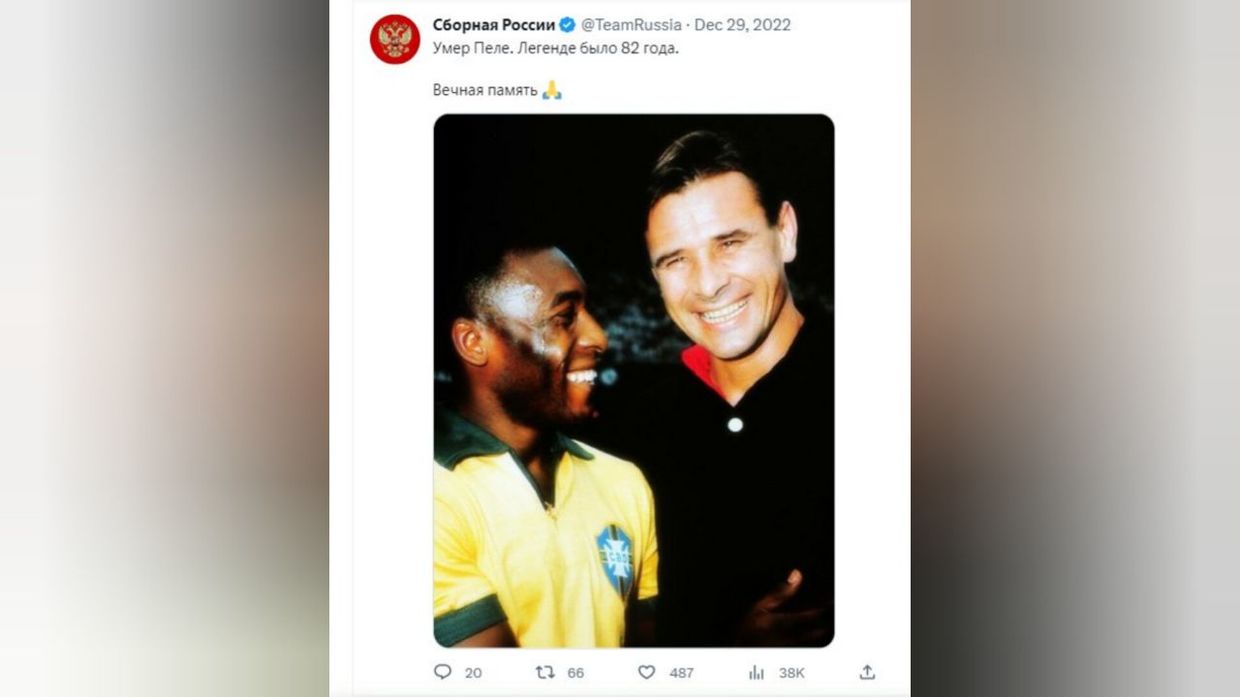
Russia was no exception, and the men’s national team paid its respects by sharing a poignant image of a smiling Pele. But alongside the legendary forward was another man who earned revered status as part of the same generation – the late, great Lev Yashin.
While Pele made his name scoring goals, Yashin forged his reputation by preventing them. A shot-stopper unlike any who had come before him, the Russian remains a benchmark for goalkeeping brilliance, more than 50 years after he played his last game and over three decades after his death.
If Pele would be selected to spearhead the attack in many football fans’ all-time fantasy eleven, the name widely picked in goal would surely be Yashin.
Nicknamed ‘The Black Spider’, ‘The Black Octopus’, and ‘The Black Panther’ because of his feats of acrobatics and the color of his on-pitch attire – topped off with a trademark flat cap – Yashin was a pioneer as an imposing Soviet shot-stopper who enjoyed a storied 20-year career.
Such was his renown, Yashin gives his name to the title annually bestowed on the world’s best goalkeeper by the respected France Football magazine.
Monday, March 20, marks 33 years since Yashin’s passing at the age of 60, and will be a day when many reflect on the remarkable life and times of Russia’s greatest football idol.
The Russian national team paid tribute to Pele alongside a legend of their own.
Born in Moscow on October 22, 1929, into a family of industrial workers, Yashin did not seem destined for footballing immortality. He was not yet a teenager when he started his own factory labors, helping the Russian effort during World War II. Yashin continued his factory work after the war, but suffered what was described as a “nervous breakdown” at age 18 as the experience took its toll.
“Was it depression? I don’t know,” Yashin wrote in his autobiography. “The fatigue accumulated over the years began to make itself felt and something in me suddenly broke. At that time I felt nothing except emptiness.”
Sport, however, was to be a vital outlet and would open up new opportunities for the young Yashin. Already a keen football and ice hockey player, he was advised by a teammate to volunteer for military service, something which he described as his “salvation” as he combined football with his new duties.
After being scouted in 1949, Yashin was invited to join the youth ranks of Dynamo Moscow – one of the Russian capital’s powerhouse football clubs, which had caused a stir with a groundbreaking tour of the UK in 1945 during which the team impressively went unbeaten in four games against supposedly superior home opposition.
Yashin, however, was not to enjoy an auspicious start when he made his debut for Dynamo in 1950, letting in a soft goal that partly contributed to him only playing two league games that year. Also in his way was Alexei ‘Tiger’ Khomich, a revered figure who would keep Yashin out of the team during the early part of his career.
Rather than seek a pathway to regular first-team football elsewhere, Yashin became hellbent on making it to the top at Dynamo. He even played as a goaltender for Dynamo’s ice hockey team, winning the Soviet Cup in 1953, showing his versatility as an all-round athlete.
“I ran, did the high jump, shot put, discus, took fencing lessons, had a go at boxing, diving, wrestling, skating, tried basketball, played ice hockey, water polo, and football. I spent my winters on skis and skates. I’m not sure what I was best at,” Yashin later recalled.
Hitting the big time
Biding his time with his football career, Yashin finally managed to oust Khomich from the Dynamo starting eleven when the latter was injured in 1953. Yashin was to make the position his own, embarking on a glittering era for Dynamo which would ultimately yield five Soviet league titles – four of which came between 1954-59 – and three Soviet Cups.
Yashin’s initial success at Dynamo meant the Soviet national team soon came calling. He received his first international call-up in 1954 in a 7-0 win against Sweden, with the next four years truly providing his breakthrough to the big time with glory at Dynamo and gold with the USSR at the 1956 Olympics.
In 1958, an even bigger football audience took note of Yashin at the World Cup in Sweden. His ‘sweepers-keeper’ approach – since popularized again by the likes of Manuel Neuer, Alisson, and Marc-Andre ter Stegen – came to the forefront, as did his ability to read the game.
Yashin crossed paths with a 17-year-old Pele and eventual champions Brazil in the group stage. Though the Selecao won 2-0, Yashin limited the South Americans’ account from growing through a string of top saves.
The USSR crashed out in the quarterfinals against the hosts, but Yashin was voted goalkeeper of the tournament, with journalists worldwide hailing him as the best in the game.
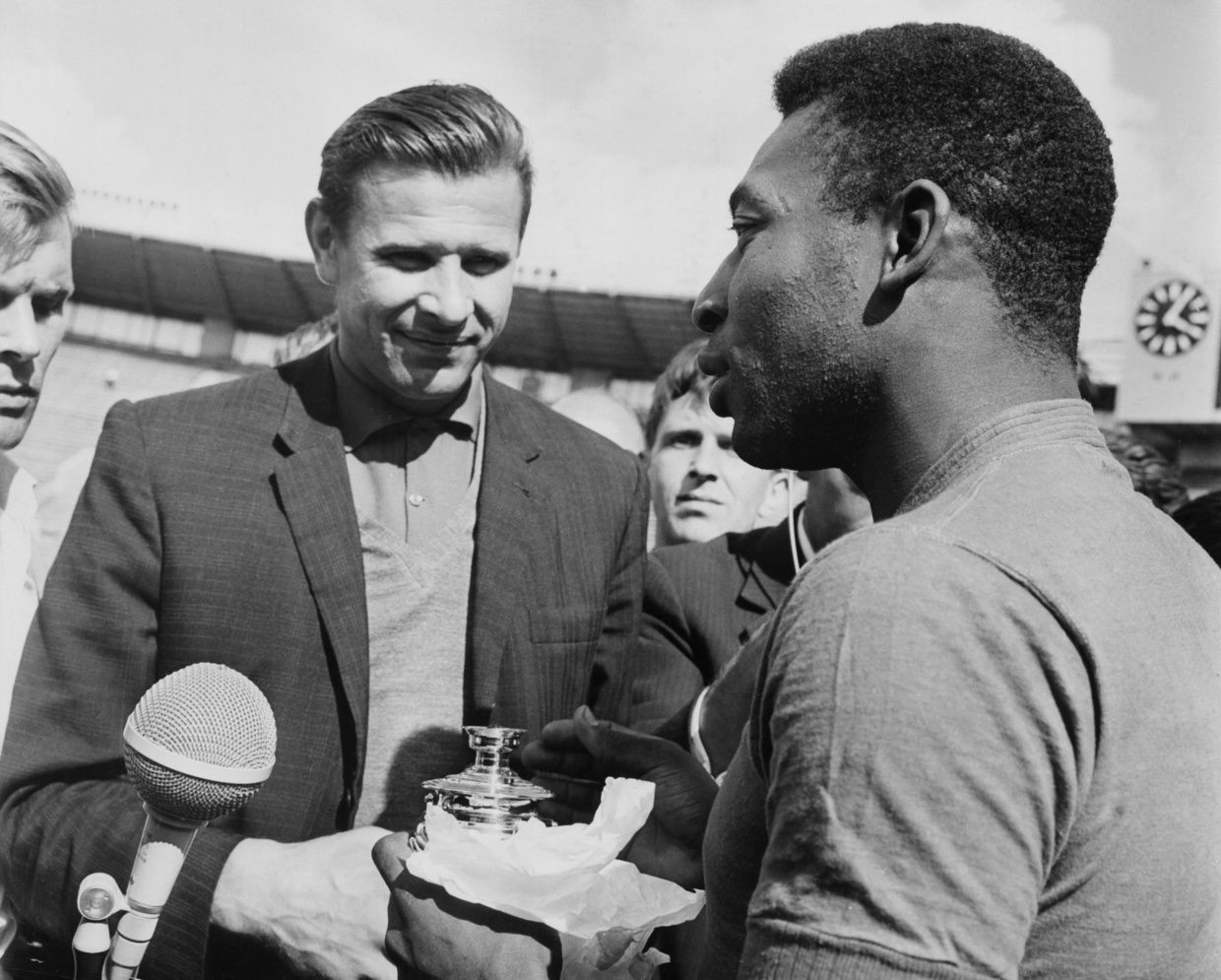
Yashin pictured with Brazilian great Pele in 1965.
Two years later, he made up for heartache in Scandinavia by leading the Soviets to the title at the inaugural European Championships in France. The tournament in 1960 was then known as the European Nations Cup, and Yashin kept a clean sheet in the semifinal as the Soviet Union beat Czechoslovakia 3-0.
In the final at the Parc des Princes against Yugoslavia, Yashin saved two free-kicks before being beaten by a deflected shot that connected with his captain Igor Netto. In extra time, Yashin made vital interventions as Yugoslavia tried to equalize Viktor Ponedelnik’s 113th-minute winner.
The celebrations were relatively tame in Paris, with runner-up Dragan Sekularac claiming that the “crowds in France wanted western European glamor, not mysterious teams from the other side of Europe” as he commented on the sparse attendance at a reception held at the Eiffel Tower. But upon their return to Moscow, the Soviet team was celebrated like heroes by over 100,000 of their compatriots at a victory parade held in the Central Lenin Stadium (now known as Luzhniki).
Bouncing back
Yashin’s heroics in Paris were the glory before a fall. At the 1962 World Cup, his errors against Colombia resulted in the game ending 4-4 before the highly fancied Soviets were eliminated at the quarterfinal stage once more by falling to hosts Chile 2-1.
“I was in disbelief that I’d scored past the great Lev Yashin,” Eladio Rojas, who embraced the ‘keeper instead of his teammates, said years later. “I still am. I was overcome with excitement that all I wanted to do was hug him. Scoring past Yashin was like a trophy.”
Yashin was made the scapegoat for the exit in Arica and was branded a “fading force” by L’Equipe. He would likely have been mentally tortured by Rojas and his blunders against Colombia, once posing: “What kind of a goalkeeper is one who is not tormented by a goal he has conceded?”
“He must be tormented! And if he is calm, that means the end. No matter what he had in the past, he has no future,” added Yashin, of whom it was later revealed had suffered a concussion in the match against Chile.
As all greats do, Yashin made a comeback for the ages by first leading Dynamo to another league title in 1963 and becoming the first and only goalkeeper ever to claim France Football’s Ballon d’Or for the best player in Europe. Yashin credited the spectacular saves he made during an England versus Rest of the World match at Wembley, where Pele was mysteriously absent, with prolonging his career and earning him the award months after the 2-1 loss in a game to mark 100 years of the English Football Association.
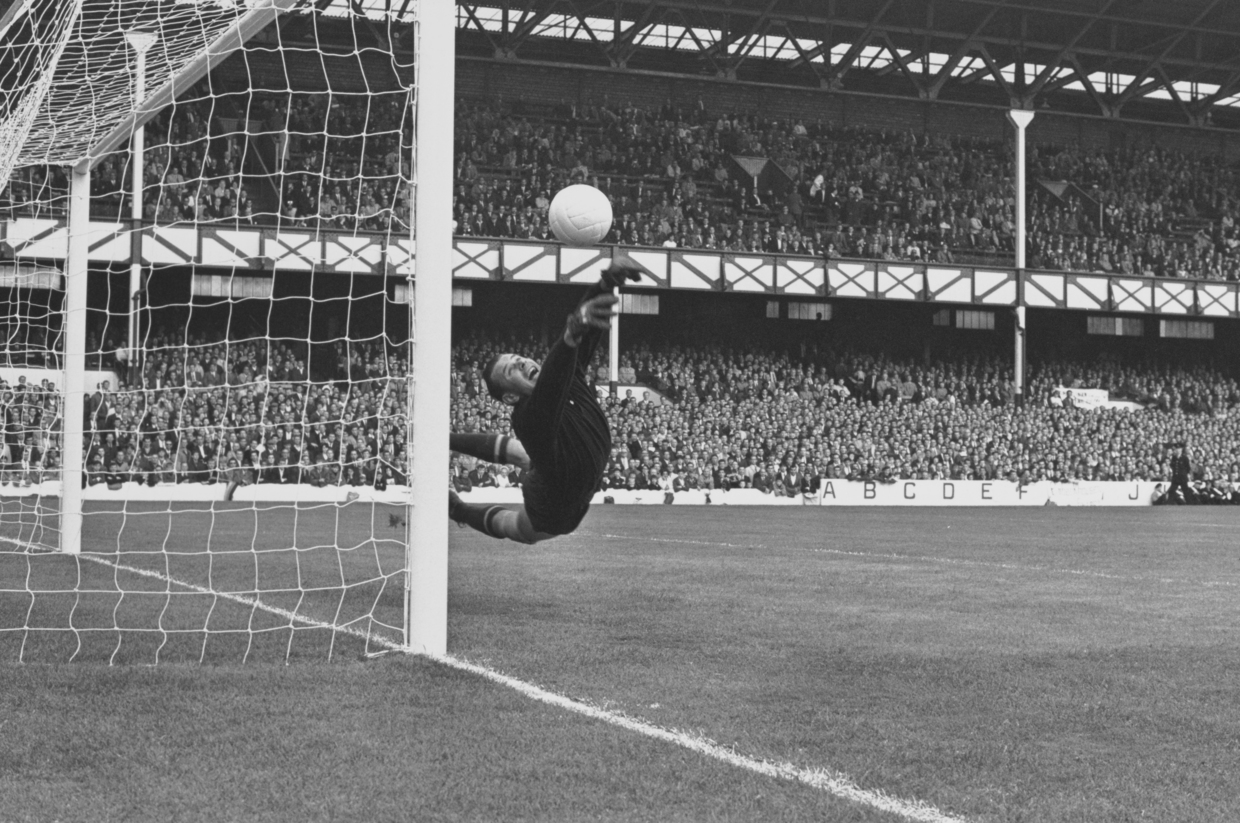
Yashin pounces on the ball during a match between England and a Rest of the World XI at Wembley in 1963.
Considering it to be his greatest achievement at the time, Yashin officially received his Ballon d’Or ahead of a European Championship quarterfinal second leg against Sweden in May 1964, in a match the USSR won 3-1 in front of around 100,000 fans in Moscow. The Soviets would go on to reach the final of the tournament in Spain, but were edged out 2-1 by the hosts in Madrid.
Yashin’s international journey continued at the 1966 World Cup in England, though he missed the first two matches due to injury. After returning to action, he led the Soviets to a best-ever fourth place finish following a semifinal loss to West Germany.
Hanging up his gloves
Completing two decades of loyal service to Dynamo and over a decade-and-a-half to his country, Yashin hung up his gloves in 1970 after traveling to his final World Cup in Mexico, where he acted as an assistant coach and third-choice back-up.
“I don’t know if one man has ever meant so much to one club,” said former Dynamo teammate Igor Chislenko, who along with Yashin was a rare breed as a one-club man.
But Yashin meant more to football than simply his allegiances to one club or country. At his testimonial in 1971, 103,000 fans reportedly turned out to see him play for Dynamo one last time against a European team captained by England and Manchester United legend Bobby Charlton.
Yashin became a football icon in Russia and far beyond.
Pele and Eusebio were also present, and joined the throngs of respected figures that spoke with reverence of a man who bowed out after setting a recordof more than 150 penalty saves (“the joy of seeing Yuri Gagarin flying in space is only superseded by the joy of a good penalty save,” Yashin once said) and keeping around 275 clean sheets.
“Someone once said that a team with Pele started [a game] with a 1-0 lead. A team with Yashin started winning 2-0,” Pele explained.
“He made me as a footballer. When you’re able to score against the greatest goalkeeper in the history of world football, you remember it for your whole life. You realize that you can score against anyone,” said Portuguese great Eusebio.
Yashin leads the USSR team out at the 1966 World Cup in England.
England’s 1966 World Cup winner Gordon Banks, regarded as one of the greatest shot-stoppers of all time, likewise hailed his Russian counterpart. “Lev Yashin was first-class, a real super goalkeeper. Everything he did was top-class. He was the model for goalkeeping for the next ten to 15 years,” Banks said.
“I visualized myself doing some of the things he was doing. Even though I was already playing in the top division, I used to learn from him.”
One of a kind
France Football agreed with Yashin’s undoubted influence, saying that he “revolutionized the role of goalkeeper like no other before him by always being ready to act as an extra defender,” and by “starting dangerous counter-attacks with his positioning and quick throws” after demonstrating his prowess through plucking crosses out of the sky.
One of the original ‘sweepers-keepers’, he was also renowned for commanding from the back, bellowing instructions to teammates while often out of his area and taking part in build-ups. He could expertly read the game, anticipating the opposition striker’s movement and where his shot was destined, and his long arms earned him the nickname ‘the Black Spider’ while helping him reach top-corner shots. Despite his somewhat lanky 6ft 2in frame, Yashin was known as agile and athletic.
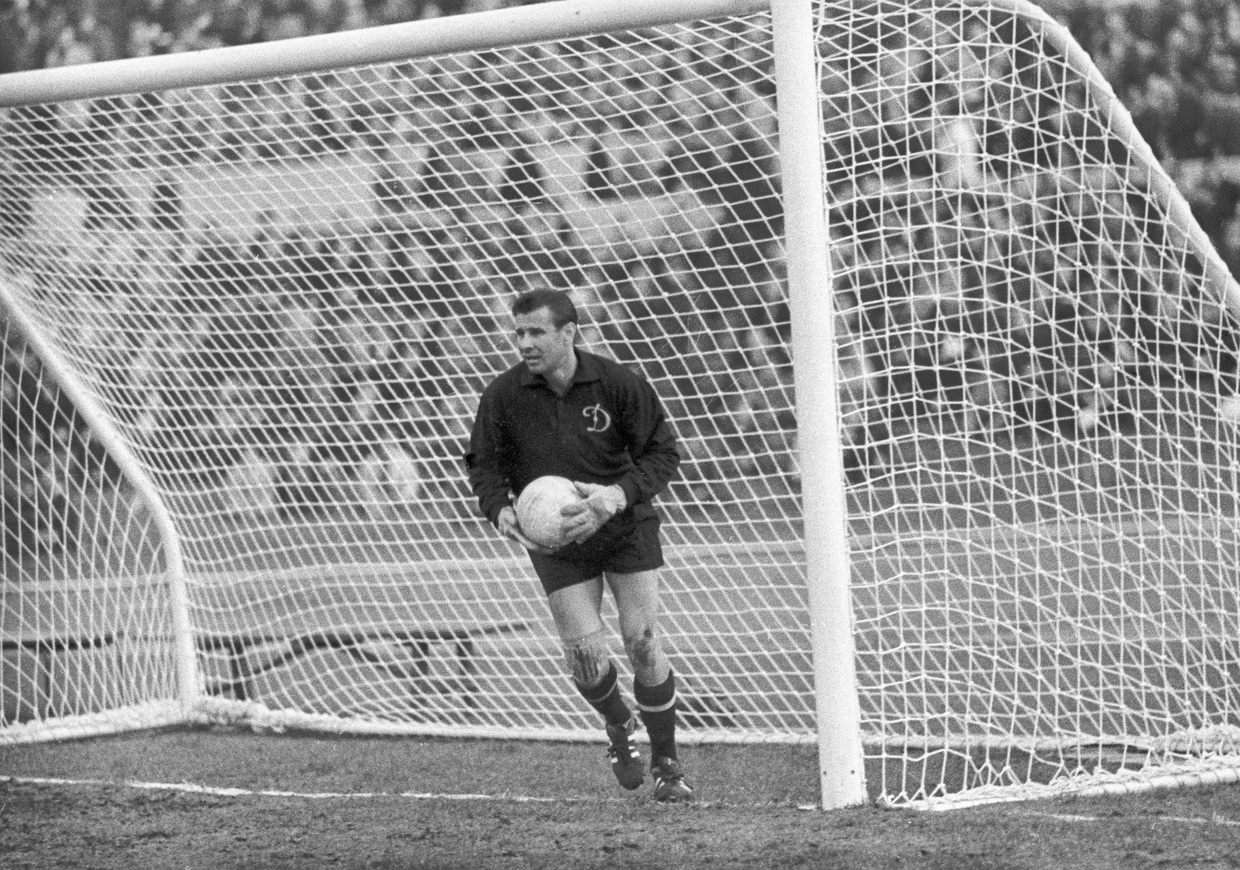
Yashin making a trademark acrobatic save at the 1966 World Cup.
The same France Football magazine which handed Yashin the Ballon d’Or in 1963 and named its goalkeeping award after him unsurprisingly picked the Russian in its all-time Dream Team in 2020. In November 2003, to mark UEFA’s jubilee, the Russian Football Union selected him as its most outstanding player of the last 50 years to compliment the Order of Lenin award he received in 1967 for his outstanding services to his country and people.
Yashin was a man of the people who fans always called by his first name, said his successor at Dynamo, Vladimir Pilguy. “To them, he was one of them like a brother or a friend. He used to walk home from matches with masses of fans – he’d let them carry his sports bag,” Pilguy added.
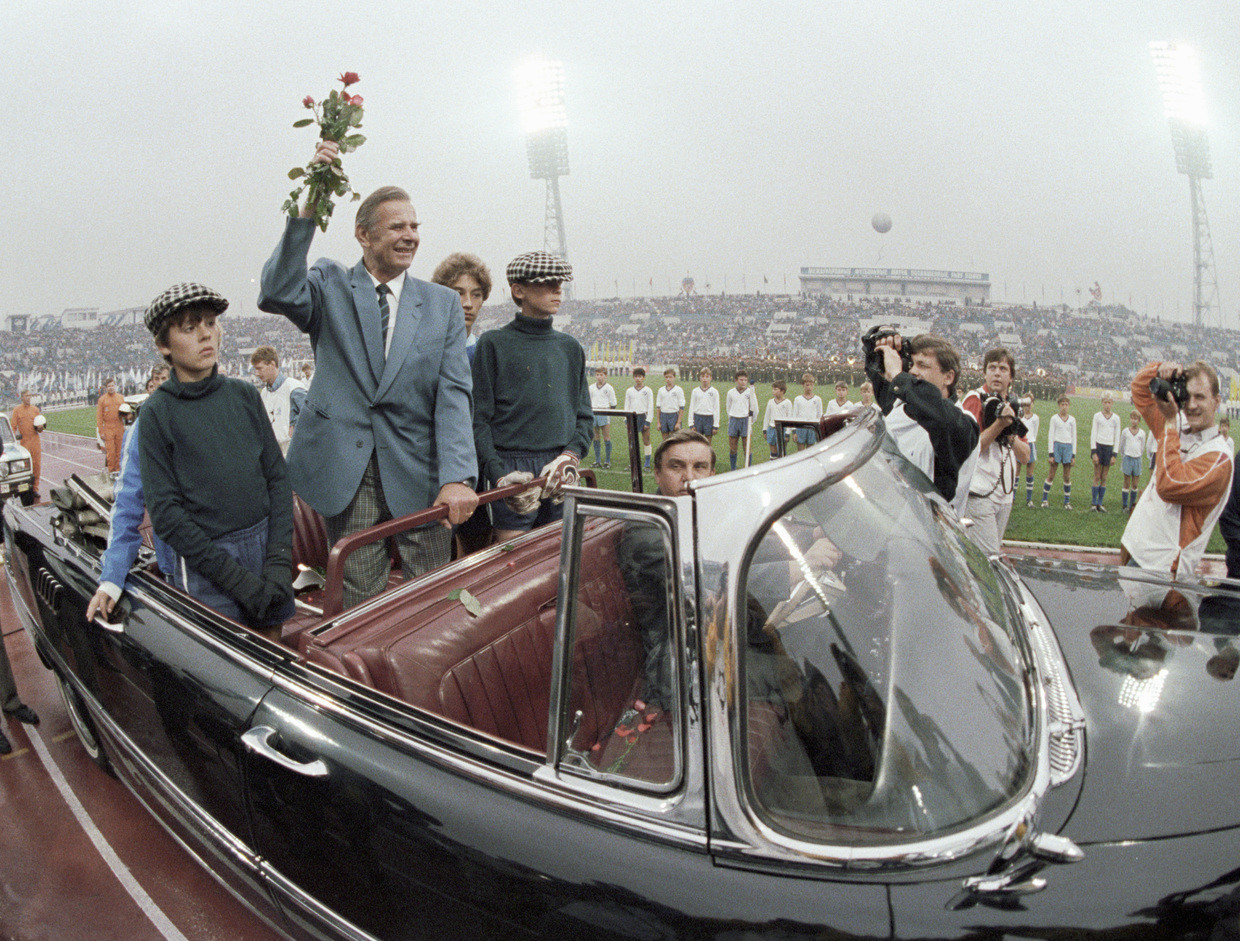
Yashin takes a tour of the Dynamo Stadium in 1989, at a match played in honor of his 60th birthday.
Yet contrary to belief, Yashin wasn’t always the model pro that people thought. “My secret? Before a game I would smoke a cigarette to calm my nerves and down a nice vodka to tone my muscles,” he once revealed.
Despite his achievements, Yashin reportedly fell out with Dynamo in his later years, and in particular with chairman Piotr Bogdanov who boasted political clout that allegedly made Yashin unable to leave the country due to routine refusals to grant his wife a visa.
Monuments to an icon
Nonetheless, Yashin remains a revered figure at the club. Its stadium is known as the VTB Arena for sponsorship purposes, but also bears Yashin’s name and his statue can be found outside it. Dynamo’s players wore a retro kit to honor him on would have been his 92nd birthday in 2021 and continued the tradition in 2022. In 2019, Yashin’s heroics were brought to a new generation in the form of a film based on his life, ‘Lev Yashin: Dream Goalkeeper’.
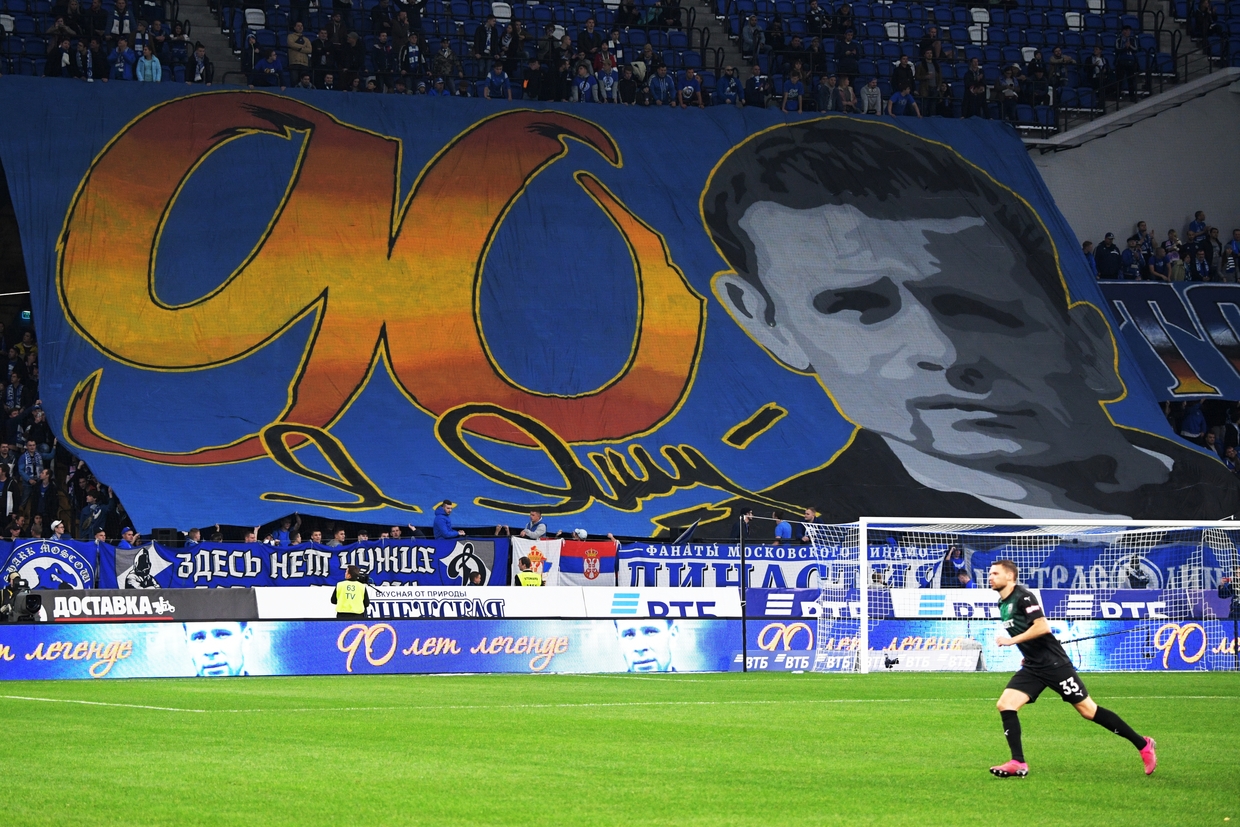
Dynamo Moscow fans unveil a banner in Yashin’s honor at a match in 2019.
Yashin, sadly, has not been around to witness many such tributes to his career. In 1986, a blood clot he suffered in his leg required it to be amputated, before he passed away in 1990 from stomach cancer complications at the age of 60, with his wife and two daughters by his side.
It was during a European Cup match between Dnipro and Benfica in the Meteor Stadium that Yashin’s death was announced, reportedly bringing tears to the eyes of Portuguese icon Eusebio, who traveled as part of the Lisbon club’s delegation.
The striker, who is himself known as an all-time great of the game, called Yashin “the peerless goalkeeper of the century.” Many would find that hard to dispute, not only due to Yashin’s team and personal accolades, but also the sheer influence he had in his position.
In the pantheon of football icons, the Russian would surely lay claim to the number one shirt.
The world number seven also saw off Novak Djokovic in the semifinals on his way to the title in Dubai
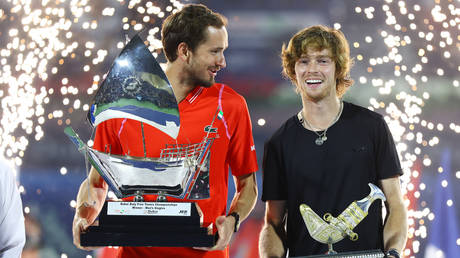
Russian tennis star Daniil Medvedev continued his resurgent form with victory in the final of the ATP tour event in Dubai, where he defeated compatriot Andrey Rublev in straight sets on Saturday.
Medvedev triumphed 6-2 6-2 over world number six Rublev, who was defending champion at the tournament.
Medvedev, 27, had overcome world number one Novak Djokovic at the semifinal stage in Dubai, ending the Serb’s 20-match winning streak.
The title in Dubai was an 18th at ATP tour level for Medvedev, who extended his unbeaten run to 14 matches. The Moscow-born star has won the last three tournaments he has entered as he aims to climb back up the ATP rankings, having enjoyed 16 weeks as world number one in 2022.
“It is amazing because at the start of the year, it was not perfect. In tennis when you don’t win matches you have doubts. Now it just feels better,” Medvedev said after his win over Rublev. “I was really happy with these three weeks and I am looking forward to the next ones.”
Second seed Rublev had reached the final in Dubai after beating Germany’s Alexander Zverev in two sets in the previous round, sealing the win in a dramatic tie-break. However, the 25-year-old came up against an inspired Medvedev in Saturday’s final, as Rublev fell short of clinching what would have been a 13th ATP title of his career.
The Dubai Duty Free Tennis Championships became the first ATP event to see an all-Russian final since 2008, when Igor Kuritsyn defeated Marat Safin during the Kremlin Cup.
The world number seven also saw off Novak Djokovic in the semifinals on his way to the title in Dubai
Russian tennis star Daniil Medvedev continued his resurgent form with victory in the final of the ATP tour event in Dubai, where he defeated compatriot Andrey Rublev in straight sets on Saturday.
Medvedev triumphed 6-2 6-2 over world number six Rublev, who was defending champion at the tournament.
Medvedev, 27, had overcome world number one Novak Djokovic at the semifinal stage in Dubai, ending the Serb’s 20-match winning streak.
The title in Dubai was an 18th at ATP tour level for Medvedev, who extended his unbeaten run to 14 matches. The Moscow-born star has won the last three tournaments he has entered as he aims to climb back up the ATP rankings, having enjoyed 16 weeks as world number one in 2022.
“It is amazing because at the start of the year, it was not perfect. In tennis when you don’t win matches you have doubts. Now it just feels better,” Medvedev said after his win over Rublev. “I was really happy with these three weeks and I am looking forward to the next ones.”
Second seed Rublev had reached the final in Dubai after beating Germany’s Alexander Zverev in two sets in the previous round, sealing the win in a dramatic tie-break. However, the 25-year-old came up against an inspired Medvedev in Saturday’s final, as Rublev fell short of clinching what would have been a 13th ATP title of his career.
The Dubai Duty Free Tennis Championships became the first ATP event to see an all-Russian final since 2008, when Igor Kuritsyn defeated Marat Safin during the Kremlin Cup.
Russia will become part of the Asian Chess Federation if accepted, the international body has ruled
Russia is free to leave the European Chess Union (ECU) and join its Asian counterpart, should the move be approved by the latter organization, it was announced by international governing body FIDE on Wednesday. The decision followed a request by the Chess Federation of Russia (CFR).
The Asian Chess Federation (ACF) is now expected to decide on Russia’s request at its General Assembly, which will be held in Abu Dhabi on February 28. A Russian delegation at the gathering will be led by the head of the CFR, Andrey Filatov, national media reported.
If the ACF does accept Russia, FIDE explained that the country would automatically withdraw from the ECU, adding that a chess federation cannot be part of two continental bodies at the same time. FIDE also decided that Russia will be redesignated as part of the Asian region starting from May 1, in the event that it is approved for membership by the ACF.
FIDE determined that Russian chess players who wish to join other federations in light of the potential changes can do so immediately upon request and without incurring any fees. Players can later return to the CFR under the same conditions, it added.
Back in March 2022, FIDE allowed chess players from Russia and Belarus to continue to participate at international tournaments, but only under neutral status.
The ACF currently features 54 national federations, including prominent chess powers such as China, India, and Uzbekistan.
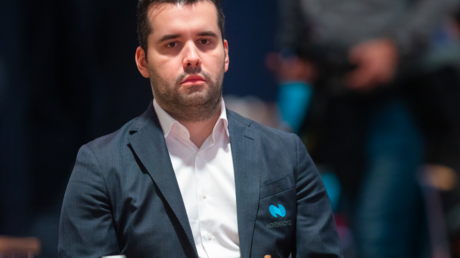
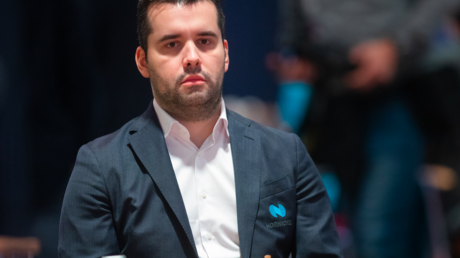
FIDE’s decision comes ahead of a world title contest between Russian grandmaster Ian Nepomniachtchi and Chinese rival Ding Liren. Nepomniachtchi ranks third in the world, while his opponent lies second. They will face off in a series of games in Astana from April 7 to May 1.
A new world champion will be crowned following the withdrawal of reigning five-time champion Magnus Carlsen of Norway, who announced last year that he would not be defending his title in 2023.
Russia will become part of the Asian Chess Federation if accepted, the international body has ruled
Russia is free to leave the European Chess Union (ECU) and join its Asian counterpart, should the move be approved by the latter organization, it was announced by international governing body FIDE on Wednesday. The decision followed a request by the Chess Federation of Russia (CFR).
The Asian Chess Federation (ACF) is now expected to decide on Russia’s request at its General Assembly, which will be held in Abu Dhabi on February 28. A Russian delegation at the gathering will be led by the head of the CFR, Andrey Filatov, national media reported.
If the ACF does accept Russia, FIDE explained that the country would automatically withdraw from the ECU, adding that a chess federation cannot be part of two continental bodies at the same time. FIDE also decided that Russia will be redesignated as part of the Asian region starting from May 1, in the event that it is approved for membership by the ACF.
FIDE determined that Russian chess players who wish to join other federations in light of the potential changes can do so immediately upon request and without incurring any fees. Players can later return to the CFR under the same conditions, it added.
Back in March 2022, FIDE allowed chess players from Russia and Belarus to continue to participate at international tournaments, but only under neutral status.
The ACF currently features 54 national federations, including prominent chess powers such as China, India, and Uzbekistan.
FIDE’s decision comes ahead of a world title contest between Russian grandmaster Ian Nepomniachtchi and Chinese rival Ding Liren. Nepomniachtchi ranks third in the world, while his opponent lies second. They will face off in a series of games in Astana from April 7 to May 1.
A new world champion will be crowned following the withdrawal of reigning five-time champion Magnus Carlsen of Norway, who announced last year that he would not be defending his title in 2023.
Christian Atsu had been missing since the earthquakes on February 6
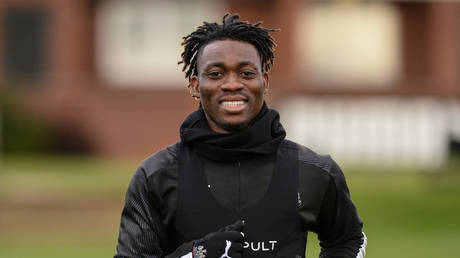
The remains of ex-Newcastle and Chelsea footballer Christian Atsu have been identified in the rubble of a block of high-rise apartments in the Turkish province of Hatay, according to his agent. Atsu had been missing since massive earthquakes rocked Türkiye and Syria on February 6, killing more than 40,000 people.
Atsu, 31, who joined Premier League giants Chelsea in 2013 during Roman Abramovich’s ownership of the club, was confirmed as deceased by his agent on Saturday.
“It is with the heaviest of hearts that I have to announce to all well-wishers that sadly Christian Atsu’s body was recovered this morning,” Nana Sechere tweeted.
“My deepest condolences go to his family and loved ones. I would like to take this opportunity to thank everyone for their prayers and support.”
The funeral of our football player Christian Atsu, who lost his life under the rubble ( debris), is on his way to be sent to his hometown, Ghana. We will not forget you, Atsu. Peace be upon you, beautiful person. There are no words to describe our sadness. REST in PEACE ATSU
Everyone at Chelsea Football Club is devastated to learn of the tragic passing of our former player, Christian Atsu. Our thoughts go out to his family and friends.
The footballer was initially understood to have been rescued a day after the earthquakes, but those reports turned out to be false. His body was found on Saturday at Ronesans Residence, a 249-apartment block in the city of Antakya in southern Türkiye. The building had supposedly been “earthquake-proof.”
The developer of the residential complex, Mehmet Yasar Coskun, was arrested at Istanbul Airport as he attempted to board a flight to Montenegro last Friday, according to the Anadolu news agency.
“There are no words to describe our sadness,” tweeted Turkish club Hatayspor, which Atsu joined last September. “We will not forget you, Atsu. Peace be upon you, beautiful person.”
Newcastle United, a club for which Atsu played 121 times, wrote on social media that it was “profoundly saddened” by the news of his death, while Chelsea said it was “devastated.”
Atsu, who played 65 times for Ghana and was named the player of the tournament at the 2015 Africa Cup of Nations, scored his first goal for Hatayspor in a Super Lig match on the eve of the earthquakes on February 5.
Christian Atsu had been missing since the earthquakes on February 6
The remains of ex-Newcastle and Chelsea footballer Christian Atsu have been identified in the rubble of a block of high-rise apartments in the Turkish province of Hatay, according to his agent. Atsu had been missing since massive earthquakes rocked Türkiye and Syria on February 6, killing more than 40,000 people.
Atsu, 31, who joined Premier League giants Chelsea in 2013 during Roman Abramovich’s ownership of the club, was confirmed as deceased by his agent on Saturday.
“It is with the heaviest of hearts that I have to announce to all well-wishers that sadly Christian Atsu’s body was recovered this morning,” Nana Sechere tweeted.
“My deepest condolences go to his family and loved ones. I would like to take this opportunity to thank everyone for their prayers and support.”
The funeral of our football player Christian Atsu, who lost his life under the rubble ( debris), is on his way to be sent to his hometown, Ghana. We will not forget you, Atsu. Peace be upon you, beautiful person. There are no words to describe our sadness. REST in PEACE ATSU
Everyone at Chelsea Football Club is devastated to learn of the tragic passing of our former player, Christian Atsu. Our thoughts go out to his family and friends.
The footballer was initially understood to have been rescued a day after the earthquakes, but those reports turned out to be false. His body was found on Saturday at Ronesans Residence, a 249-apartment block in the city of Antakya in southern Türkiye. The building had supposedly been “earthquake-proof.”
The developer of the residential complex, Mehmet Yasar Coskun, was arrested at Istanbul Airport as he attempted to board a flight to Montenegro last Friday, according to the Anadolu news agency.
“There are no words to describe our sadness,” tweeted Turkish club Hatayspor, which Atsu joined last September. “We will not forget you, Atsu. Peace be upon you, beautiful person.”
Newcastle United, a club for which Atsu played 121 times, wrote on social media that it was “profoundly saddened” by the news of his death, while Chelsea said it was “devastated.”
Atsu, who played 65 times for Ghana and was named the player of the tournament at the 2015 Africa Cup of Nations, scored his first goal for Hatayspor in a Super Lig match on the eve of the earthquakes on February 5.
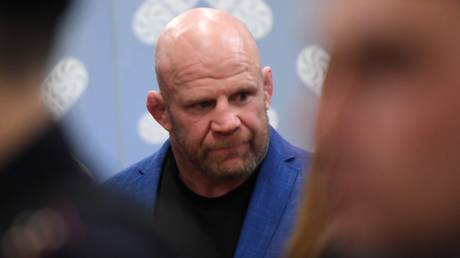
Jeff Monson became a Russian citizen in 2018 and was elected to political office in Moscow Region
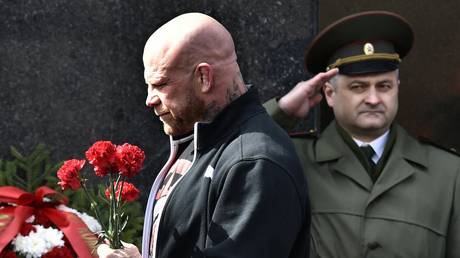
American-born mixed martial arts star Jeff Monson plans to renounce his US citizenship due to his disagreement with Washington’s foreign policy, he told TASS on Thursday.
“I disagree with US policies because they interfere in the internal affairs of other countries and people suffer because of this,” said the legendary fighter, who was granted Russian citizenship in 2018.
“Yes, I have children living in the United States, but I love Russia, I love the Russian people,” he told the state news outlet, adding, “I like everything here and I want to be the holder of a Russian passport only.”
Only months after becoming a Russian citizen, Monson was elected as a deputy to the Council of Deputies of the Krasnogorsk district in Moscow Region. He remains a legislator for the region.
Nicknamed ‘the Snowman’, Monson has won 61 of his 90 fights. He is a former challenger for the Ultimate Fighting Championship heavyweight title and a two-time ADCC Submission Wrestling World Championship winner. In addition to MMA, he is also a Brazilian Jiu-jitsu world champion.
An enthusiast of Russian and Soviet culture who has said he has a “Russian soul,” Monson was granted honorary citizenship of the breakaway Republic of Abkhazia in 2016 and received a passport in 2017 to what was then the self-declared Lugansk People’s Republic. He recently filmed and edited a documentary about “the people of Donbass” and in September revealed he planned to open sports schools in the Donetsk People’s Republic.
Jeff Monson became a Russian citizen in 2018 and was elected to political office in Moscow Region
American-born mixed martial arts star Jeff Monson plans to renounce his US citizenship due to his disagreement with Washington’s foreign policy, he told TASS on Thursday.
“I disagree with US policies because they interfere in the internal affairs of other countries and people suffer because of this,” said the legendary fighter, who was granted Russian citizenship in 2018.
“Yes, I have children living in the United States, but I love Russia, I love the Russian people,” he told the state news outlet, adding, “I like everything here and I want to be the holder of a Russian passport only.”
Only months after becoming a Russian citizen, Monson was elected as a deputy to the Council of Deputies of the Krasnogorsk district in Moscow Region. He remains a legislator for the region.
Nicknamed ‘the Snowman’, Monson has won 61 of his 90 fights. He is a former challenger for the Ultimate Fighting Championship heavyweight title and a two-time ADCC Submission Wrestling World Championship winner. In addition to MMA, he is also a Brazilian Jiu-jitsu world champion.
An enthusiast of Russian and Soviet culture who has said he has a “Russian soul,” Monson was granted honorary citizenship of the breakaway Republic of Abkhazia in 2016 and received a passport in 2017 to what was then the self-declared Lugansk People’s Republic. He recently filmed and edited a documentary about “the people of Donbass” and in September revealed he planned to open sports schools in the Donetsk People’s Republic.