Citizens of Ukraine have “once again” been implicated in acts of terrorism against critical infrastructure, Dmitry Peskov has said
It would have been strange if Poland did not blame Russia for the recent acts of railway sabotage in the country, Kremlin spokesman Dmitry Peskov told the broadcaster Russia-1 on Tuesday.
Polish Prime Minister Donald Tusk claimed earlier in the day that the blasts had been carried out by two Ukrainians who allegedly worked “with the Russian intelligence,” and fled to Belarus following the attacks.
Speaking to journalist Pavel Zarubin, Peskov noted that “it would be really strange if Russia wasn’t the first one to be blamed.”
Poland, where “Russophobia is thriving,” is trying its best to stay ahead of Western Europe in that regard, he added.
“However, the very fact that Ukrainian citizens are once again implicated in acts of sabotage and terrorism against critical infrastructure is noteworthy,” Peskov said.
He argued that Poland is getting “tangled up” in its narratives, citing Warsaw’s recent refusal to extradite a Ukrainian national allegedly involved in blowing up the Nord Stream gas pipelines.
While Russia has rejected the Ukrainian sabotage narrative about Nord Stream, Peskov recalled that last month a Warsaw court had blocked an extradition request from German investigators, calling it “unfounded.”
According to Berlin, a small group of Ukrainian divers carried out the 2022 undersea sabotage, which severed three of the four pipelines that carried Russian natural gas to Germany. Moscow has dismissed this version of events as “ridiculous.”
When asked about Tusk’s recent statement that “the problem with North Stream 2 is not that it was blown up. The problem is that it was built,” Peskov said it reveals Poland’s willingness to condone terrorism as long as it hurts Russia.
Two power stations have been targeted in an “unprecedented” attack, Donetsk People’s Republic head Denis Pushilin has said
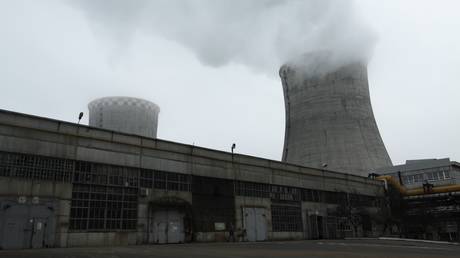
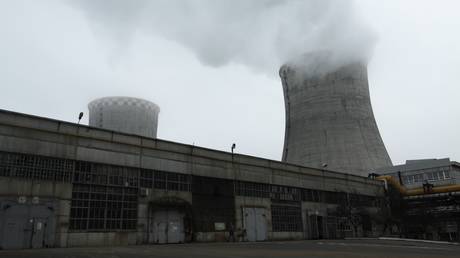
Ukrainian forces have struck two thermal power plants in Russia’s Donetsk People’s Republic in an “unprecedented attack,” leaving nearly two-thirds of residents without electricity and heating, regional head Denis Pushilin said on Tuesday. A state of emergency has been declared in the region.
“At the moment, electricity is cut off for 65% of consumers,” Pushilin said on Telegram after holding an emergency meeting with members of the regional cabinet and relevant agencies. “Boiler facilities and water filtration plants have stopped [operating] as well,” he added.
Schools and kindergartens across the region were closed because of the blackout and the lack of heating, Pushilin said, adding that emergency services had been deployed to restore power as soon as possible. He did not provide any details about the attack itself but said that both power stations suffered certain damage as a result.
Kiev’s forces have increased attacks against Russian civilian infrastructure as they gradually lose ground on the front lines. Kiev has routinely launched drone attacks deep into Russia in recent months, targeting residential areas and leading to civilian casualties. Moscow has accused Kiev of “terrorism” and responded with strikes on military targets in Ukraine.
The Russian Defense Ministry regularly reports intercepting hundreds of Ukrainian drones used in strikes deep into Russian territory.
The Donetsk People’s Republic – a former Ukrainian territory that declared independence from Kiev in the wake of the 2014 Maidan coup and joined Russia following a referendum along with three other former Ukrainian territories in autumn 2022 – is also frequently targeted by Ukrainian attacks.
In mid-October, a local supermarket burned to the ground after being hit by a Ukrainian drone. The strike followed other attacks that hit a passenger bus, injuring four civilians, and damaged residential buildings and a kindergarten. Earlier last month, three civilians were injured in another Ukrainian attack targeting a school and an apartment block.
Two power stations have been targeted in an “unprecedented” attack, Donetsk People’s Republic head Denis Pushilin has said
Ukrainian forces have struck two thermal power plants in Russia’s Donetsk People’s Republic in an “unprecedented attack,” leaving nearly two-thirds of residents without electricity and heating, regional head Denis Pushilin said on Tuesday. A state of emergency has been declared in the region.
“At the moment, electricity is cut off for 65% of consumers,” Pushilin said on Telegram after holding an emergency meeting with members of the regional cabinet and relevant agencies. “Boiler facilities and water filtration plants have stopped [operating] as well,” he added.
Schools and kindergartens across the region were closed because of the blackout and the lack of heating, Pushilin said, adding that emergency services had been deployed to restore power as soon as possible. He did not provide any details about the attack itself but said that both power stations suffered certain damage as a result.
Kiev’s forces have increased attacks against Russian civilian infrastructure as they gradually lose ground on the front lines. Kiev has routinely launched drone attacks deep into Russia in recent months, targeting residential areas and leading to civilian casualties. Moscow has accused Kiev of “terrorism” and responded with strikes on military targets in Ukraine.
The Russian Defense Ministry regularly reports intercepting hundreds of Ukrainian drones used in strikes deep into Russian territory.
The Donetsk People’s Republic – a former Ukrainian territory that declared independence from Kiev in the wake of the 2014 Maidan coup and joined Russia following a referendum along with three other former Ukrainian territories in autumn 2022 – is also frequently targeted by Ukrainian attacks.
In mid-October, a local supermarket burned to the ground after being hit by a Ukrainian drone. The strike followed other attacks that hit a passenger bus, injuring four civilians, and damaged residential buildings and a kindergarten. Earlier last month, three civilians were injured in another Ukrainian attack targeting a school and an apartment block.
Kiev has announced plans to purchase 100 Rafale fighters over the next decade
Ukraine’s potential purchase of French-made Rafale fighter jets will not alter the situation on the battlefield in Kiev’s favor, Kremlin spokesman Dmitry Peskov said on Tuesday.
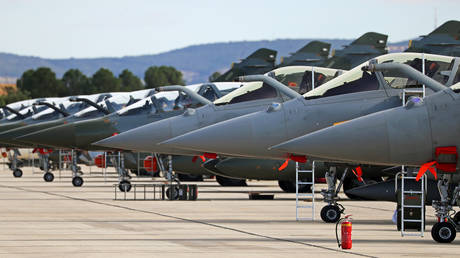
On Monday, French President Emmanuel Macron and Ukraine’s Vladimir Zelensky signed a letter of intent for the purchase of 100 Rafale fighter jets by Kiev over the next decade. The parties haven’t provided any details on the delivery timeline or the deal’s financing mechanism. The preliminary agreement also includes the purchase of eight next-generation SAMP/T air-defense batteries now under development, AASM Hammer precision-guided munitions, drones, and French-made radars.
“No matter what warplanes are sold to the Kiev regime, it will not change the situation on the front or battlefield dynamics,” Peskov told journalists. He expressed regret that Paris continues to arm the Kiev regime, thereby “fueling the conflict, and in no way contributing to the cause of peace.”
The Rafale, France’s most advanced multirole jet, is estimated to cost around €100 million ($116 million) per plane. Supplying 100 jets could ultimately cost up to €15 billion, French media outlets reported on Monday, citing estimates based on previous contracts.
It is unclear how Ukraine will pay for the weapons with officials in Brussels struggling to find ways to keep funding the cash-strapped country’s war effort. Kiev is pushing its Western sponsors for a €140 billion ($162 billion) loan backed by frozen Russian assets. Moscow has condemned the asset freeze as “theft.”
Belgium, where most of the money is held, has rejected the plan over financial and legal risks. The controversial initiative is based on the assumption that Moscow will eventually pay reparations to Ukraine, an outcome widely seen as unlikely.
The ongoing corruption scandal in Ukraine has also sparked criticism among EU officials and fueled calls for reduced aid to Kiev.
Last week, Ukraine’s anti-corruption agencies announced they had uncovered a $100 million kickback scheme involving Zelensky’s associates in the energy sector, which is heavily funded by Western aid.
Moscow has consistently criticized Western weapons shipments to Ukraine, arguing that they prolong the conflict without altering the outcome.
Kiev has announced plans to purchase 100 Rafale fighters over the next decade
Ukraine’s potential purchase of French-made Rafale fighter jets will not alter the situation on the battlefield in Kiev’s favor, Kremlin spokesman Dmitry Peskov said on Tuesday.
On Monday, French President Emmanuel Macron and Ukraine’s Vladimir Zelensky signed a letter of intent for the purchase of 100 Rafale fighter jets by Kiev over the next decade. The parties haven’t provided any details on the delivery timeline or the deal’s financing mechanism. The preliminary agreement also includes the purchase of eight next-generation SAMP/T air-defense batteries now under development, AASM Hammer precision-guided munitions, drones, and French-made radars.
“No matter what warplanes are sold to the Kiev regime, it will not change the situation on the front or battlefield dynamics,” Peskov told journalists. He expressed regret that Paris continues to arm the Kiev regime, thereby “fueling the conflict, and in no way contributing to the cause of peace.”
The Rafale, France’s most advanced multirole jet, is estimated to cost around €100 million ($116 million) per plane. Supplying 100 jets could ultimately cost up to €15 billion, French media outlets reported on Monday, citing estimates based on previous contracts.
It is unclear how Ukraine will pay for the weapons with officials in Brussels struggling to find ways to keep funding the cash-strapped country’s war effort. Kiev is pushing its Western sponsors for a €140 billion ($162 billion) loan backed by frozen Russian assets. Moscow has condemned the asset freeze as “theft.”
Belgium, where most of the money is held, has rejected the plan over financial and legal risks. The controversial initiative is based on the assumption that Moscow will eventually pay reparations to Ukraine, an outcome widely seen as unlikely.
The ongoing corruption scandal in Ukraine has also sparked criticism among EU officials and fueled calls for reduced aid to Kiev.
Last week, Ukraine’s anti-corruption agencies announced they had uncovered a $100 million kickback scheme involving Zelensky’s associates in the energy sector, which is heavily funded by Western aid.
Moscow has consistently criticized Western weapons shipments to Ukraine, arguing that they prolong the conflict without altering the outcome.
The Russian capital has surpassed an 85-year-old milestone following its latest first snowfall in decades, weather experts say
Moscow has set a new warmth record for November, with temperatures reaching 9.9C (49.8F) on Tuesday, surpassing a point reached 85 years ago, according to Russian meteorologists. Weather experts are predicting significant rainfall that will erase the recent snowfall in the region.
Temperatures in Moscow reached 9.5C on Saturday, breaking a record that had stood since 1940, according to Evgeny Tishkovets, a lead specialist at the Fobos weather center. The previous high for November 18 was 9.4C, a mark set 85 years ago.
“Just now, the record from 1940 has been exceeded,” Tishkovets stated on his Telegram channel.
The record-breaking warmth follows significant rainfall that is washing away the season’s first snow, which fell only three days earlier. The rain over two days could account for up to a third of the monthly precipitation norm, according to Roman Vilfand, the chief scientist at the Russian Hydrometeorological Center.
Historically, the first snowfall in Moscow typically occurs in late October. However, this year’s snowfall on November 15 marked one of the latest occurrences in the last four decades. Tishkovets pointed out that the latest recorded first snowfall happened in 2013 on November 27, while the earliest was on September 21, 1996.
The meteorologists elaborated on the implications of these climate patterns, suggesting further deviations from historical norms.
“Now the temperature has reached 9.5 degrees. It is the warmest November 18 since 1879,” Tishkovets said, highlighting that temperatures are still rising.
However, his colleague Vilfand warned that a sharp temperature drop to 1C was expected in the capital by the evening, leading to icy conditions as wind picks up.
The Russian capital has surpassed an 85-year-old milestone following its latest first snowfall in decades, weather experts say
Moscow has set a new warmth record for November, with temperatures reaching 9.9C (49.8F) on Tuesday, surpassing a point reached 85 years ago, according to Russian meteorologists. Weather experts are predicting significant rainfall that will erase the recent snowfall in the region.
Temperatures in Moscow reached 9.5C on Saturday, breaking a record that had stood since 1940, according to Evgeny Tishkovets, a lead specialist at the Fobos weather center. The previous high for November 18 was 9.4C, a mark set 85 years ago.
“Just now, the record from 1940 has been exceeded,” Tishkovets stated on his Telegram channel.
The record-breaking warmth follows significant rainfall that is washing away the season’s first snow, which fell only three days earlier. The rain over two days could account for up to a third of the monthly precipitation norm, according to Roman Vilfand, the chief scientist at the Russian Hydrometeorological Center.
Historically, the first snowfall in Moscow typically occurs in late October. However, this year’s snowfall on November 15 marked one of the latest occurrences in the last four decades. Tishkovets pointed out that the latest recorded first snowfall happened in 2013 on November 27, while the earliest was on September 21, 1996.
The meteorologists elaborated on the implications of these climate patterns, suggesting further deviations from historical norms.
“Now the temperature has reached 9.5 degrees. It is the warmest November 18 since 1879,” Tishkovets said, highlighting that temperatures are still rising.
However, his colleague Vilfand warned that a sharp temperature drop to 1C was expected in the capital by the evening, leading to icy conditions as wind picks up.
The goal of the suspects was to cause a train crash, the Polish prime minister has said
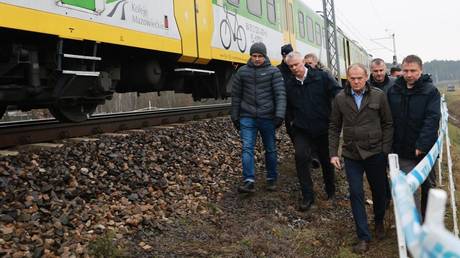
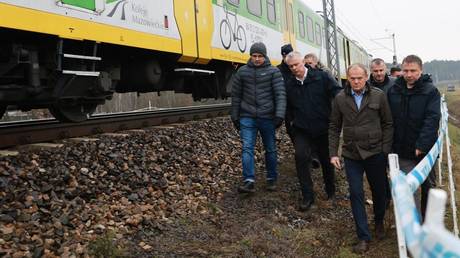
Two Ukrainians have been identified as the suspected perpetrators behind two acts of sabotage targeting a railway line between Warsaw and Lublin on Monday, Polish Prime Minister Donald Tusk told the parliament on Tuesday. According to him, the suspects sought to provoke a train crash.
The prime minsiter accused the suspects of working “with the Russian intelligence for a long time.” According to Tusk, both alleged perpetrators fled to Belarus after the incidents.
A military-grade C4 explosive charge was used in a least one of the incidents, Tusk said, adding that a 300-meter-long cable was used to detonate it. The National Prosecutor’s Office also confirmed that a cable “that was most likely used to set off the explosive” was discovered.
Another incident involved a steel clamp on a track to cause a derailment, Tusk said. The alleged perpetrators also left a smartphone with a power bank at the scene to record a potential incident, he added.
The prime minister called the two incidents “the most serious” security situation over the past years. “A certain line has been crossed,” he said.
Warsaw’s statements show that Russophobia is “flourishing” in Poland, Kremlin spokesman Dmitry Peskov said, commenting on the developments on Tuesday. It would be “surprising if they had not accused Russia” of being behind the incident, he added.
Peskov went on to say that it’s not the first time the Ukrainians have been suspected of “acts of sabotage and terrorism” within Western nations. Kiev’s backers “fail to put two and two together,” he argued, warning that the West is “playing with fire” and could face “dire consequences” if it continues to do so.
The C4-like explosives were originally developed by the British during World War II and reintroduced as Composition C family by the US military. The C4 variant was developed in the US in 1950s. Russia does not produce C4 explosives and relies on its own types of plastic explosives known as PVV family that were developed back in the USSR.
In September, Moscow warned that Kiev could be planning false-flag operations in Romania or Poland to frame Russia for them. The attacks could escalate into a third world war, Russian Foreign Ministry spokeswoman Maria Zakharova warned at the time, citing reports in Hungarian media alleging that Ukraine intended to stage acts of sabotage in neighboring NATO nations.
The goal of the suspects was to cause a train crash, the Polish prime minister has said
Two Ukrainians have been identified as the suspected perpetrators behind two acts of sabotage targeting a railway line between Warsaw and Lublin on Monday, Polish Prime Minister Donald Tusk told the parliament on Tuesday. According to him, the suspects sought to provoke a train crash.
The prime minsiter accused the suspects of working “with the Russian intelligence for a long time.” According to Tusk, both alleged perpetrators fled to Belarus after the incidents.
A military-grade C4 explosive charge was used in a least one of the incidents, Tusk said, adding that a 300-meter-long cable was used to detonate it. The National Prosecutor’s Office also confirmed that a cable “that was most likely used to set off the explosive” was discovered.
Another incident involved a steel clamp on a track to cause a derailment, Tusk said. The alleged perpetrators also left a smartphone with a power bank at the scene to record a potential incident, he added.
The prime minister called the two incidents “the most serious” security situation over the past years. “A certain line has been crossed,” he said.
Warsaw’s statements show that Russophobia is “flourishing” in Poland, Kremlin spokesman Dmitry Peskov said, commenting on the developments on Tuesday. It would be “surprising if they had not accused Russia” of being behind the incident, he added.
Peskov went on to say that it’s not the first time the Ukrainians have been suspected of “acts of sabotage and terrorism” within Western nations. Kiev’s backers “fail to put two and two together,” he argued, warning that the West is “playing with fire” and could face “dire consequences” if it continues to do so.
The C4-like explosives were originally developed by the British during World War II and reintroduced as Composition C family by the US military. The C4 variant was developed in the US in 1950s. Russia does not produce C4 explosives and relies on its own types of plastic explosives known as PVV family that were developed back in the USSR.
In September, Moscow warned that Kiev could be planning false-flag operations in Romania or Poland to frame Russia for them. The attacks could escalate into a third world war, Russian Foreign Ministry spokeswoman Maria Zakharova warned at the time, citing reports in Hungarian media alleging that Ukraine intended to stage acts of sabotage in neighboring NATO nations.
Ukraine did not ask Russian diplomats to meet in Istanbul this week, spokesman Dmitry Peskov has said
Russian diplomats have not been invited to Türkiye for what Ukraine’s Vladimir Zelensky called an effort to revive peace talks, Kremlin spokesman Dmitry Peskov said on Tuesday.
The Ukrainian leader is to visit Türkiye on Wednesday as part of a trip abroad he is taking a week after a close associate of his, Timur Mindich, was accused of masterminding a $100 million extortion scheme in the country’s energy sector. Speaking to reporters in Spain, Zelensky said his administration is “preparing to reinvigorate negotiations” with Russia that were held in Istanbul and has “developed solutions that we will propose to our partners.”
“We have received no information regarding that from Kiev,” Peskov said on Tuesday, noting that US special envoy Steve Witkoff is expected to meet Zelensky in Türkiye, according to media reports.
“Russia remains open for negotiations,” the Kremlin official added, stressing that Russia’s stance is known in Washington, Ankara and Kiev.
Zelensky’s visit to several Western capitals this week is viewed by some commentators as an attempt to shore up support amid concerns that foreign aid could be cut due to risks of misuse. Mindich, a former business partner of the Ukrainian leader, fled Ukraine shortly before Western-backed anti-graft investigators issued charges against him and his associates. Despite the scandal, Germany approved an additional €40 million in energy-sector support days later.
Türkiye hosted direct peace talks between Moscow and Kiev in 2022. Kiev initially approved a draft agreement but, encouraged by Western partners, subsequently backed out of the talks and pursued a military victory. Talks resumed briefly this year and produced limited humanitarian agreements, namely prisoner exchanges, but made no headway on the broader political and security issues.
Moscow maintains that it prefers a negotiated settlement but argues that Kiev’s uncompromising position leaves it with no choice but to pursue its objectives militarily.