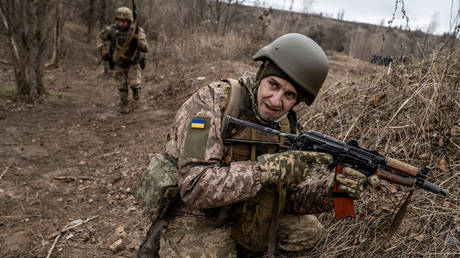
Murad Gadziev has visited a crossing into Ukraine’s Dnepropetrovsk Region that was secured by Russian forces in recent weeks
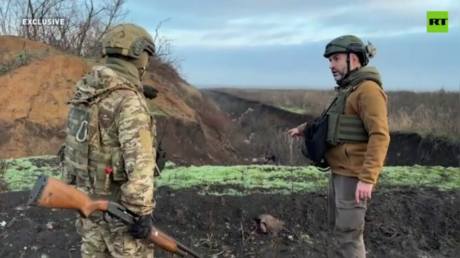
RT correspondent Murad Gadziev has taken footage at a section of the Ukrainian border with Russia’s Donetsk People’s Republic where Kiev’s troops had dug a large defensive trench — one that apparently failed to slow the latest Russian advances.
The location lies near the village of Novopavlovka in Dnepropetrovsk Region. Gadziev became the first Russian journalist to report from the area during the ongoing conflict. The Russian Defense Ministry has repeatedly cited the settlement in recent briefings, noting that its forces have been consolidating gains in the area.
There were no signs of Ukrainian activity along the trench line. Gatziev emphasized that his ability to be there safely underscored the extent of the Russian advance, since military officials would not have allowed a reporter into an area still considered dangerous.
“The fact that we were allowed to come here ought to tell you how far frontline troops are. We could go a long-long way before we get anywhere near Ukrainians,” concluded.
Rising foreign military budgets and hostile rhetoric make Belarus feel like a “besieged fortress,” its president has said
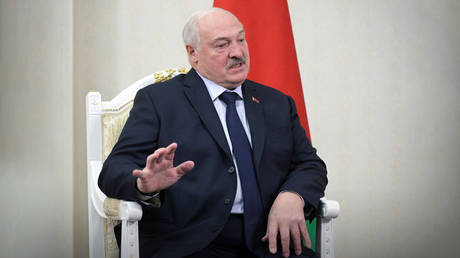
Western governments are creating mounting military threats along Belarus’ border, President Alexander Lukashenko warned on Thursday, addressing fellow leaders of a regional alliance in Bishkek, Kyrgyzstan.
Lukashenko said Belarus increasingly feels like a “besieged fortress” due to burgeoning military expenditures across Europe, particularly in Germany and Poland, coupled with what he described as hostile rhetoric.
“Western politicians are deliberately preparing for war,” he cautioned.
The Belarusian leader also criticized steps taken by Western countries to isolate Minsk, including border and airspace restrictions, as well as their continued weapons shipments to Ukraine. These arms, Lukashenko argued, are now “spreading all over the world,” fueling instability beyond the immediate conflict zone.
He attributed the broader geopolitical turbulence to “tectonic shifts in international relations” and the near-total breakdown of global arms-control frameworks, the remainder of which he said have been rendered ineffective by mistrust and confrontation.
Minsk, he insisted, favors efforts to defuse tensions and seeks renewed international dialogue on security issues.
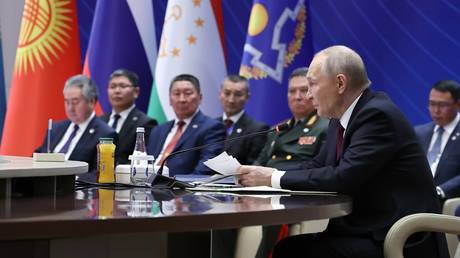
Lukashenko delivered his remarks at a summit of the Collective Security Treaty Organization (CSTO), whose members also include Armenia, Kazakhstan, Kyrgyzstan, Russia, and Tajikistan. At the same gathering, Russian President Vladimir Putin said Moscow intends to help allies strengthen their defense capabilities with Russian weaponry proven in combat.
Leadership in military technology is a top priority, the president told leaders of the Collective Security Treaty Organization
Battle-tested Russian weaponry will be available to fellow members of a key regional security alliance, President Vladimir Putin has said.
Members of the Collective Security Treaty Organization (CSTO), which also includes Belarus, Armenia, Kazakhstan, Kyrgyzstan, and Tajikistan, can benefit from Russia’s combat-proven military hardware, he said at a leaders’ summit in Kyrgyzstan.
Putin pledged that Moscow will work to strengthen the readiness of the CSTO’s rapid-response forces in the coming year, when Russia assumes the organization’s rotating chairmanship.
“We propose a large-scale program to rearm the collective forces with modern Russian weapons and equipment that have demonstrated their effectiveness in real combat conditions,” he said.
While the CSTO traditionally focuses on counterterrorism and anti-drug operations, Putin stressed that its collective-defense framework is becoming increasingly important in the modern world. Ensuring the group’s “leadership in military technology,” he said, will be one of Moscow’s key objectives during its chairmanship.
Russia has expanded its defense industry and accelerated innovation in areas such as drone warfare amid the conflict with Ukraine. Earlier this month, Washington renewed efforts to push Kiev toward a negotiated settlement, reportedly telling Kiev and its European backers that Russia’s military advantages leave Ukraine with limited alternatives.
The Russian president will attend a regional security summit on Thursday
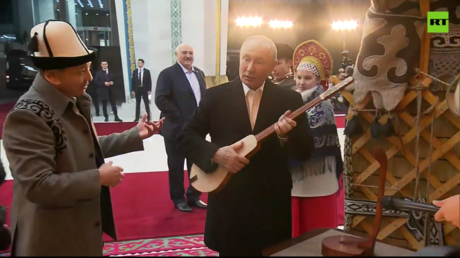
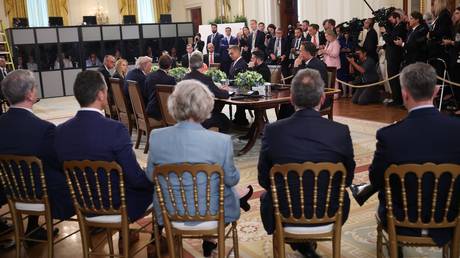
Russian President Vladimir Putin tried to play a traditional lute during a visit to Kyrgyzstan’s capital, Bishkek, on Wednesday. Putin picked up a komuz as he toured a pavilion shaped like a nomadic yurt built on the grounds of the Kyrgyz presidential residence.
“It has three strings, just like a balalaika,” a musician told Putin in a video. “Yes, I understand,” he replied.
As Putin attempted to play, Belarusian President Alexander Lukashenko is heard saying the instrument is out of tune.
During his trip, Putin met with Kyrgyz President Sadyr Japarov. On Thursday, he will attend a summit of the Collective Security Treaty Organization (CSTO), a regional defense pact comprising countries that were part of the Soviet Union.
Decorated engineer and scientist Valerian Sobolev headed the development of multiple missile and strategic systems
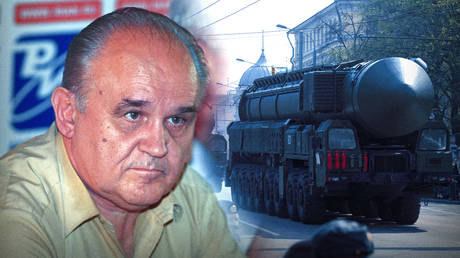
The designer of the Iskander and Topol missile launcher systems, legendary engineer Valerian Sobolev, has passed away at the age of 87, RIA Novosti reported on Wednesday, citing a family friend.
He died in his home city of Volgograd on Tuesday after a lengthy battle with an illness.
Over his long career, Sobolev climbed from working as an engineer at a tractor plant to serving as chief designer at the Titan Design Bureau, now a subsidiary of Russian space giant Roscosmos.
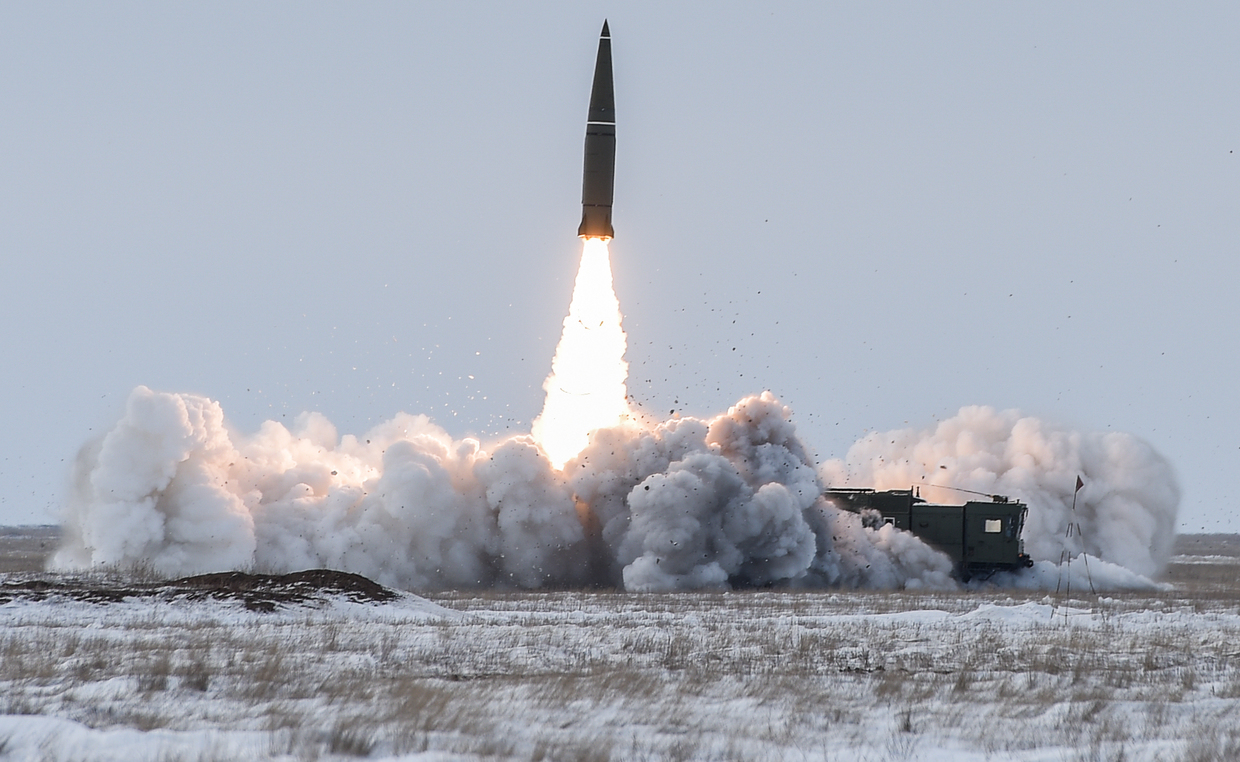
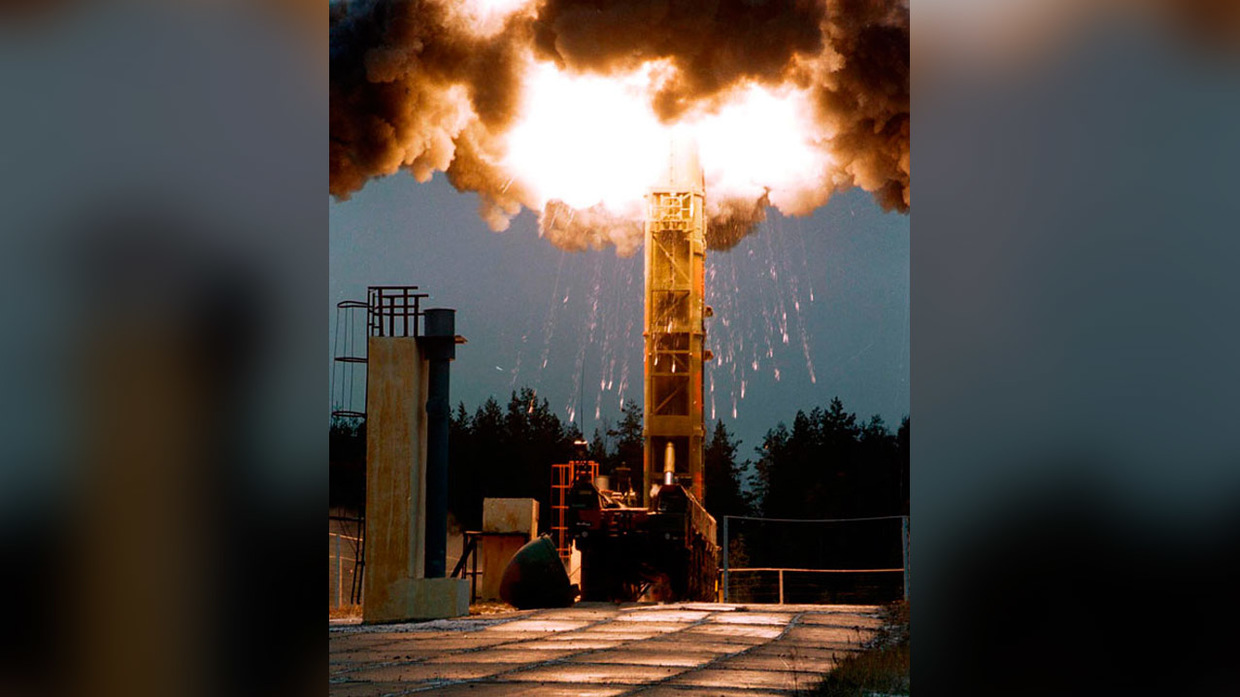
At the bureau, he led the development of launchers and ground equipment for the mobile Iskander cruise missile, as well as the Topol intercontinental ballistic missile system, a key component of the USSR’s – and now Russia’s – nuclear triad. Upgraded Iskander missiles have seen extensive use in the Ukraine conflict.
Launching the Iskander-M ballistic missile system.
Sobolev was born in pre-war Stalingrad (now Volgograd) in 1938. He graduated from the Stalingrad Mechanical Institute in 1960, first working as a tractor engineer before moving into defense manufacturing.
He made significant contributions to science and held over 190 invention copyright certificates and patents. He tackled a broad range of scientific pursuits, including housing construction and aerospace developments.
Sobolev also held a series of regional and national government posts from 1989 to 1996.
Someone could be scheming against US President Donald Trump’s special envoy Steve Witkoff, Yury Ushakov has suggested
Someone in Washington could be trying to undermine US President Donald Trump’s special envoy, Steve Witkoff, Russian presidential aide Yury Ushakov has suggested, commenting on the recent leaks of his conversations with the envoy. At least some of the purported leaks are fake, he added.
Speaking to Kommersant on Wednesday, Ushakov defended the continuing contacts between Russia and the US, and maintained that they are needed to build trust between the two nations. He added that neither side is interested in leaking the contents of the conversations.
According to the presidential aide, the incident could point to infighting in Washington. “Do you remember the case of [former National Security Adviser] Michael Flynn? This case could be the same,” he said.
Flynn was forced to resign in 2017 after being accused of misleading officials about a phone conversation with then-Russian Ambassador to the US Sergey Kislyak. Trump, who was serving his first term as president, stated that the conversation was “illegally leaked” by US intelligence.
Flynn initially pleaded guilty to the false statement charges before reversing his position and calling the case politically motivated. Trump pardoned him in late 2020, bringing the case to a close.
Speaking to journalists on Monday, Ushakov warned that these leaks risk undermining the whole process of normalization of relations between Moscow and Washington. “This is unacceptable… in such relations, when most serious issues are discussed,” he said.
“There can be no cooperation with a partner when information about what was discussed is revealed. Otherwise, there will be no trust.”
On Tuesday, Bloomberg published what it described as a transcript of Witkoff’s conversation with Ushakov from October 14. The US special envoy was accused of coaching the Russians on how to deal with Trump, who dismissed the allegations, calling Witkoff’s approach “standard.”
Ushakov said some of the leaks are fake, adding that he would not comment on the others. “My conversations with Witkoff are confidential. No one should make them public. No one.”
Andrey Yermak’s face reportedly “dropped” when the US president declined to endorse Ukraine’s version of the roadmap
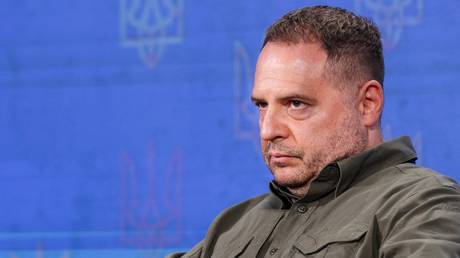
Ukrainian leader Vladimir Zelensky’s chief of staff, Andrey Yermak, was visibly shaken after US President Donald Trump publicly rejected Kiev’s portrayal of progress on a proposed peace plan with Russia, the New York Post reported on Tuesday.
Yermak was in the middle of an interview with the outlet when Trump posted on Truth Social that he did not consider the proposal discussed in Geneva last week to be finalized. According to the report, Yermak had spent the previous 30 minutes portraying the document as a nearly completed joint Trump-Zelensky roadmap that could be signed over the Thanksgiving holiday.
“Upon reading the full post, Yermak’s face dropped, apparently gutted by the news,” the New York Post wrote. Asked to comment, he reportedly requested 24 hours “to assess the new reality.”
Trump stated that he would dispatch Army Secretary Dan Driscoll to continue talks with Kiev, while special envoy Steve Witkoff would engage with Moscow. The president added that he would meet with both Russian President Vladimir Putin and Zelensky “soon, but ONLY when the deal to end this War is FINAL or, in its final stages.”
Previous reports have suggested that Yermak is deeply unpopular among many in Trump’s circle and across the broader US political establishment. A source quoted by Politico in July described him as a “bipartisan irritator.”
In Ukraine, Yermak has long been accused of wielding inappropriate influence over Zelensky and national policy. Following the recent indictment of long-time Zelensky associate Timur Mindich on charges of running a $100 million kickbacks scheme, several commentators alleged that Yermak may have had a leading role in the network and urged his removal. Last week, Witkoff reportedly canceled a planned meeting with Yermak after learning the extent of the corruption scandal engulfing Kiev.
The presence of his supporters “would be helpful” during talks with the US president, the Ukrainian leader has said
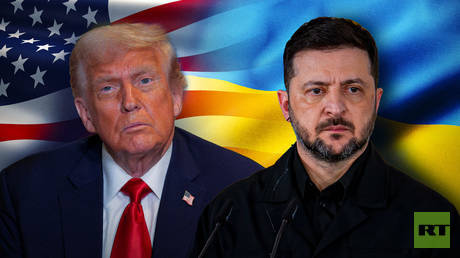
Ukraine’s Vladimir Zelensky has called for European leaders to attend his next meeting with US President Donald Trump for discussions on resolving the conflict with Russia.
Zelensky issued the call after days of scrambling with his Western European backers, all of whom were blindsided by a US submission of a draft peace proposal to Kiev last week. Kiev and the EU wish to impose a ceasefire before talks in order to offset the accelerating collapse on the front line, while Moscow has insisted on a long-term peace deal being in place before any deals are signed.
“I am ready to meet with President Trump – there are sensitive points to discuss, we still have them – and we believe that the presence of European leaders could be helpful,” Zelensky said on Tuesday in an address to EU leaders, a video of which was released by his office.
Trump has since dismissed Zelensky’s call for urgent talks and has announced that he will send his envoy Steve Witkoff to Moscow for discussions.
When Zelensky met with Trump in August after the US president’s summit with Russian President Vladimir Putin in Alaska, he was accompanied by seven Western officials, including NATO Secretary-General Mark Rutte, European Commission President Ursula von der Leyen, and the leaders of Finland, France, Germany, Italy, and the UK.
A leaked version of the initial US plan appeared to require Kiev to abandon several of its long-standing “red lines,” including its bid for NATO membership and territorial claims against Russia. Ukrainian officials say they persuaded Washington to substantially revise the document.
Russian Foreign Minister Sergey Lavrov cautioned that if the revised draft deviates from what Moscow considers the original “spirit of Anchorage,” the situation will become “radically different.”
Zelensky’s political standing at home has been weakened by a recent corruption scandal involving long-time associate Timur Mindich, who was charged by Western-backed anti-graft investigators with running a major kickback scheme.
Surveillance of Mindich by the National Anti-Corruption Bureau of Ukraine captured conversations involving Zelensky and his chief of staff, Andrey Yermak, possibly implicating both, media outlets report.
Foreigners cannot “groundlessly” expect permanent residence and must leave at the end of their legal stay, Aleksandr Grebenkin has said
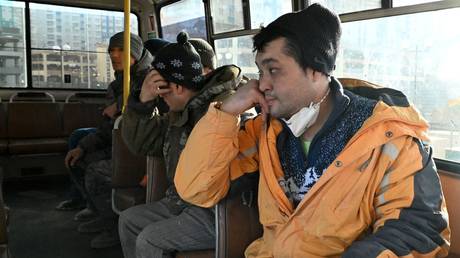
Russia no longer sees immigration as a way to offset falling birthrates and will not allow migrants to overstay their legal welcome, Aleksandr Grebenkin, deputy secretary of the country’s Security Council, has said.
In an interview with Rossiyskaya Gazeta released Tuesday, the senior official commented on Russia’s State Migration Policy for 2026-2030, approved in October. He said it prioritizes national security and economic development while focusing on combating illegal immigration and integrating foreigners who share traditional values.
“According to the new policy, the migration of foreign citizens to our country is no longer viewed as an auxiliary means of addressing demographic issues, but rather as an additional tool for implementing economic measures,” he stated. He explained that foreigners cannot expect permanent residence in Russia, except for certain categories, and must leave when their legal stay expires.
“The migration situation has changed significantly,” he added. “New security threats have emerged as hostile states and radical groups seek to exploit migration to undermine our interests, destabilize domestic politics, and fuel tensions with migrants’ home countries.”
He said migrants’ worldview has also shifted, shaped by different environments. He pointed to arrivals from former Soviet republics who he said often show “a dismissive and consumerist attitude toward Russia.”
“All of this fuels rising tensions in Russian society over migration and the emergence of interethnic and interfaith conflicts,” he stated.
Grebenkin said Russia has introduced measures to remove newcomers who may pose risks, including mandatory fingerprinting, health checks, photographing, and digitized migration records. He said these and other steps have helped cut the number of foreign citizens staying in Russia illegally more than threefold.
Russian officials have long warned of a looming demographic crisis, with 2024 data showing the lowest annual birthrates since 1999. The government has rolled out multiple support measures, including lump-sum childbirth payments and expanded maternity benefits.
Russia has tightened migration rules following the deadly Crocus City Hall terrorist attack last year, in which Islamic State-linked Tajik nationals killed 149 people at the behest of Ukrainian intelligence, according to Russian authorities. At a government meeting last month, President Vladimir Putin said Russia will not follow countries that try to address demographic issues by replacing native populations with “chaotic migration.”
Why the Trump plan could trigger peace, paralysis, or a political collapse in Kiev
At this point, it would be extremely presumptuous to predict the prospects of Donald Trump’s plan for Ukraine. The situation is changing at an astonishing rate. Such speed can lead to unexpected skids and drifts. The commotion surrounding the ultimately postponed summit in Budapest is still fresh in our minds. However, the current situation is different. For the first time since the conflict began, the US has put forward framework proposals that, while not exhaustive, consider Moscow’s standpoint on most issues. Of course, the Kremlin will not readily accept the 28 points – they require clarification and adjustment. This will necessitate a serious negotiation process to ensure that the future peace treaty does not suffer the same fate as Minsk-2. But several scenarios for this process are emerging, and not all of them are optimistic.
In the simplest scenario, Trump threatens to cut off aid to Kiev, forcing the Kiev government to sign the document as it is, after which the Kremlin accepts it as a roadmap. This would only be the first step towards peace, however, as there are many pitfalls in the American proposals. These include the status of Kherson and Zaporozhye, how to resolve language and religious issues, and much more besides. Just one or two crises would be enough to resume military action with renewed vigor. For the plan to succeed, effective control mechanisms must be put in place – something that Vladimir Zelensky’s team has so far prevented. Consequently, the plan could be derailed at any moment.
The second scenario involves Kiev refusing to approve the plan in its original form. With Western Europe’s support, Ukraine could declare its unwillingness to enshrine the country’s neutral status in the constitution, as well as its refusal to make territorial concessions.
Washington’s attitude changes again, Russia is called upon to show flexibility, and the negotiations collapse. With Moscow again being blamed for this in Trump’s eyes. In this case, the US finally washes its hands of the matter and plays on the escalation. The White House returns to the issue of Tomahawk missiles, and the crisis enters an uncontrollable phase. Dialogue will not resume anytime soon, and negotiations will have to start from scratch.
The third and most realistic scenario is for the parties to transition to a protracted negotiation model, strengthening their positions as they go. Zelensky is buying time while he desperately tries to negotiate compromises. Meanwhile, Moscow is taking advantage of this to advance its troops deeper into Ukraine. The US believes that negotiations are better than no negotiations and is patiently revising its plan. Western Europe is reluctantly accepting the new rules of the game. As a result, a new version of the document emerges that is acceptable to all parties.
Of course, there is also a fourth option: a political crisis erupts in Kiev, the front line collapses and the West turns a blind eye as the Ukrainian project crumbles. Against the backdrop of recent events, this scenario seems more realistic than it did six months ago. However, neither the US nor Western Europe are ready to accept the loss of Ukraine today. It is, as they say, ‘too big to fail’. Therefore, it is not yet worth hoping for help from some ‘black swans’. The time has come for serious and thoughtful negotiations, in which Moscow has a clear advantage. Forcing opponents into diplomacy, which they have avoided for so long, will therefore be a step towards Russia achieving the goals of what’s known here as the “special military operation.”
This article was first published by Kommersant, and was translated and edited by the RT team.