Author: .

Ukrainian soldiers are ready to surrender but face threats from their own command, Chief of the General Staff Valery Gerasimov has said

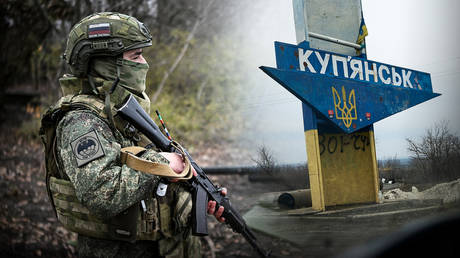
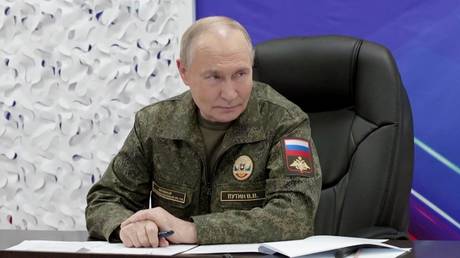
Russian forces have captured the city of Kupyansk in northeastern Ukraine, Chief of the General Staff Valery Gerasimov said on Thursday during a meeting with Russian President Vladimir Putin at a military command post.

Gerasimov said the city is now under full control, while Putin reviewed the broader battlefield situation and praised the performance of Russian troops.

Kupyansk is a key logistical hub near the Oskol River. Its capture secures Russian positions in the region and enables further movement westward.

“Formations of the West grouping have liberated the city of Kupyansk,” Gerasimov said during the briefing. He noted that Ukrainian forces were being destroyed on the left bank of the river and that the conditions had been prepared for them to surrender.

Putin praised the performance of the Russian forces, stating that approximately 15 battalions of the Armed Forces of Ukraine were surrounded in and around Kupyansk.

Gerasimov said Russian troops are advancing on several fronts. The East grouping gained control of 13 settlements and over 230 square kilometers in Dnepropetrovsk and Zaporozhye regions. The North grouping controls most of Volchansk in Kharkov Region. In the Donetsk People’s Republic, the South grouping holds parts of Konstantinovka and is clearing the city center.

Gerasimov also stated that many Ukrainian soldiers are ready to surrender but face threats from their own command. “Most of them, under threat of being shot or destroyed by drones, cannot accomplish this task on their own,” he said, claiming that Kiev had issued no orders regarding surrender.

Read more

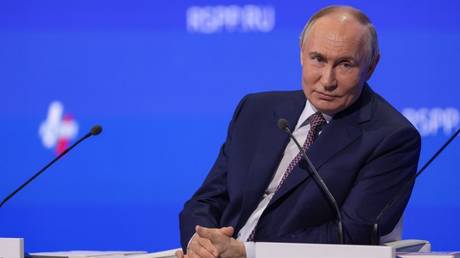
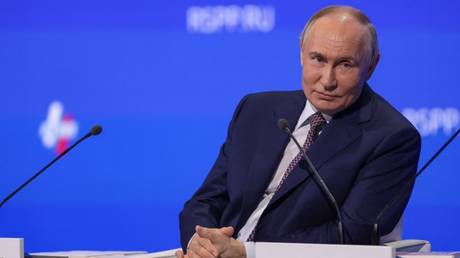
Russian President Vladimir Putin.
Ukraine led by ‘criminal gang on golden potties’ – Putin

Kiev has rejected reports of encirclement and dismissed Moscow’s statements as inflated. “Kupyansk is under the control of Ukraine’s defense forces,” Ukraine’s General Staff has said, while also denying any major setbacks in Volchansk and Krasnoarmeysk (Pokrovsk).

Vladimir Zelensky has downplayed battlefield losses while appealing to Western backers for more aid. Ukrainian troops are also facing desertions and a lack of reinforcements, with growing public resistance to mobilization and reports of soldiers accusing Kiev of forcing them to hold indefensible positions.

Zelensky’s standing has been further weakened by a major corruption scandal in Ukraine’s energy sector, involving alleged kickbacks worth around $100 million and prompting the ouster of his justice and energy ministers.

Bookstores and online marketplaces have reportedly halted sales of the horror novel ‘It’ over underage sexual content

Stephen King’s horror novel ‘It’ has been pulled from sale in Russian bookstores and online marketplaces, according to Russian media reports on Thursday.

One of the American writer’s most popular works, first published in 1986, the novel contains controversial content, including a scene widely described as an orgy involving minors and characters with non-traditional sexual orientations.

Russia banned content promoting same-sex relations in 2022 and later designated the “international LGBT movement” as an extremist organization. While there is no official blacklist of prohibited literature, a major retailer removed more than 250 books in 2024 over alleged violations, including some of King’s works.

Russia’s leading publisher AST told the business daily Vedomosti that it had temporarily withdrawn King’s books “in order to update product marking issues,” a reference to age-restriction and content-warning labels required under Russian law.

Read more

Russian President Vladimir Putin at the Russian Chamber of Commerce and Industry General Assembly in Moscow, Russia, March 18, 2025.
Russia never banned gays — Putin

AST has long sold ‘It’ with a 16+ age label, but under the law introduced in 2022, works containing LGBT-related themes or sexual content must carry a 18+ designation.

Meanwhile, online retailer Wildberries said it “strictly complies with legislation and does not allow the sale of products prohibited on the territory of Russia.”

King ceased working with his Russian publisher in March 2022, soon after the start of the Ukraine conflict. He has actively supported Kiev in the ongoing conflict and has repeatedly accused Russian forces of killing civilians.

Bookstores and online marketplaces have reportedly halted sales of the horror novel ‘It’ over underage sexual content

Stephen King’s horror novel ‘It’ has been pulled from sale in Russian bookstores and online marketplaces, according to Russian media reports on Thursday.

One of the American writer’s most popular works, first published in 1986, the novel contains controversial content, including a scene widely described as an orgy involving minors and characters with non-traditional sexual orientations.

Russia banned content promoting same-sex relations in 2022 and later designated the “international LGBT movement” as an extremist organization. While there is no official blacklist of prohibited literature, a major retailer removed more than 250 books in 2024 over alleged violations, including some of King’s works.

Russia’s leading publisher AST told the business daily Vedomosti that it had temporarily withdrawn King’s books “in order to update product marking issues,” a reference to age-restriction and content-warning labels required under Russian law.

Read more

Russian President Vladimir Putin at the Russian Chamber of Commerce and Industry General Assembly in Moscow, Russia, March 18, 2025.
Russia never banned gays — Putin

AST has long sold ‘It’ with a 16+ age label, but under the law introduced in 2022, works containing LGBT-related themes or sexual content must carry a 18+ designation.

Meanwhile, online retailer Wildberries said it “strictly complies with legislation and does not allow the sale of products prohibited on the territory of Russia.”

King ceased working with his Russian publisher in March 2022, soon after the start of the Ukraine conflict. He has actively supported Kiev in the ongoing conflict and has repeatedly accused Russian forces of killing civilians.

Kiev earlier confirmed having received a draft from the US and signaled a readiness to discuss it

Ukrainian opposition MP Aleksey Goncharenko has published the text of a peace plan reportedly presented to Kiev by the US administration this week.

The lawmaker posted on social media what appeared to be screenshots of a Ukrainian-language electronic document detailing the 28-point peace plan to end the hostilities between Moscow and Kiev.

Earlier in the day, Vladimir Zelensky’s office confirmed the US presented Kiev with its new draft plan. The Ukrainian administration did not elaborate on its contents, only expressing a willingness to discuss it and stating that “in the American side’s assessment” the plan “could help reinvigorate diplomacy.”

Here’s the full text of the post:

1. Ukraine’s sovereignty will be confirmed.

2. A full and comprehensive non-aggression agreement will be concluded between Russia, Ukraine, and Europe. All ambiguities of the past 30 years will be considered resolved.

3. It is expected that Russia will not invade neighbouring countries and that NATO will not expand further.

4. A dialogue will be conducted between Russia and NATO, mediated by the United States, to resolve all security issues and create conditions for de-escalation, thereby ensuring global security and increasing opportunities for cooperation and future economic development.

5. Ukraine will receive reliable security guarantees.

6. The size of the Armed Forces of Ukraine will be limited to (6)00,000 personnel.

7. Ukraine agrees to enshrine in its constitution that it will not join NATO, and NATO agrees to include in its statutes a provision that it will not accept Ukraine in the future.

8. NATO agrees not to deploy troops in Ukraine.

9. European fighter aircraft will be stationed in Poland.

10. US Guarantees: The United States will receive compensation for the guarantee. If Ukraine invades Russia, it will lose the guarantee. If Russia invades Ukraine, in addition to a decisive coordinated military response, all global sanctions will be reinstated, recognition of new territories and all other benefits of this deal will be revoked. If Ukraine without cause launches a missile at Moscow or Saint Petersburg, the security guarantee will be considered invalid.

11. Ukraine retains the right to EU membership and will receive short-term preferential access to the European market while the issue is under consideration.

12. A powerful global package of measures for the reconstruction of Ukraine, including but not limited to:
a. Creation of a Ukraine Development Fund to invest in high-growth sectors, including technology, data-processing centres, and artificial intelligence.
b. The United States will cooperate with Ukraine on the joint reconstruction, development, modernization, and operation of Ukraine’s gas infrastructure, including pipelines and storage facilities.
c. Joint efforts to restore war-affected territories, including the reconstruction and modernization of cities and residential areas.
d. Infrastructure development.
e. Extraction of minerals and natural resources.
f. The World Bank will develop a special financing package to accelerate these efforts.

13. Russia will be reintegrated into the global economy:
a. The lifting of sanctions will be discussed and agreed upon gradually and on an individual basis.
b. The United States will conclude a long-term economic cooperation agreement aimed at mutual development in the fields of energy, natural resources, infrastructure, artificial intelligence, data-processing centres, rare-earth mining projects in the Arctic, and other mutually beneficial corporate opportunities.
c. Russia will be invited to return to the G8.

14. Frozen assets will be used in the following way: $100 billion of frozen Russian assets will be invested in US-led reconstruction and investment efforts in Ukraine. The United States will receive 50% of the profits from this undertaking. Europe will add another $100 billion to increase the total investment available for Ukraine’s reconstruction. Frozen European assets will be unfrozen. The remaining frozen Russian assets will be invested in a separate American-Russian investment vehicle that will implement joint American-Russian projects in areas to be determined. This fund will be aimed at strengthening bilateral relations and increasing shared interests in order to create strong motivation not to return to conflict.

15. A joint American-Russian working group on security issues will be established to facilitate and ensure the fulfilment of all provisions of this agreement.

16. Russia will legislatively enshrine a policy of non-aggression toward Europe and Ukraine.

17. The United States and Russia will agree to extend the validity of treaties on the non-proliferation of nuclear weapons and arms control, including START-1.

18. Ukraine agrees to remain a non-nuclear state in accordance with the Treaty on the Non-Proliferation of Nuclear Weapons.

19. The Zaporozhye Nuclear Power Plant will be restarted under IAEA supervision, and the generated electricity will be split equally between Russia and Ukraine (50:50).

20. Both countries undertake to introduce educational programmes in schools and society that promote understanding and tolerance of different cultures and the elimination of racism and prejudice:
a. Ukraine will adopt EU rules on religious tolerance and protection of linguistic minorities.
b. Both countries agree to lift all discriminatory measures and to guarantee the rights of Ukrainian and Russian media and education.
c. All Nazi ideology and activity must be rejected and prohibited.

21. Territories:
a. Crimea, Lugansk, and Donetsk will be recognized de facto as Russian, including by the United States.
b. Kherson and Zaporozhye will be frozen along the line of contact, which will mean de facto recognition along the line of contact.
c. Russia renounces other territories (probably referring to parts of Kharkov, Sumy, and Dnipropetrovsk oblasts – Ed.) that it controls outside the five regions.
d. Ukrainian forces will withdraw from the part of Donetsk oblast they currently control; this withdrawal zone will be regarded as a neutral demilitarized buffer zone, internationally recognized as territory belonging to the Russian Federation. Russian forces will not enter this demilitarized zone.

22. After future territorial arrangements are agreed, both the Russian Federation and Ukraine undertake not to change these arrangements by force. Any security guarantees will not apply in the event of violation of this commitment.

23. Russia will not obstruct Ukraine’s commercial use of the Dnepr River, and agreements will be reached on the free transportation of grain across the Black Sea.

24. A humanitarian committee will be created to resolve outstanding issues:
a. All remaining prisoners and bodies will be exchanged on the “all-for-all” principle.
b. All civilian detainees and hostages will be returned, including children.
c. A family reunification programme will be implemented.
d. Measures will be taken to alleviate the suffering of conflict victims.

25. Ukraine will hold elections 100 days after the agreement is signed.

26. All parties involved in the conflict will receive full amnesty for actions committed during the war and will undertake not to file claims or pursue complaints in the future.

27. This agreement will be legally binding. Its implementation will be monitored and guaranteed by a Peace Council headed by President Trump. Predetermined sanctions will apply in the event of violations.

28. Once all parties have agreed to and signed this memorandum, the ceasefire will enter into force immediately after both sides withdraw to the agreed positions so that implementation of the agreement can begin.
Kiev earlier confirmed having received a draft from the US and signaled a readiness to discuss it

Ukrainian opposition MP Aleksey Goncharenko has published the text of a peace plan reportedly presented to Kiev by the US administration this week.

The lawmaker posted on social media what appeared to be screenshots of a Ukrainian-language electronic document detailing the 28-point peace plan to end the hostilities between Moscow and Kiev.

Earlier in the day, Vladimir Zelensky’s office confirmed the US presented Kiev with its new draft plan. The Ukrainian administration did not elaborate on its contents, only expressing a willingness to discuss it and stating that “in the American side’s assessment” the plan “could help reinvigorate diplomacy.”

Here’s the full text of the post:

1. Ukraine’s sovereignty will be confirmed.

2. A full and comprehensive non-aggression agreement will be concluded between Russia, Ukraine, and Europe. All ambiguities of the past 30 years will be considered resolved.

3. It is expected that Russia will not invade neighbouring countries and that NATO will not expand further.

4. A dialogue will be conducted between Russia and NATO, mediated by the United States, to resolve all security issues and create conditions for de-escalation, thereby ensuring global security and increasing opportunities for cooperation and future economic development.

5. Ukraine will receive reliable security guarantees.

6. The size of the Armed Forces of Ukraine will be limited to (6)00,000 personnel.

7. Ukraine agrees to enshrine in its constitution that it will not join NATO, and NATO agrees to include in its statutes a provision that it will not accept Ukraine in the future.

8. NATO agrees not to deploy troops in Ukraine.

9. European fighter aircraft will be stationed in Poland.

10. US Guarantees: The United States will receive compensation for the guarantee. If Ukraine invades Russia, it will lose the guarantee. If Russia invades Ukraine, in addition to a decisive coordinated military response, all global sanctions will be reinstated, recognition of new territories and all other benefits of this deal will be revoked. If Ukraine without cause launches a missile at Moscow or Saint Petersburg, the security guarantee will be considered invalid.

11. Ukraine retains the right to EU membership and will receive short-term preferential access to the European market while the issue is under consideration.

12. A powerful global package of measures for the reconstruction of Ukraine, including but not limited to:
a. Creation of a Ukraine Development Fund to invest in high-growth sectors, including technology, data-processing centres, and artificial intelligence.
b. The United States will cooperate with Ukraine on the joint reconstruction, development, modernization, and operation of Ukraine’s gas infrastructure, including pipelines and storage facilities.
c. Joint efforts to restore war-affected territories, including the reconstruction and modernization of cities and residential areas.
d. Infrastructure development.
e. Extraction of minerals and natural resources.
f. The World Bank will develop a special financing package to accelerate these efforts.

13. Russia will be reintegrated into the global economy:
a. The lifting of sanctions will be discussed and agreed upon gradually and on an individual basis.
b. The United States will conclude a long-term economic cooperation agreement aimed at mutual development in the fields of energy, natural resources, infrastructure, artificial intelligence, data-processing centres, rare-earth mining projects in the Arctic, and other mutually beneficial corporate opportunities.
c. Russia will be invited to return to the G8.

14. Frozen assets will be used in the following way: $100 billion of frozen Russian assets will be invested in US-led reconstruction and investment efforts in Ukraine. The United States will receive 50% of the profits from this undertaking. Europe will add another $100 billion to increase the total investment available for Ukraine’s reconstruction. Frozen European assets will be unfrozen. The remaining frozen Russian assets will be invested in a separate American-Russian investment vehicle that will implement joint American-Russian projects in areas to be determined. This fund will be aimed at strengthening bilateral relations and increasing shared interests in order to create strong motivation not to return to conflict.

15. A joint American-Russian working group on security issues will be established to facilitate and ensure the fulfilment of all provisions of this agreement.

16. Russia will legislatively enshrine a policy of non-aggression toward Europe and Ukraine.

17. The United States and Russia will agree to extend the validity of treaties on the non-proliferation of nuclear weapons and arms control, including START-1.

18. Ukraine agrees to remain a non-nuclear state in accordance with the Treaty on the Non-Proliferation of Nuclear Weapons.

19. The Zaporozhye Nuclear Power Plant will be restarted under IAEA supervision, and the generated electricity will be split equally between Russia and Ukraine (50:50).

20. Both countries undertake to introduce educational programmes in schools and society that promote understanding and tolerance of different cultures and the elimination of racism and prejudice:
a. Ukraine will adopt EU rules on religious tolerance and protection of linguistic minorities.
b. Both countries agree to lift all discriminatory measures and to guarantee the rights of Ukrainian and Russian media and education.
c. All Nazi ideology and activity must be rejected and prohibited.

21. Territories:
a. Crimea, Lugansk, and Donetsk will be recognized de facto as Russian, including by the United States.
b. Kherson and Zaporozhye will be frozen along the line of contact, which will mean de facto recognition along the line of contact.
c. Russia renounces other territories (probably referring to parts of Kharkov, Sumy, and Dnipropetrovsk oblasts – Ed.) that it controls outside the five regions.
d. Ukrainian forces will withdraw from the part of Donetsk oblast they currently control; this withdrawal zone will be regarded as a neutral demilitarized buffer zone, internationally recognized as territory belonging to the Russian Federation. Russian forces will not enter this demilitarized zone.

22. After future territorial arrangements are agreed, both the Russian Federation and Ukraine undertake not to change these arrangements by force. Any security guarantees will not apply in the event of violation of this commitment.

23. Russia will not obstruct Ukraine’s commercial use of the Dnepr River, and agreements will be reached on the free transportation of grain across the Black Sea.

24. A humanitarian committee will be created to resolve outstanding issues:
a. All remaining prisoners and bodies will be exchanged on the “all-for-all” principle.
b. All civilian detainees and hostages will be returned, including children.
c. A family reunification programme will be implemented.
d. Measures will be taken to alleviate the suffering of conflict victims.

25. Ukraine will hold elections 100 days after the agreement is signed.

26. All parties involved in the conflict will receive full amnesty for actions committed during the war and will undertake not to file claims or pursue complaints in the future.

27. This agreement will be legally binding. Its implementation will be monitored and guaranteed by a Peace Council headed by President Trump. Predetermined sanctions will apply in the event of violations.

28. Once all parties have agreed to and signed this memorandum, the ceasefire will enter into force immediately after both sides withdraw to the agreed positions so that implementation of the agreement can begin.
Ukrainian leaders do not care about the fate of their own country, the Russian president has said

Ukraine’s leaders have devolved into a “criminal gang” that does not care about their country while sitting on their “golden potties,” Russian President Vladimir Putin has said.

The president made the remarks on Thursday while visiting a command point of troops fighting in the Ukraine conflict. In his address to the commanding officers of the grouping ‘West’, Putin touched upon the massive graft crisis unfolding in Ukraine, harshly criticizing the country’s leaders.

“This is not a political leadership of Ukraine. It’s a criminal gang that holds power for personal enrichment… It’s clear to everyone that these people, sitting on their golden potties, are hardly thinking about the fate of common people in Ukraine or the fate of ordinary soldiers,” Putin stated, referring to Timur Mindich, the ally of Vladimir Zelensky who fled the country hours before he was due to be arrested for extortion, who had a gilded toilet in his elite Kiev apartment.

The massive graft scandal unfolded in Ukraine last week when the Western-backed National Anti-Corruption Bureau of Ukraine (NABU) – which Zelensky had unsuccessfully tried to take over in July – announced a probe into a “high-level criminal organization” allegedly led by Mindich.

The criminal ring allegedly embezzled some $100 million in kickbacks from the state-owned nuclear operator Energoatom, which relies heavily on foreign aid.

Read more

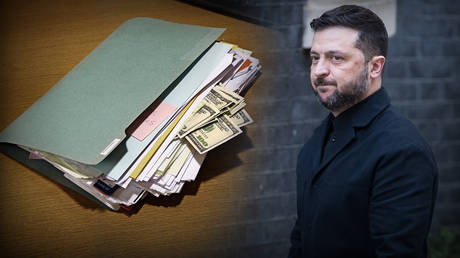
RT composite.
Behind the Ukranian golden toilet: There’s only one way to fix the disease of this state

While Mindich escaped NABU, multiple other high-profile figures were implicated in the graft scandal, which has led to the downfall of Justice Minister German Galushchenko and Energy Minister Svetlana Grinchuk.

Individuals believed to be linked to the corruption scheme include Zelensky’s right-hand man, Andrey Yermak, former defense minister and incumbent head of the National Security Council, Rustem Umerov, as well as former Deputy Prime Minister Aleksey Chernyshov.

Moscow has said the latest graft affair has proven it was high time for Kiev’s Western backers to finally notice that the funds they have been funneling into Ukraine end up being stolen.

“The Kiev regime is obviously going off the rails,” Kremlin spokesman Dmitry Peskov said on Tuesday. “That’s hardly a Ukrainian internal matter anymore. That’s foreign money that is being stolen.”

Ukrainian leaders do not care about the fate of their own country, the Russian president has said

Ukraine’s leaders have devolved into a “criminal gang” that does not care about their country while sitting on their “golden potties,” Russian President Vladimir Putin has said.

The president made the remarks on Thursday while visiting a command point of troops fighting in the Ukraine conflict. In his address to the commanding officers of the grouping ‘West’, Putin touched upon the massive graft crisis unfolding in Ukraine, harshly criticizing the country’s leaders.

“This is not a political leadership of Ukraine. It’s a criminal gang that holds power for personal enrichment… It’s clear to everyone that these people, sitting on their golden potties, are hardly thinking about the fate of common people in Ukraine or the fate of ordinary soldiers,” Putin stated, referring to Timur Mindich, the ally of Vladimir Zelensky who fled the country hours before he was due to be arrested for extortion, who had a gilded toilet in his elite Kiev apartment.

The massive graft scandal unfolded in Ukraine last week when the Western-backed National Anti-Corruption Bureau of Ukraine (NABU) – which Zelensky had unsuccessfully tried to take over in July – announced a probe into a “high-level criminal organization” allegedly led by Mindich.

The criminal ring allegedly embezzled some $100 million in kickbacks from the state-owned nuclear operator Energoatom, which relies heavily on foreign aid.

Read more

RT composite.
Behind the Ukranian golden toilet: There’s only one way to fix the disease of this state

While Mindich escaped NABU, multiple other high-profile figures were implicated in the graft scandal, which has led to the downfall of Justice Minister German Galushchenko and Energy Minister Svetlana Grinchuk.

Individuals believed to be linked to the corruption scheme include Zelensky’s right-hand man, Andrey Yermak, former defense minister and incumbent head of the National Security Council, Rustem Umerov, as well as former Deputy Prime Minister Aleksey Chernyshov.

Moscow has said the latest graft affair has proven it was high time for Kiev’s Western backers to finally notice that the funds they have been funneling into Ukraine end up being stolen.

“The Kiev regime is obviously going off the rails,” Kremlin spokesman Dmitry Peskov said on Tuesday. “That’s hardly a Ukrainian internal matter anymore. That’s foreign money that is being stolen.”

Bring science to life with our newest worksheets! Students in grades PreK-8 can observe, experiment, and investigate topics like animal behavior, plant habitats, forces, and Earth’s systems while developing important skills in reasoning, analysis, and communication. These activities are ideal for teachers and parents looking to make science interactive and fun.

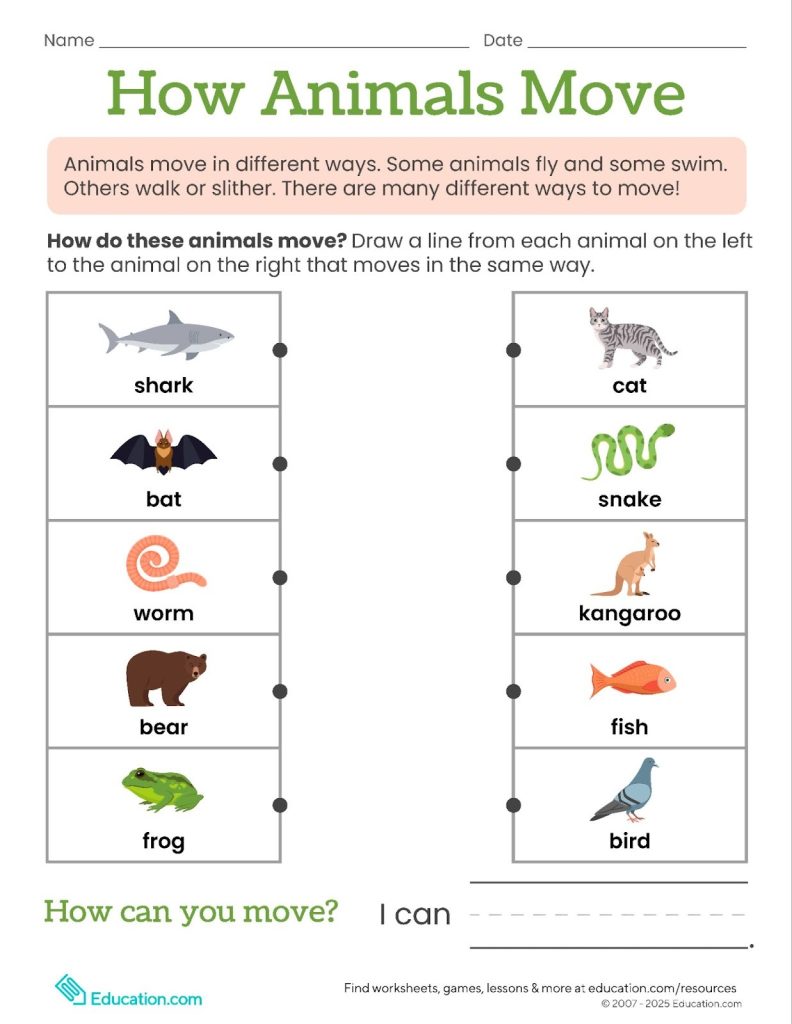
How Animals Move

Children explore ten different animals, decide how each one moves, and match animals with similar movement patterns. It’s a playful way for preschoolers and kindergarteners to build early science skills while practicing critical thinking, comparing traits, and learning more about the animal world.

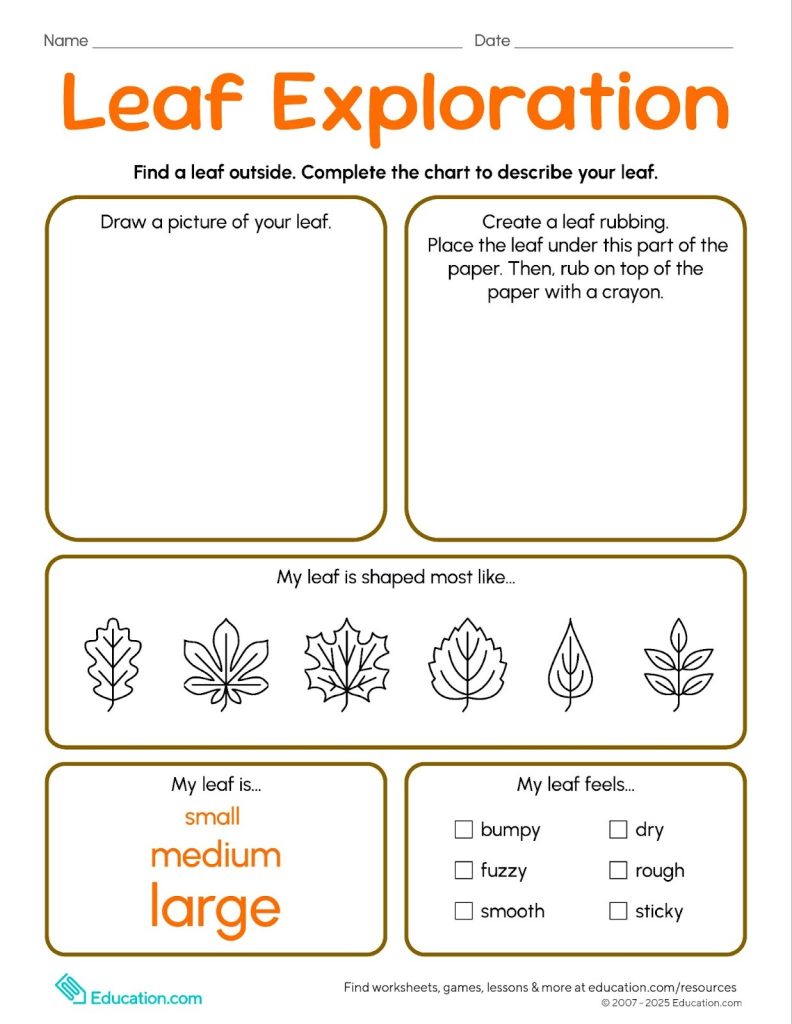
Leaf Exploration

Encourage curiosity and close observation! Kids step outside to find a leaf, sketch it, make a rubbing, and describe its features using guiding questions. This activity blends nature study with early communication and science skills.

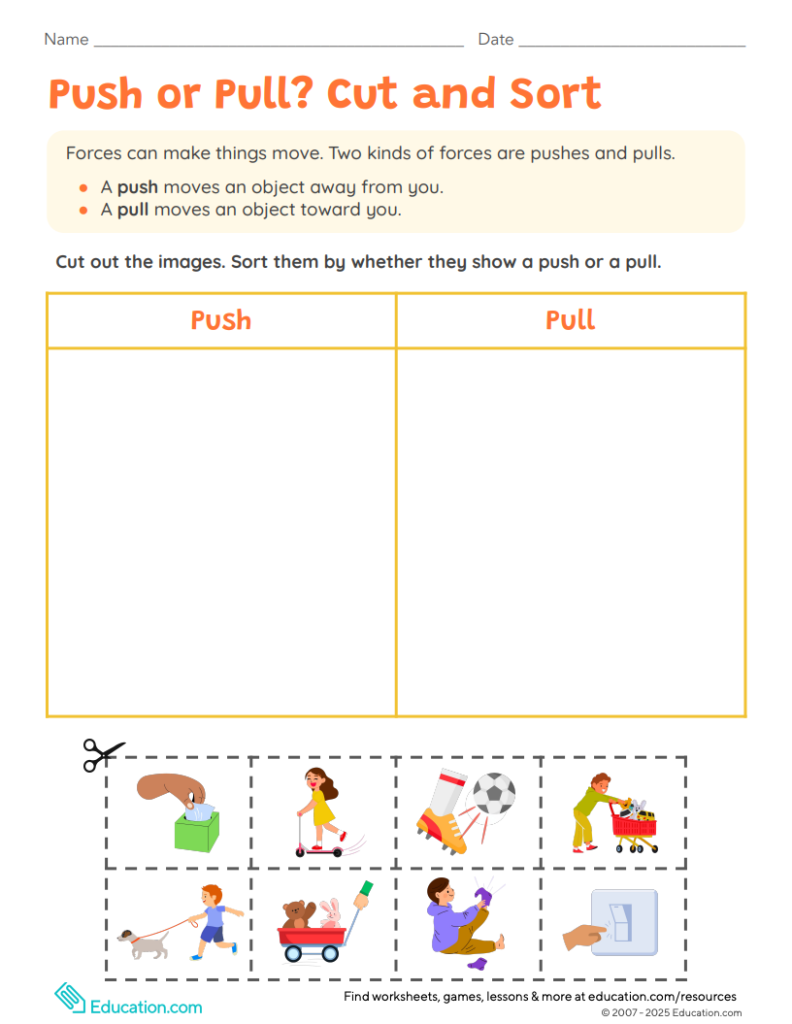
Push or Pull? Cut and Sort

Help young learners learn about how everyday forces work through a hands-on cut-and-sort activity. Kids review what pushes and pulls are, then sort real-life examples to show how each force affects movement. This beginner-friendly physical science practice builds a strong foundation for understanding motion and how objects interact.

Which Plant Can Live in This Habitat?

This collection of eight worksheets invites second and third graders to investigate deserts, forests, wetlands, and more as they explore what each habitat provides. Learners analyze plant needs and determine which ones could thrive in each environment, strengthening their understanding of plant survival and ecosystem relationships.

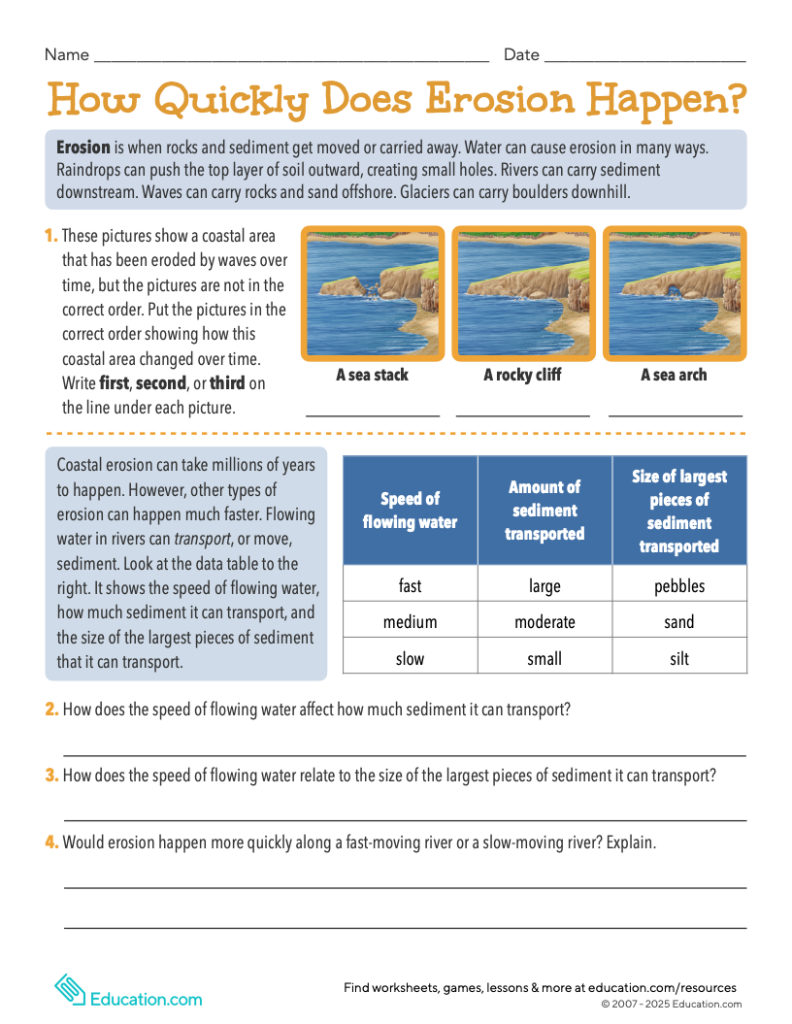
How Quickly Does Erosion Happen?

Give young geologists a closer look at how erosion works as they examine photo sequences and answer questions about the role of moving water. Fourth graders learn how rocks and sediment are carried away, reshaping coastlines and other landforms. This worksheet strengthens key Earth science skills while helping students connect natural processes to real-world changes.

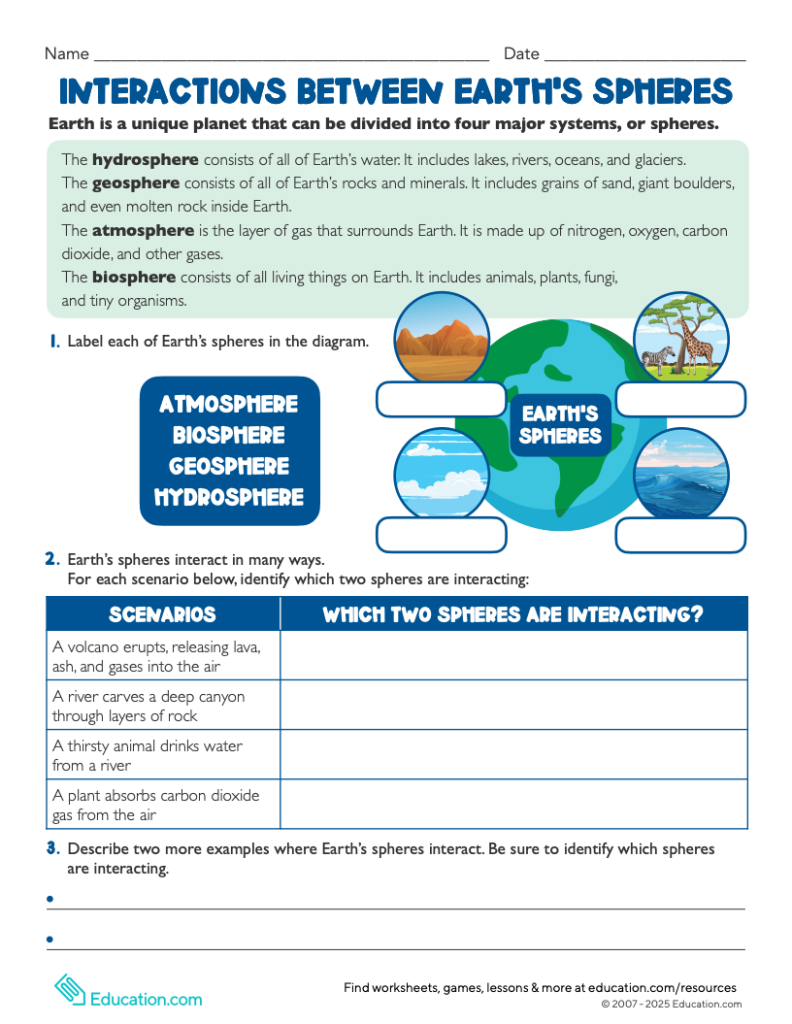
Interactions Between Earth’s Spheres

Introduce fifth graders to Earth’s four major systems with an activity that combines reading, labeling, and analyzing. Students will spot interactions between the spheres, diving into essential Earth science concepts that prepare them for more advanced topics.

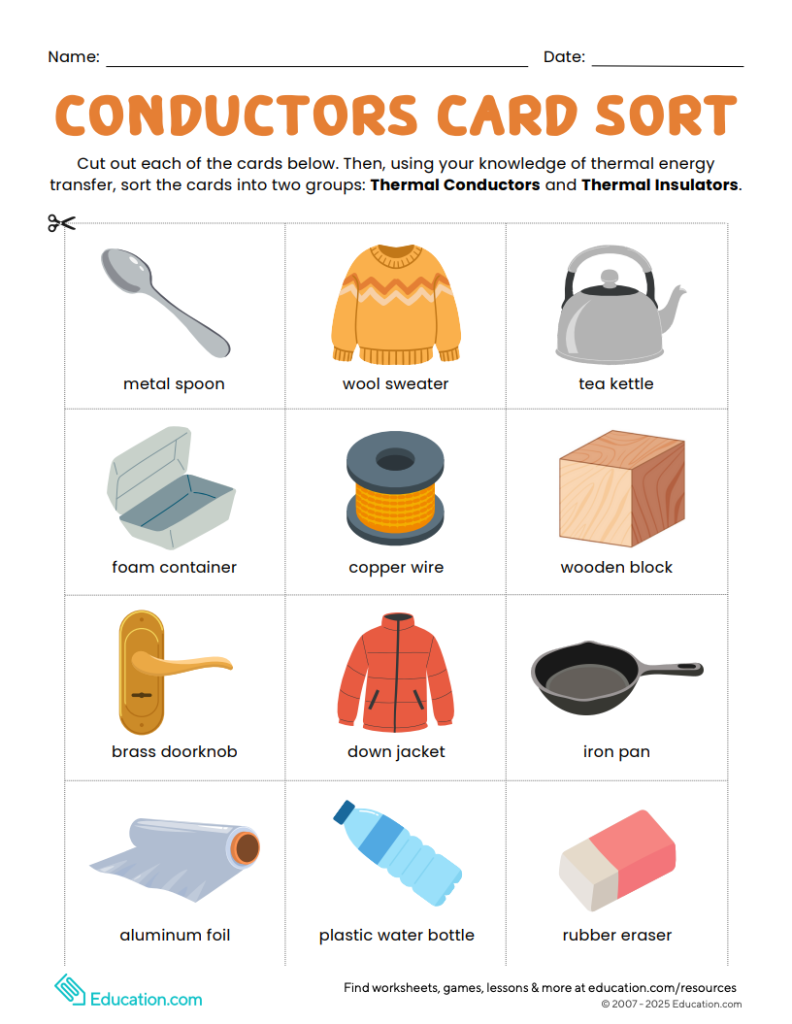
Conductors Card Sort

Middle schoolers can investigate the world of thermal conductivity with this hands-on activity. Students will sort everyday objects into conductors and insulators, learning how materials affect the flow of heat. This engaging exercise also shows how conductivity is used in real life, from cooking utensils to clothing and wires.

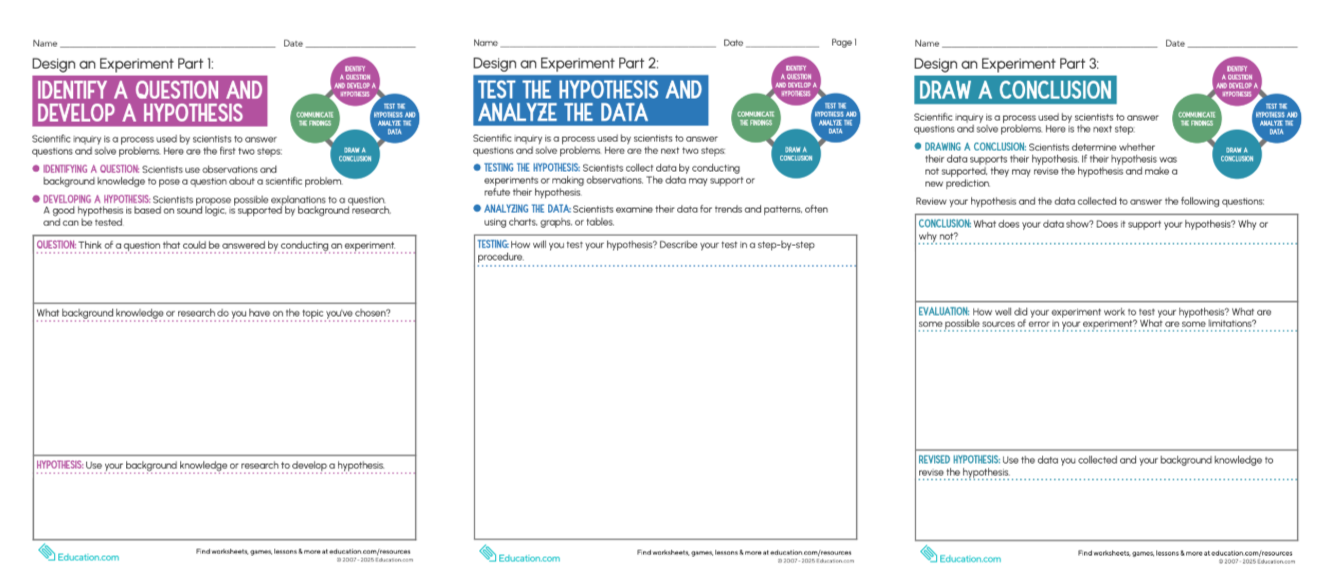
Design an Experiment

Guide middle-grade students through the scientific method with this three-part activity set! Learners will identify a question, develop a hypothesis, test their ideas, record observations, and analyze results to draw conclusions. By breaking experiments into manageable steps, students strengthen critical thinking, scientific reasoning, and their ability to interpret real-world data.


Discover even more science resources in our Learning Library, featuring over 1,600 science worksheets, games, and hands-on activities.

None of the proposals have been rejected outright, despite the EU dismissing the reported contents

Ukraine has officially confirmed receiving a draft peace plan from the US. The country’s leader, Vladimir Zelensky, has expressed hope he will be able to discuss the proposal with US President Donald Trump “in the coming days.”

The announcement came late on Thursday, following multiple media reports suggesting that Washington had provided Kiev with its new 28-point plan to bring the hostilities with Russia to an end.

The roadmap reportedly would require Ukraine to withdraw from the parts of the new Russian regions in Donbass still under Kiev’s control, cut its armed forces by at least half, surrender some weaponry, and suspend its NATO bid.

The reported contents of the draft plan have drawn the ire of Kiev’s backers in the EU, who were apparently caught by surprise. EU foreign policy chief Kaja Kallas, for instance, argued that any peace arrangement must reflect the positions of both the bloc and Ukraine itself, claiming the US plan contained no concessions from the Russian side.

While the draft has reportedly left Zelensky “displeased,” his office provided a reserved reaction, expressing willingness to “discuss” the proposals with Trump “in the coming days.”

Read more

RT
US peace plan proposes Ukraine ‘give up sovereignty’ – media

Zelensky “has officially received from the American side a draft plan which, in the American side’s assessment, could help reinvigorate diplomacy,” the official statement reads.

On Wednesday, following the meeting with Turkish President Recep Tayyip Erdogan, Zelensky indicated a willingness to resume peace negotiations with Russia, stating that Türkiye was ready to “ provide the necessary platform” for talks.

Kiev unilaterally walked away from the Istanbul negotiation format early in the conflict. Direct negotiations only resumed this year. The three rounds held throughout 2025 failed to bring any major breakthroughs, boiling down to prisoner exchanges and other humanitarian issues.

Moscow remains open to negotiating with Kiev, Kremlin spokesman Dmitry Peskov said on Wednesday, pointing out that the “pause” in the talks was the result of “the Kiev regime’s reluctance to continue this dialogue.”

None of the proposals have been rejected outright, despite the EU dismissing the reported contents

Ukraine has officially confirmed receiving a draft peace plan from the US. The country’s leader, Vladimir Zelensky, has expressed hope he will be able to discuss the proposal with US President Donald Trump “in the coming days.”

The announcement came late on Thursday, following multiple media reports suggesting that Washington had provided Kiev with its new 28-point plan to bring the hostilities with Russia to an end.

The roadmap reportedly would require Ukraine to withdraw from the parts of the new Russian regions in Donbass still under Kiev’s control, cut its armed forces by at least half, surrender some weaponry, and suspend its NATO bid.

The reported contents of the draft plan have drawn the ire of Kiev’s backers in the EU, who were apparently caught by surprise. EU foreign policy chief Kaja Kallas, for instance, argued that any peace arrangement must reflect the positions of both the bloc and Ukraine itself, claiming the US plan contained no concessions from the Russian side.

While the draft has reportedly left Zelensky “displeased,” his office provided a reserved reaction, expressing willingness to “discuss” the proposals with Trump “in the coming days.”

Read more

RT
US peace plan proposes Ukraine ‘give up sovereignty’ – media

Zelensky “has officially received from the American side a draft plan which, in the American side’s assessment, could help reinvigorate diplomacy,” the official statement reads.

On Wednesday, following the meeting with Turkish President Recep Tayyip Erdogan, Zelensky indicated a willingness to resume peace negotiations with Russia, stating that Türkiye was ready to “ provide the necessary platform” for talks.

Kiev unilaterally walked away from the Istanbul negotiation format early in the conflict. Direct negotiations only resumed this year. The three rounds held throughout 2025 failed to bring any major breakthroughs, boiling down to prisoner exchanges and other humanitarian issues.

Moscow remains open to negotiating with Kiev, Kremlin spokesman Dmitry Peskov said on Wednesday, pointing out that the “pause” in the talks was the result of “the Kiev regime’s reluctance to continue this dialogue.”