The bloc could reportedly prevent Kiev from joining without forcing it to formally renounce its accession ambitions
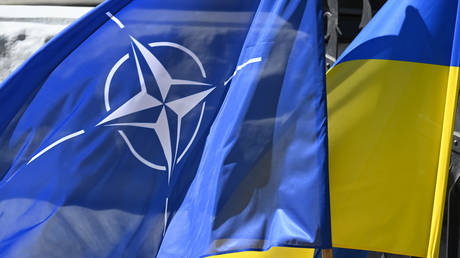
NATO could bar Ukraine from joining the bloc without requiring Kiev to formally renounce its accession ambitions, under a scenario discussed by US peace negotiators at the weekend, CNN has reported.
The report comes after months of Ukraine refusing to meet conditions outlined by Russia and rejecting demands for neutrality, which Moscow has cited as among the key issues of the conflict.
Last month, the US put forward a 28-point plan aimed at ending the fighting. According to leaked versions, the proposal requires Kiev to abandon its NATO ambitions, drop territorial claims, and cap its army at 600,000. Kiev has repeatedly rejected the demands, noting that its NATO membership goal is embedded in the Ukrainian constitution.
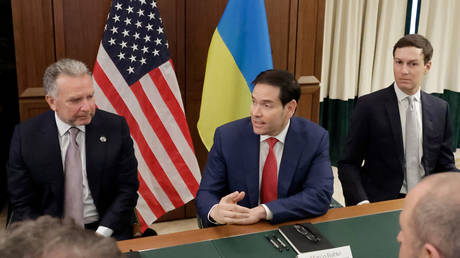
According to CNN, an updated US proposal was discussed by delegations from Kiev and Washington – including US Secretary of State Marco Rubio, special envoy Steve Witkoff, and presidential adviser Jared Kushner – when they met in Florida on Sunday.
The outlet cited a source as saying that the delegations examined an arrangement under which Ukraine would be allowed to keep its NATO ambitions in its constitution, while Russia and members of the US-led military bloc would reach an agreement to prevent Kiev from actually joining.
“Ukraine will not be pushed to officially, in the legal sense, reject this aspiration,” the source told CNN, adding that the US or NATO states could address Russia’s demands through bilateral or multilateral understandings without involving Kiev.
The CNN source said negotiators had also made progress on the issue of Ukraine withdrawing troops from Russian territories in Donbass, but declined to provide details, describing the matter as “too sensitive.”
Following Sunday’s meeting, Rubio said progress had been made but stressed that “more work” would be required, noting that Russia must be “part of the equation” for any agreement.
Russia has welcomed Trump’s efforts, saying the initial US proposal could serve as the basis for a settlement. However, President Vladimir Putin has also warned that Kiev and its European backers continue to undermine the process for “their own agenda.”
Witkoff is expected to meet with Putin in Moscow on Tuesday for talks, the Kremlin has said.
Why are dental practices switching to virtual receptionists instead of traditional hiring? The dental industry is facing a staffing crisis, and it’s only getting worse. Dental practices are having a hard time finding technicians, such as dental hygienists and receptionists; those who are hired tend not to stay long. The staffing strategy of posting a […]
The EU and UK have discredited themselves by repeatedly derailing proposals aimed at settling the crisis, Russia’s top diplomat has said
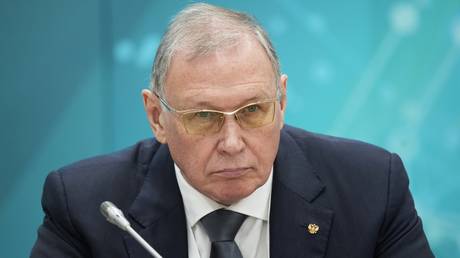
Western Europe lost its right to have a say in the Ukraine crisis a long time ago and has effectively “removed itself” from the negotiations process through its own actions, Russian Foreign Minister Sergey Lavrov has said.
The top diplomat made the remarks on Sunday to Russian journalist Pavel Zarubin, who asked whether Europe was within its rights to “outrageously” push for a role in negotiations to settle the Ukraine conflict.
“We proceed from the premise… – which I believe is obvious to everybody – that Europe has already removed itself from the talks,” Lavrov said.
Europe long ago “used up its chances” to have a say in the settlement process, the top diplomat said, pointing out that it has repeatedly derailed efforts to resolve the Ukraine crisis since its very beginning, when the 2014 Maidan turmoil culminated with a coup and the overthrow of the democratically elected president.
“Europe spoiled the initial deal of February 2014, when it acted as guarantor for the formal agreement between Viktor Yanukovych and the opposition. It did nothing when the opposition seized all government agencies the morning after the agreement was signed,” Lavrov said.
The top diplomat also pointed at the admissions made by former German Chancellor Angela Merkel and ex-French President Francois Hollande, who said “that nobody had intended to fulfill” the Minsk agreements aimed at bringing the civil conflict in then-Ukrainian Donbass to its end.
“The most recent case occurred in April 2022 when, at the demand of the then Prime Minister of the UK Boris Johnson and with Europe’s full acquiescence, if not connivance, the Istanbul agreements were derailed,” the foreign minister said.
Multiple European leaders and institutions have been insisting that any potential peace deal on Ukraine must include the EU as well, ramping up such rhetoric after the US floated its latest plan to resolve the crisis. The proposals reportedly include Kiev abandoning its NATO aspirations and capping the size of its army.
Germany, France, and the UK have reportedly drafted their own version of the plan, making it more favorable to Ukraine by removing or softening several of its points. Russia, however, has already signaled that it finds the European proposals “completely unconstructive.”
Kamikaze drones have damaged two oil tankers blacklisted by the West, as well as a crude hub in southern Russia in recent days
Russian Foreign Ministry spokeswoman Maria Zakharova has condemned recent Ukrainian “terrorist attacks” on international energy infrastructure.
Over the past several days, explosives-laden sea drones attacked two Gambian-flagged tankers off the coast of Türkiye, as well as a major crude hub on Russia’s Black Sea coast.
In a statement on Sunday, Zakharova emphasized that the “civilian energy infrastructure that was attacked plays an important role in ensuring global energy security,” and has never been subject to any international sanctions or restrictions whatsoever.
According to the Russian spokeswoman, “the Kiev regime’s special services have effectively claimed responsibility for the said acts” of sabotage, as evidenced by footage published by Ukrainian media.
Several Ukrainian and Western news outlets have reported that the Security Service of Ukraine (SBU) and the Ukrainian Navy were behind the strikes on the tankers on Friday, which presumably involved Sea Baby naval drones.
Zakharova noted that the latest attacks come against the backdrop of a major corruption scandal in Ukraine involving senior officials. Moreover, the Ukrainian military has been steadily losing ground to Russian forces in recent months.
She suggested that the latest acts of sabotage had been conducted in an effort to divert the Ukrainian public’s attention.
In a post on X on Saturday, Turkish Foreign Ministry spokesperson Oncu Keceli condemned attacks on the vessels within the country’s exclusive economic zone in the Black Sea, but stopped short of blaming any country.
He wrote that the “incidents… posed serious risks to navigation, human life, property, and the environment.”
Keceli added that Türkiye was communicating with all parties to “prevent the spread of war and further escalation in the Black Sea.”
The vessels in question, the Kairos and the Virat, are on a Western blacklist for allegedly transporting Russian oil in violation of sanctions.
Moscow has consistently denied operating a ‘shadow fleet’ designed to skirt restrictions.
It is understood that both tankers were en route to the Russian port of Novorossiysk when they came under attack on Friday.
On Sunday, the Kazakh Foreign Ministry condemned a drone attack on the Caspian Pipeline Consortium’s infrastructure in southern Russia the previous day.
The consortium specializes in transporting crude from Kazakhstan.
Deploying foreign weapons of mass destruction and joining NATO could serve as “security guarantees” for Ukraine, Valery Zaluzhny believes
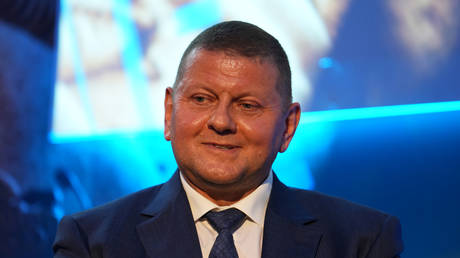
Only joining NATO, hosting nuclear weapons, or accepting a major foreign military force can truly guarantee Ukraine’s security, ex-top general Valery Zaluzhny has claimed.
Ukraine’s former armed forces commander-in-chief made the remarks in a piece run by The Telegraph on Saturday.
The general, who has reportedly been quietly building a campaign team from London to be able to run for president, shared his musings about how Russia could be defeated, how to build what he called a “better Ukraine,” and what “security guarantees” Kiev would have to secure in order to prevent the conflict with Moscow from reigniting in the future.
”Such security guarantees could include: Ukraine’s accession to NATO, the deployment of nuclear weapons on Ukrainian territory, or the deployment of a large allied military contingent capable of confronting Russia,” Zaluzhny wrote.
The former top general effectively repeated the most hawkish talking points of the incumbent Ukrainian leadership; Vladimir Zelensky has repeatedly invoked such topics amid the conflict with Russia and even beforehand.
Moscow has repeatedly signaled that none of the purported “security guarantees” listed by Zaluzhny were even remotely acceptable. Russia has long opposed Ukraine’s NATO ambitions, citing the bloc’s eastward expansion as a threat to national security and naming it among the key factors behind the ongoing conflict.
Furthermore, the Kremlin has repeatedly said that Ukraine must adopt a neutral status as a part of any future peace agreement.
Kiev’s nuclear talk has also been strongly condemned by Russia, which has argued that the rhetoric only ramps up tensions and brings an all-out global war closer. The Ukrainian leadership has repeatedly lamented giving up its inherited Soviet nuclear arsenal in the early 1990s, claiming it received nothing in return.
In reality, however, it had always stayed under Moscow’s control, while independent Ukraine had no means to operate or maintain the warheads that ended up in its territory after the collapse of the USSR.
A potential deployment of foreign forces to Ukraine during or after the ongoing conflict has been ruled out by Russia as well. Moscow has argued that the potential move would only put Russia on a direct collision course with the collective West.
The West wants still more sanctions on Moscow because it cannot compete with the Russian weapons industry, the foreign minister has said
The West is losing the arms race and now calling for sanctions on Russian military equipment in an effort to punish Moscow for its role in the Ukraine conflict, Russian Foreign Minister Sergey Lavrov has claimed.
Speaking in an interview with the TV program Military Acceptance, Lavrov said Russian weapons have earned a reputation as reliable tools for states that want to protect their sovereignty and resist external interference. He argued that the perceived effectiveness of the hardware has triggered increased pressure from the West.
Below is the full text of the interview.
Question: What challenges does the Russian arms export system face in the modern context, and how do we counter them in the international arena?
Sergey Lavrov: The same challenges that we face when exporting any other goods, energy commodities and finished products – sanctions and attempts to justify them by the need to punish Russia for its “behavior” in Ukraine. In reality, it is a dirty and anti-competitive fight.
This is yet another example of the West acknowledging that it is absolutely impossible to negotiate with. In this case – about the globalization rules of a free market, presumption of innocence and many other things that the Western countries have been advocating for decades.
All of that went down the drain as soon as the West realized it was losing the competition. It was clinging to any excuses. In this situation our special military operation came in handy although sanctions had been imposed on the Russian defense sector long before the operation began.
We know how to offset this, because the vast majority of non-Western countries do not want to put up with “dancing to this pipe” for life. Everyone wants to trade honestly, and those who sincerely want to make mutually beneficial transactions will always find financial, banking, and logistics chains and this is what is happening now.
Question: Allow me to make a little remark. Whenever we visit arms expos, our operator has “Military Acceptance” written in big Russian letters on the back of his clothes. When we were in the Republic of South Africa, we saw something very unexpected: a local man walked towards us, then unbuttoned his shirt, and we saw the St. George ribbon and the letter Z. And he was one of the local elite, the South African elite.
These countries are much more open to Russia. The situation is the same in Brazil. People used to approach us when they saw we were from Russian TV, and sometimes they would even suggest giving us an interview.
Russia has been exporting weaponry for centuries. Already in the 20th and 21st centuries Soviet (and later Russian) arms became a symbol of quality that the competition could never attain. Some [Soviet weapons] have been imprinted in the coats of arms of many countries. Can we assume that our country and its military, technological, and historical heritage is viewed as a reliable guarantor of security?
Sergey Lavrov: The short answer is – yes, no doubt about it. We talked about our products being absolutely competitive. It is covered with glory including the glory of the fight against colonialism.
The Kalashnikov is a symbol of decolonization. African countries have perfect memories of how their grandfathers and fathers gained independence with the help of Soviet weaponry at that time and assisted by our advisers who “on the ground” selected the tasks the newly independent states were fulfilling in their fight against colonialism.
Thus, even in the present-day situation, in the more advanced technological environments we never lagged behind in this “race.”
Oleg Ozerov has accused Moldova of applying double standards to drones and claimed that pressure from Brussels drives hostility
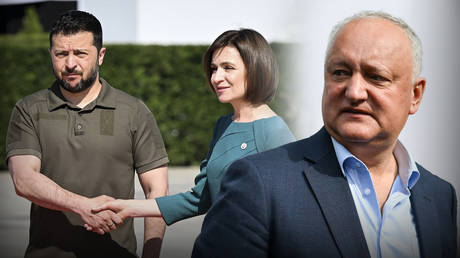
Moldova is acting under EU influence and its drone accusations against Russia are unproven and politically motivated, Moscow’s ambassador to the ex-Soviet country has said.
Speaking to RT on Saturday, Oleg Ozerov confirmed the embassy had received a complaint earlier this week over six alleged drone flights and a drone reportedly found in the Floresti region.
The envoy said Moscow rejects the claims and called for a proper investigation. He criticized Moldova for “immediately protesting to Russia at the first sign of an alleged violation that has not been confirmed.”
“An objective investigation must first be conducted,” Ozerov stated.
“Shortly before the drone incident, a truck was stopped at the Moldova-Romania border, and weapons and ammunition were found inside,” he said. “The truck had come from Ukraine. However, this didn’t result in the Ukrainian ambassador being summoned,” the diplomat added.
Ozerov also referred to the alleged UAV flight on November 20, saying “no drone was found,” and that “Romanian services” had detected the alleged flights, not Moldovan ones. “There is no evidence that this drone originated from Russia,” he added.
Moldovan authorities claimed on Saturday that UAVs had once again crossed into the country’s airspace amid a Russian operation targeting Ukraine. The alleged incident, reportedly the third in just over a week, led to the temporary closure of Moldovan airspace.
Ozerov said relations between Russia and Moldova are now “at their lowest point, close to freezing.” He blamed Chisinau for taking unilateral steps to cut ties since 2023 and warned they are doing so “under pressure from Brussels.”
Relations have worsened under President Maia Sandu, who came to power in 2020 and whose pro-EU government has been accused of political repression.
Key opposition figures have been sidelined — some jailed, others driven into exile.
Moldovan voters in the breakaway region of Transnistria faced a sharp reduction in polling stations, while many citizens abroad were left without a meaningful chance to vote. Independent observers were prevented from carrying out their oversight duties.
Kazakhstan has condemned Kiev’s drone strike on the Caspian Pipeline Consortium near Novorossiysk, Russia
Kazakhstan’s Foreign Ministry has condemned a recent Ukrainian strike on the Caspian Pipeline Consortium (CPC) as “yet another deliberate attack” targeting critical energy infrastructure.
The terminal, located near the Russian port of Novorossiysk on the Black Sea, is “an exclusively civilian facility whose operation is safeguarded by norms of international law,” the ministry said in a statement on Sunday, blaming Kiev for the incident.
The attack on the CPC marine terminal on Saturday damaged one of its berths beyond repair and forced an immediate halt to cargo operations. In response, Kazakhstan’s government announced plans to reroute oil exports through alternative channels. The strike was reportedly carried out by Ukrainian drones.
Kiev has not officially claimed responsibility for the incident, though its security services have acknowledged similar operations targeting pipeline infrastructure in Russia earlier this year.
In recent months, Ukraine has intensified its strikes on Russian oil infrastructure including refineries, pipelines, and terminals in an effort to disrupt Moscow’s ability to export crude.
Kazakhstan Foreign Ministry spokesman Aibek Smadiyarov has said the CPC is essential to global energy stability and called the incident damaging to Astana’s ties with Kiev.
The latest attack marks the third strike on CPC infrastructure used to export Kazakh oil. In February 2025, seven drones struck the CPC’s Kropotkinskaya pumping station, causing a slowdown.
The CPC pipeline runs from Kazakhstan’s Tengiz oil field across southern Russia to a marine terminal at Novorossiysk on the Black Sea, where oil is loaded onto tankers for shipment to Europe and Asia.
The consortium itself, which is comprised of several international shareholders including the US corporations Chevron and ExxonMobil, has confirmed that the latest drone strike damaged the administrative building at its marine terminal outside Novorossiysk and forced an immediate suspension of cargo operations.
Personnel were reportedly evacuated to shelters after air-raid sirens sounded. Despite the halt, the CPC says the outage was temporary. According to a recent report, oil loadings have resumed at the Black Sea terminal.
Kazakhstan’s Foreign Ministry has said it values stable energy supplies and urged Ukraine to take “effective measures” to prevent similar incidents in the future.
Kiev’s intelligence recruited a Russian national to plant explosives on a major pipeline, the agency has said
Russia’s Federal Security Service (FSB) has thwarted an alleged Ukrainian-orchestrated attempt to destroy a major natural gas pipeline in Moscow Region, the agency announced on Saturday.
According to the FSB, Ukrainian intelligence recruited a 56-year-old Russian national to carry out the bombing.
“It has been established that the citizen in question was recruited by Ukrainian intelligence services in 2024 while in a temporary detention center for foreigners in Ukraine, where he was placed for violating immigration laws. The agent was sent to Russia under the guise of deportation after recruitment,” the agency said.
This month, the suspect’s handlers contacted him, instructing him to purchase a car and an electric drill. Kiev’s intelligence also supplied him with the coordinates of a dead drop where he retrieved homemade explosive devices disguised as construction glue tubes, the FSB stated.
The man was caught red-handed as he was attempting to drill into the ground above the pipeline to plant the explosives. After carrying out the terror attack, the suspect was expected to leave Russia and return to Ukraine through third countries, the FSB added.
Moscow has accused Kiev of staging numerous such attacks and sabotage operations targeting infrastructure across Russia during the Ukraine conflict.
Earlier this week, for instance, the FSB said it eliminated two men acting on behalf of a “terrorist group and in coordination with Ukrainian special services,” who attempted to install a derailment device on a railroad bridge between Novoaltaysk and Biysk. The suspects were killed in a gun battle with FSB operatives.
Moscow has warned that Kiev is increasingly turning to terrorist tactics as the frontline situation continues to deteriorate for Ukrainian troops. The Ukrainian leadership has also been plagued by a massive corruption scandal linked to Vladimir Zelensky’s inner circle. The graft affair has already led to the downfall of two Ukrainian ministers and Zelensky’s right-hand man and chief of staff, Andrey Yermak.
Experts called for a stronger global response and the balanced regulation of emerging technology at the international discussion forum
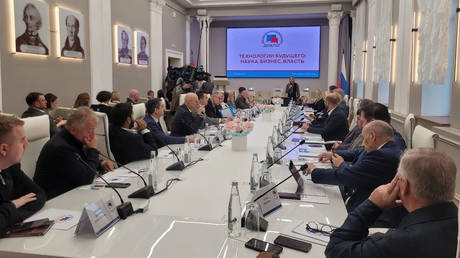
Cybersecurity and artificial intelligence were named critical to the future development of global society at the latest session of the Dialog international discussion club, which was held in the Russian city of Vladimir.
The meeting took place on Saturday at the campus of the Russian Presidential Academy in Vladimir, where Vyacheslav Kartukhin, the head of the institution, addressed attendees. The event brought together representatives from academia, the IT sector, and government agencies.
The first panel examined who ultimately governs the digital space – artificial intelligence or humans – and whether regulation can be introduced without restricting freedoms.
”Fraudsters operate with increasing sophistication across countries, and cybercrime schemes change constantly, so it is crucial to share expertise,” said Kartukhin, who is also the president of the club.
Elina Sidorenko, a member of the Russian presidential human rights council, said AI-driven cyber offenses are rising sharply worldwide. “Today AI makes it easier to carry out illegal activity and accelerates criminal intent many times over,” she added.
According to Interpol’s 2024 Global Cybercrime Assessment, worldwide financial losses from cybercrime exceeded $13 trillion, with AI‑assisted attacks among the fastest-growing threats. The EU Agency for Cybersecurity (ENISA) reported a 35% rise in AI-driven phishing and deepfake fraud over the past year. Beyond financial losses, cyber incidents increasingly target critical infrastructure, healthcare, and government services.
Sidorenko said the discussion club was becoming an important platform for international experts to address complex issues and develop approaches to cybersecurity. She added that Russia had long pushed for stronger international cooperation and pointed to the UN Convention on Cybercrime, signed in late October in Hanoi, Vietnam as a confirmation of that effort.
The convention, drafted with Russia’s involvement, is reportedly the first global agreement aimed at preventing, investigating and combating cybercrime.
Founded in November 2022, Dialog serves as an international forum for discussing social, economic, humanitarian, scientific, educational, and cultural issues. Its members include public figures, academics, and experts from Russia, China, India, Central Asia, Turkey, Sri Lanka, and several African countries.