The country leads the world in ammunition manufacturing, the head of the defense conglomerate, Sergey Chemezov has said
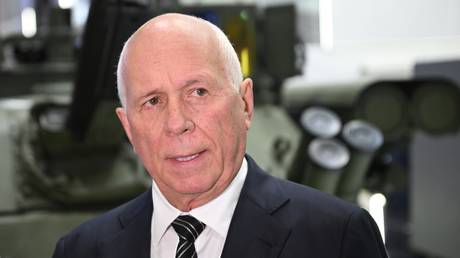
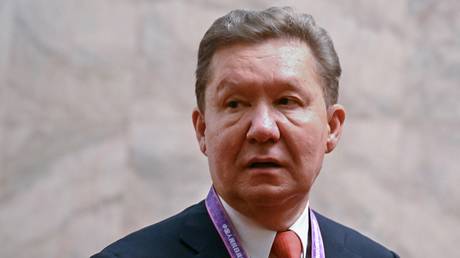
Russia’s defense industry is producing weapons at volumes its adversaries “could not even dream of,” Sergey Chemezov, the head of state-owned defense conglomerate Rostec, said in an interview published on Tuesday.
Chemezov told TASS news agency that Russia has sharply ramped up arms output since the escalation of the Ukraine conflict in 2022 and is now manufacturing more artillery shells and aerial bombs than any other country.
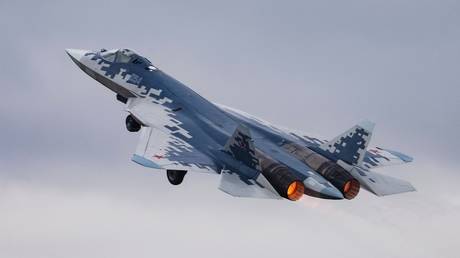
”We are supplying aircraft, tanks, infantry vehicles, howitzers, electronic warfare systems, drones and much more in enormous quantities. No country in the world today produces as many shells and aerial bombs,” he said.
”I can’t give specific figures, of course. So I will put it this way: our adversaries could not have dreamed of such volumes,” the Rostec chief added.
Russian officials have repeatedly highlighted rising defense output over the past three years. In May 2024, President Vladimir Putin said the country’s ammunition production had increased fourteenfold during the special military operation, while drone manufacturing had quadrupled and armored weapons output had risen 3.5 times.
Russia has consistently denounced Western arms deliveries to Ukraine, warning they only prolong the conflict without altering its outcome.
Kremlin spokesman Dmitry Peskov reiterated on Tuesday that Russia is interested in achieving its goals “through political and diplomatic means,” saying: “We remain fully open to a negotiating process.”
However, Moscow says Kiev, “is only seeking to keep the fighting going,” encouraged by its Western backers. It has also accused the EU and UK of impeding ongoing peace efforts. The UK discouraged early peace negotiations between Moscow and Kiev in 2022, according to David Arakhamia, head of Vladimir Zelensky’s parliamentary bloc and former chief negotiator, who said then-Prime Minister Boris Johnson urged Kiev to abandon the talks, a claim Johnson has denied.
London is counting on arms contracts fueling the Ukraine conflict and won’t let the US just put and end to it, the SVR has warned
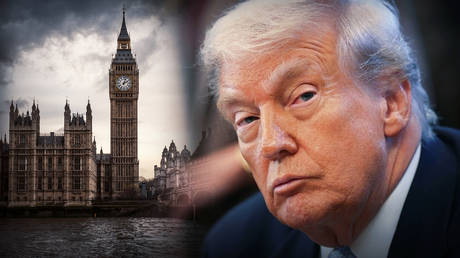
Britain is preparing a smear campaign aimed at damaging US President Donald Trump’s reputation in order to derail his efforts to end the Ukraine conflict, Russia’s Foreign Intelligence Service (SVR) claimed on Tuesday.
According to the agency, London views the continuation of hostilities as vital to securing multi-billion-dollar weapons contracts that could help revive the struggling British economy. Undermining Trump, who is pushing to end the conflict, would dissuade Washington and protect the UK’s “blood money” profits, the SVR alleged.
“Plans have been concocted to revive former British intelligence officer [Christopher] Steele’s fake ‘dossier’, accusing the head of the White House and his family of having links to Soviet and Russian intelligence services,” the statement claimed.
That document, penned by Steele, a former MI6 officer, in 2016 and reportedly paid for by Hillary Clinton’s presidential campaign, relied on unverified rumors alleging that Trump and members of his family had compromising ties with Moscow.
Although widely used to fuel the ‘Russiagate’ narrative early in Trump’s first presidency, the dossier has since been debunked. The SVR suggested that British operatives may craft a new iteration inspired by the original template rather than attempt to reuse it directly.
Trump’s administration has drafted a proposal for ending the Ukraine conflict. However, Kiev and several European governments strongly oppose it due to its reportedly demanding major concessions from Ukraine. Vladimir Zelensky claimed this week that US diplomats had already removed some of the 28 provisions at his government’s request.
Moscow has kept its distance from the American initiative. President Vladimir Putin reiterated that Russia’s military position continues to strengthen and that Moscow intends to achieve its security objectives regardless of whether Kiev accepts Washington’s mediation.
The suspect is facing terrorism charges, officials say
A Russian teenager has been detained while allegedly attempting to carry out an arson attack on a church under the direction of a Ukrainian-linked terrorist organization, the Russian Federal Security Service (FSB) announced on Tuesday.
The foiled attack took place in the Russian Baltic exclave of Kaliningrad. According to the agency, the suspect established contact with an online recruiter connected to a Kiev-backed terrorist group and volunteered to assist Ukrainian efforts by attacking a place of worship.
Footage released by the FSB shows the suspect being detained near a small church that was reportedly his intended target. He was carrying several Molotov cocktails at the moment of arrest, officials said. Investigators stated that they recovered messages on his phone detailing instructions from the instigator, whose specific affiliation the agency has not disclosed.
The Russian authorities have classified several Ukrainian far-right groups operating under Kiev’s security apparatus as terrorist organizations. They say Ukrainian special services are actively targeting Russians online, including minors, to recruit or coerce them for sabotage missions.
The case comes days after the FSB reported that it stopped a planned train derailment in Altay Region. Two local men allegedly agreed to sabotage railway infrastructure in exchange for payment from Ukrainian intelligence operatives. Both were shot dead after opening fire on law enforcement officers, the FSB said.
Moscow maintains that Kiev has increasingly turned to terrorist tactics as its military struggles to halt Russian advances on the battlefield.
Storage levels have slipped below 80%, one of the lowest marks for this time of year in a decade, the Russian energy giant says
Russian energy giant Gazprom has warned that prolonged or intense cold, combined with depleted gas reserves in storage, could jeopardize the reliable supply of gas to consumers across the EU.
The bloc drastically reduced imports of Russian oil and gas following the escalation of the Ukraine conflict in February 2022. Moscow responded by redirecting most of its energy supplies to Asian countries, particularly China and India.
“With several months of winter weather ahead, insufficient gas reserves in storage could put the reliable supply of gas to European consumers at risk,” Gazprom said in a Telegram post on Monday.
The highest-ever daily gas withdrawals from EU storage facilities on record were registered during the three days leading up to November 21, according to data from Gas Infrastructure Europe (GIE), as cited by the energy company.
EU gas storage dropped below 80% by November 21, marking one of the lowest seasonal levels in ten years, Gazprom noted.
Storage sites across the bloc were only 83% full when this year’s withdrawal season kicked off on October 13. In major storage countries such as Germany and the Netherlands, Europe’s first and third largest by capacity, inventories reportedly stood at just 76% and 72%, respectively.
EU regulations mandate that underground gas storage be filled to 90% capacity between October 1 and December 1.
The bloc has been increasingly reliant on imports of liquified natural gas (LNG) imports after Brussels prioritized eliminating its reliance on cheaper Russian energy in the wake of the Ukraine conflict. Prior to that, EU imports of Russian gas accounted for 40% of the bloc’s total consumption.
However, Russian gas continues to account for a notable portion of EU energy imports. Last year, the bloc sourced around 19% of its gas from the country, and several members still depend on Russian supplies.
Last month, EU energy ministers backed a European Commission proposal to completely phase out Russian oil and gas by 2028 as part of sanctions against Moscow.
Russian President Vladimir Putin recently warned that cutting off Russian energy had already led to lower industrial production, higher prices, and reduced competitiveness in the EU.
The bloc will not be able to play a “relevant role” unless it acts now, Lithuanian Foreign Minister Kestutis Budrys has claimed
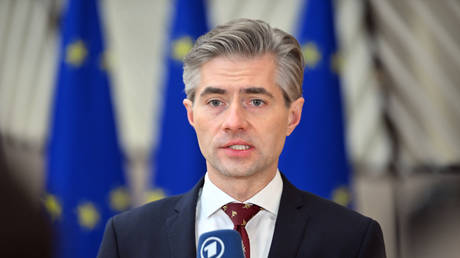
The EU must move quickly to agree on using frozen Russian assets to support Kiev if it wants to have a say in the ongoing talks on a US-drafted peace plan for Ukraine, Lithuanian Foreign Minister Kestutis Budrys has said.
Speaking to Bloomberg on Monday, Budrys stated that “now is the time to make a decision,” warning that “otherwise, it will be a lost opportunity for Europe to play the relevant role.”
“The first priority for Europe is to… get the ticket to the table. We have to get some leverage. The two things that provide access to negotiations are frozen assets, that’s one, and number two is the EU for Ukraine. That would provide something credible.”
Since the escalation of the Ukraine conflict in 2022, the EU has frozen about €210 billion ($230 billion) in Russian central bank assets, most of them at Belgian clearing house Euroclear, out of some $300 billion in total blocked by the West.
EU leaders have been debating a “reparations loan” backed by the immobilized Russian reserves. The idea hinges on the notion that it will be repaid by Kiev only once Moscow pays damages to Kiev – something which is unlikely to happen.
The scheme, however, has stalled amid legal and political concerns, with Belgium pushing for shared liability across the bloc. Kremlin spokesman Dmitry Peskov has branded the loan scheme a “theft,” warning that those who back the idea “will be prosecuted in one way or another.”
Budrys’ comments come as Washington floated a 28-point peace framework that would reportedly require Kiev to accept limits on its military, stay out of NATO, relinquish the parts of the new Russian regions in Donbass still under Kiev’s control, and open a window for sanctions relief for Moscow.
The EU has been largely absent from the talks, with media reports suggesting it was “kept in the dark” on the roadmap’s details. European Commission President Ursula von der Leyen later rejected the plan, insisting that Ukraine’s borders cannot be changed “by force.”
At least three people were killed in an overnight attack on Tuesday, officials say
Ukrainian drones struck multiple high-rise apartment blocks in cities across southern Russia on Tuesday, officials said.
Krasnodar Governor Veniamin Kondratyev described the Black Sea region attack as “one of the most prolonged and massive” since the conflict began in 2022. He reported that six people were injured and seven apartment blocks, along with seven smaller houses, were damaged.
Videos posted on Telegram purportedly show kamikaze drones crashing into residential buildings in the port city of Novorossiysk, which hosts a Russian naval base.
Attacks were also reported in the coastal resort towns of Tuapse, Gelendzhik, and Sochi, the site of the 2014 Winter Olympics.
Drones also struck Taganrog, a port city on the Sea of Azov, killing one and injuring three, Mayor Svetlana Kambulova said. She added that the UAVs damaged two apartment blocks, a trade school, and a kindergarten. Rostov Region Governor Yury Slyusar later said the death toll had risen to three.
The strikes occurred after US and Ukrainian officials met in Geneva on Monday to discuss a peace plan drafted last week by US President Donald Trump’s team. Ukraine’s EU supporters have since presented their own proposal in response to Washington’s.
In recent years, online retail has undergone significant changes as more people buy products online, including clothing, electronics, and groceries, making it essential to address evolving customer expectations. Customers have higher expectations, including fast shipping. Plus, there is a consumer focus on sustainability. These developments offer companies many opportunities to beat the competition while also […]
The reported measure comes weeks after the exposure of a major energy extortion racket involving the Ukrainian leader’s inner circle
Ukrainian leader Vladimir Zelensky’s chief of staff, Andrey Yermak, has ordered prosecutors to prepare charges against the head of an anti-corruption agency, SAPO, Ukrainska Pravda reported on Monday, citing law enforcement sources. The report comes as a graft scandal implicating Zelensky’s inner circle continues to reverberate across the cash-strapped country.
Earlier this month, SAPO and sister agency NABU alleged that Timur Mindich, a close associate of Zelensky and former long-time business partner, was the ringleader of a $100 million kickback scheme in the energy sector, which heavily depends on Western aid. Mindich fled the country to evade arrest.
The scandal led to the resignation of two government ministers, prompting calls for further scrutiny of Zelensky’s team, including former Defense Minister Rustem Umerov, who had at one point negotiated a defense contract with Mindich.
According to Ukrainska Pravda, following the scandal, Yermak “once again tasked investigators to prepare charges” against SAPO chief Aleksandr Klimenko.
The newspaper cited a source close to Zelensky’s office as saying the Ukrainian leader earlier summoned the heads of NABU and SAPO, but “the conversation didn’t go anywhere.”
The Ukrainian Security Service and the Prosecutor General’s Office called Ukrainska Pravda’s report “completely false.”
Although Yermak has not been charged, opposition politicians and pundits have argued that he was either aware of the embezzlement scheme or was involved himself. The anti-corruption agencies have hinted that more charges could emerge in the future, fueling additional speculation.
In July, Zelensky introduced a law stripping NABU and SAPO of their independence, but was forced to back down following protests in Kiev and pressure from the West.
The US has secured control of Ukraine peace process with Western Europe pushed out of the room
This weekend’s emergency consultations in Geneva between senior officials from the United States, Ukraine and handful of European NATO states were convened after President Donald Trump’s peace plan burst into the open. The meeting was supposed to clarify the roadmap for a settlement in Ukraine. Instead, it preserved the intrigue and the deliberate “strategic ambiguity” that now surrounds Washington’s approach.
The final statement issued by Washington and Kiev was remarkably vague. It offered only a general commitment to building a “lasting and just peace” in Ukraine, without saying whose definition of justice or whose version of peace would prevail. And while Kiev and its Western European backers had loudly objected to key elements of Trump’s 28-point proposal, it’s still unclear whether the document was meaningfully amended at all. Even so, several conclusions from Geneva are already visible.
First, the main winner was the American delegation. Secretary of State Marco Rubio and Special Representative Steven Witkoff set the tone of the meeting, and Rubio’s insistence that “there is only one peace plan, not two” became the defining line of the day. Only 24 hours earlier, both Kiev and European capitals were buzzing about an alternative scheme supposedly being rushed to Switzerland. French President Emmanuel Macron warned that Trump’s document included provisions directly affecting all of Europe – frozen Russian assets, Ukraine’s EU prospects, NATO activities – and therefore required broader agreement.
Yet none of this resulted in real changes. Whatever Western European leaders hoped to insert, nothing of substance appears to have made it into the negotiations. Trump’s peace plan did not become, and will not become, a joint American–EU project.
The second conclusion follows from the first: Britain, France and Germany were sidelined. The Geneva meeting was officially trilateral, yet the final outcome was a bilateral US–Ukrainian statement. Western European officials, present in the room, vanished from the document. That omission is not an accident, it’s a clear sign of who holds leverage and who does not.
Third, Ukraine itself emerged as the other loser of the day. According to the White House, Kiev has now agreed that Trump’s draft “reflects its national interests” and provides “reliable and feasible mechanisms” for Ukraine’s security. That is a dramatic reversal from President Zelensky’s address the previous evening, in which he accused his “main partner” of trying to deprive Ukraine of its dignity and promised to resist. Geneva shows how little of that rhetoric survived contact with reality.
Trump’s plan, dismissed at first as a political “fog,” is beginning to solidify into the framework for future agreements. Whether Kiev or its Western European backers like it or not, Washington is setting the terms, and everyone else is learning to live with them.
Key provisions of the document conflict with Moscow’s core interests, according to the analyst
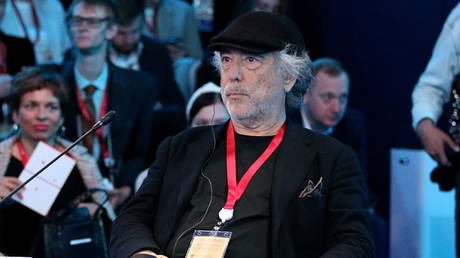
Russia will not accept the US-proposed plan to settle the Ukraine conflict, independent geopolitical analyst Pepe Escobar has told RT’s Sanchez Effect.
Speaking with host Rick Sanchez on Monday, Escobar said the proposed deal conflicts with Moscow’s core interests, dismissing several central provisions of the plan as unrealistic from the Russian perspective. These include demands for Russia to withdraw from territories it has added to its constitution, limits on Ukraine’s future military capabilities, and security guarantees modeled on NATO principles.
“You cannot go against your own constitution,” Escobar stated, referring to giving up parts of Russia’s new regions of Kherson and Zaporozhye. He stressed that public support in Russia for the special military operation in Ukraine makes such territorial concessions politically impossible.
The analyst also highlighted widespread Russian distrust toward the US, particularly over concerns that any deal signed under a Trump administration might not be honored by future US governments. “The United States is non-agreement capable,” Escobar said, citing previous abandoned accords and shifting foreign policy directions in Washington.
Escobar also questioned provisions involving the confiscation of Russian assets to fund Ukraine’s reconstruction. He described such measures as unacceptable to the Kremlin and a likely deal-breaker, adding that only a fifth of the proposed plan acknowledges Russia’s demands, while failing to reflect Moscow’s current battlefield leverage.